

Holistic Dentistry
Also known as: Biological Dentistry, Integrative Dentistry, Biologic Dentistry
Overview
Holistic dentistry—also called biological dentistry, integrative dentistry, or whole-body dentistry in some settings—describes an approach to oral care that places dental health within the larger context of overall wellness. Rather than viewing the teeth and gums as isolated structures, this model emphasizes the relationship between the mouth and broader systems such as the cardiovascular, metabolic, respiratory, musculoskeletal, and immune systems. People often seek information on holistic dentistry when exploring mercury-free or mercury-safe practices, biocompatible dental materials, temporomandibular joint (TMJ) and jaw function concerns, airway-focused dentistry, and the possible links between oral inflammation and systemic health.
In conventional research, the strongest support for a whole-body view of dentistry comes from well-established associations between oral disease and systemic conditions. Periodontal disease has been linked in studies to diabetes, adverse pregnancy outcomes, and cardiovascular risk, while untreated oral infections can affect nutrition, sleep, speech, and quality of life. Holistic dentistry builds on these connections by asking broader questions about how dental materials, bite alignment, chronic oral inflammation, sleep-disordered breathing, and lifestyle factors may influence health. This framework often includes attention to prevention, lower-toxic exposures where feasible, and collaboration across disciplines such as dentistry, medicine, myofunctional therapy, physical therapy, and nutrition.
The field is also shaped by consumer concerns and ongoing debate. For example, many patients search for dentists who avoid or remove amalgam fillings, use ceramic or composite alternatives, evaluate airway structure and breathing patterns, or consider posture and muscle tension in cases of jaw pain. At the same time, not all concepts marketed under holistic dentistry are equally supported by evidence. Some elements—such as periodontal-systemic health links, oral hygiene, tobacco avoidance, and sleep apnea screening—are grounded in substantial research, while others, including certain methods of biocompatibility testing or broad claims about hidden dental toxins, remain more controversial or less well validated.
As a modality, holistic dentistry is best understood as an integrative philosophy of dental care rather than a single treatment. Its scope may include preventive counseling, conservative materials selection, attention to nasal breathing and oral development, and efforts to reduce chronic inflammation. Because dental decisions can affect both oral function and general health, discussions about this approach are often most useful when they include both the potential benefits and the limitations of current evidence, ideally in consultation with qualified dental and medical professionals.
Medical Perspectives
Two Ways of Seeing Health

Western
scientific · clinical
Western medicine applies science, technology, and clinical experience to treat symptoms through testing, diagnosis, and targeted intervention.

Eastern
traditional · alternative
Eastern medicine focuses on treating the body naturally by applying traditional knowledge practiced for thousands of years, emphasizing balance and whole-person wellness.
Gold Bamboo presents both perspectives side-by-side so you can make informed decisions. We don't advocate for one over the other — your health choices are yours.
Western Medicine Perspective
Western / Conventional Medicine Perspective
From a conventional perspective, dentistry is increasingly recognized as part of interprofessional healthcare. Mainstream dental and medical organizations acknowledge that oral health is closely connected with systemic health, particularly through inflammation, bacterial burden, and shared risk factors such as smoking, diet, stress, and socioeconomic barriers to care. Periodontal disease is one of the best-studied examples: research suggests a bidirectional relationship with diabetes, and studies indicate associations with cardiovascular disease, pregnancy complications, and respiratory illness, although association does not always establish direct causation. This systems-based understanding overlaps with one of holistic dentistry’s central principles.
Conventional dentistry also addresses several topics commonly associated with holistic care. Mercury-containing dental amalgam has been extensively studied and is considered acceptable for many patients by major organizations, though use has declined in many regions due to aesthetic preferences, environmental concerns, and policy restrictions for some groups. Composite resins, ceramics, gold, and other restorative materials are chosen based on durability, function, appearance, and patient-specific factors. Conventional clinicians may also evaluate TMJ disorders, malocclusion, bruxism, and sleep-disordered breathing, including the role of oral appliances in selected cases of obstructive sleep apnea. Pediatric dentistry and orthodontics increasingly consider facial growth, tongue posture, and airway development, though this remains an evolving area.
Where conventional medicine may diverge from some holistic claims is in the standard of evidence required. Practices such as routine biocompatibility testing for dental materials, broad assertions that root canals inherently cause systemic disease, or unvalidated detoxification claims after amalgam removal are generally viewed with caution unless supported by strong clinical data. Mainstream care tends to rely on established diagnostics, infection control, radiography when indicated, and treatments supported by reproducible outcomes. In this framework, the most evidence-aligned aspects of holistic dentistry are those that emphasize prevention, individualized material selection, screening for sleep and airway issues, and coordination between oral and general healthcare providers.
Eastern & Traditional Perspective
Eastern / Traditional Medicine Perspective
In Traditional Chinese Medicine (TCM) and related East Asian systems, oral health is often interpreted through patterns of systemic balance rather than through local pathology alone. The teeth are traditionally associated with the Kidney system, while the gums may be discussed in relation to the Stomach meridian and the presence of internal heat, dampness, or deficiency patterns. Symptoms such as gum swelling, bleeding, dry mouth, jaw tension, or mouth ulcers may be viewed as expressions of broader disharmony involving digestion, stress, circulation, or constitutional weakness. This perspective aligns conceptually with holistic dentistry’s focus on seeing oral symptoms as part of whole-body health, although the explanatory model differs substantially from biomedicine.
In Ayurveda, the mouth is considered an important gateway to overall health, and oral disease may be interpreted through imbalances in doshas as well as digestion, tissue nourishment, and inflammatory load. Traditional practices such as tongue examination, herbal mouth care, oil pulling, and attention to diet and daily routine are used within a preventive framework. Naturopathic and integrative traditions similarly tend to emphasize oral microbiome balance, nutrient adequacy, breathing patterns, stress reduction, and minimizing chronic inflammatory burden. These systems often place strong value on the quality and compatibility of substances introduced into the body, which helps explain the interest in non-metal restorations and lower-toxicity dental environments.
While these traditional frameworks can offer a broader lens on prevention and patient experience, their concepts are not always directly measurable in conventional biomedical terms. Research on some supportive practices—such as certain herbal rinses, mind-body approaches for pain and bruxism, or oil pulling for plaque reduction—remains mixed or preliminary, and quality varies. As a result, eastern and traditional perspectives are often most productively understood as complementary interpretive systems that may inform lifestyle, symptom context, and preventive care, rather than as replacements for evidence-based dental diagnosis and treatment.
Supplements & Products
Recommended Products
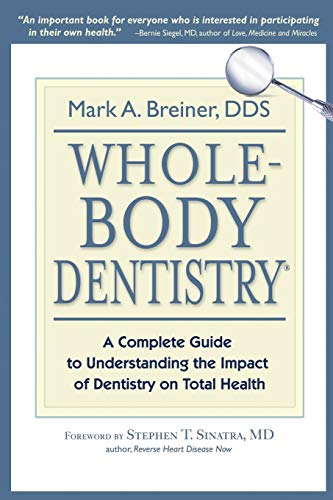
Whole-Body Dentistry®: A Complete Guide to Understanding the Impact of Dentistry on Total Health: Mark A. Breiner
Whole-Body Dentistry®: <strong>A Complete Guide to Understanding the Impact of Dentistry on Total Health</strong> [Mark A. Breiner] on Amazon.com. *FREE* shipping on qualifying offers. Whole-Body Dent

Hyperbiotics Vital Nutrients Pro Dental Probiotic | Clinically Studied BLIS K12 and M18 | Oral Probiotics for Bad Breath treatment for adults | Oral Health for teeth and gums | 45 Mint Tablets
Oral Probiotics, 11 Billion CFU, with M18, A12, Oral Probiotics for Mouth Bad Breath for adults, Dry Mouth, Gum Health & Gum Restore, Chronic Halitosis, Fresh Breath, 60 Lozenges (Mint Flavor) SUP

RiseWell Mineral Toothpaste - All Natural Toothpaste with Hydroxyapatite - Made in the USA, No Added Fluoride, Natural SLS-Free Toothpastes - for a Stronger and Healthier Teeth, Wild Mint, 3.4 Oz
Amazon.com : RiseWell Mineral Toothpaste - All Natural Toothpaste with Hydroxyapatite - Made in the USA, <strong>No Added Fluoride</strong>, Natural SLS-Free Toothpastes - for a Stronger and Healthier
Evidence & Sources
Promising research with growing clinical support from multiple studies
- American Dental Association (ADA)
- National Institute of Dental and Craniofacial Research (NIDCR)
- World Health Organization (WHO) Oral Health
- National Center for Complementary and Integrative Health (NCCIH)
- Journal of Clinical Periodontology
- Journal of Periodontology
- International Journal of Environmental Research and Public Health
- Sleep Medicine Reviews
- Journal of Oral Rehabilitation
This content is for informational purposes only and does not constitute medical advice. Always consult a qualified healthcare provider before starting, stopping, or changing any supplement or medication regimen.