

Feldenkrais Method
Also known as: Feldenkrais, Feldenkraise, Feldencreis
Overview
The Feldenkrais Method is a form of somatic education developed by physicist and engineer Moshe Feldenkrais in the mid-20th century. Rather than being framed as a conventional medical treatment, it is generally described as a learning-based movement approach that aims to improve body awareness, coordination, ease of movement, and functional ability. Sessions typically occur in one of two formats: Awareness Through Movement (ATM), usually taught verbally in group settings, and Functional Integration (FI), an individualized hands-on format. The method emphasizes gentle, often novel movement sequences intended to help people notice habitual patterns and explore alternatives.
The modality is used in a wide range of contexts, including chronic pain, balance concerns, neurological rehabilitation support, stress-related muscular tension, healthy aging, and performance optimization for dancers, musicians, and athletes. Interest in Feldenkrais has grown alongside broader attention to mind-body medicine, pain neuroscience, and the role of self-awareness in movement efficiency. Its appeal often lies in its non-forceful style: lessons are typically slow, exploratory, and designed to reduce unnecessary effort rather than strengthen or stretch in a conventional sense.
From a health perspective, the Feldenkrais Method is often discussed at the intersection of movement science, rehabilitation, and embodied self-regulation. Advocates describe it as a way to refine the relationship between the nervous system and movement, while researchers have examined possible effects on balance, mobility, perceived exertion, pain, and quality of life. Some studies suggest benefits for specific populations, particularly older adults and people with chronic musculoskeletal discomfort, though findings are not uniform and many trials are relatively small.
A key distinction is that Feldenkrais generally does not focus on diagnosing disease or correcting the body according to a rigid ideal. Instead, it is organized around the idea that increasing sensory awareness and movement options may support more adaptable function. Because it is educational rather than disease-specific, its outcomes can be broad and sometimes difficult to measure using standard biomedical endpoints. For that reason, it is often considered a complementary modality, and conversations with qualified healthcare professionals remain important when symptoms are persistent, progressive, or medically complex.
Medical Perspectives
Two Ways of Seeing Health

Western
scientific · clinical
Western medicine applies science, technology, and clinical experience to treat symptoms through testing, diagnosis, and targeted intervention.

Eastern
traditional · alternative
Eastern medicine focuses on treating the body naturally by applying traditional knowledge practiced for thousands of years, emphasizing balance and whole-person wellness.
Gold Bamboo presents both perspectives side-by-side so you can make informed decisions. We don't advocate for one over the other — your health choices are yours.
Western Medicine Perspective
Western Medicine Perspective
From a conventional medicine standpoint, the Feldenkrais Method is usually categorized as a complementary mind-body or movement-based intervention, rather than a primary treatment for disease. Western frameworks often interpret its potential effects through concepts such as motor learning, neuroplasticity, proprioceptive training, sensorimotor integration, relaxation response, and behavioral modification of movement habits. In practical terms, clinicians and researchers may view Feldenkrais as an approach that helps individuals become more aware of inefficient or protective movement patterns that can contribute to pain, stiffness, or reduced function.
Research has most often explored Feldenkrais in areas such as chronic low back pain, neck/shoulder discomfort, balance and fall risk in older adults, multiple sclerosis, Parkinsonian symptoms, and general functional mobility. Systematic reviews suggest that some participants experience improvements in balance, perceived effort, mobility, and self-reported pain or well-being, but the evidence base remains mixed. Common limitations include small sample sizes, variable lesson formats, inconsistent comparison groups, and challenges with blinding. As a result, conventional medicine does not generally regard Feldenkrais as a stand-alone evidence-based treatment equivalent to standard physical therapy, pharmacologic care, or specialist management for clearly defined medical conditions.
That said, there is increasing interest in nonpharmacologic strategies for chronic pain and functional decline, and Feldenkrais fits within that broader landscape. In integrative and rehabilitation settings, it may be discussed as a supportive modality that could complement established care, particularly where goals involve body awareness, gentle movement confidence, and functional self-management. For individuals with significant pain, neurological symptoms, or unexplained changes in mobility, conventional evaluation remains important to rule out underlying pathology and to determine whether this type of movement education is appropriate within a broader care plan.
Eastern & Traditional Perspective
Eastern / Traditional Medicine Perspective
Although the Feldenkrais Method did not emerge from classical Eastern medical systems, its principles often resonate with long-standing ideas in Traditional Chinese Medicine (TCM), Ayurveda, yoga therapy, and other body-mind traditions. These systems commonly emphasize that health is shaped not only by structural anatomy, but also by the quality of awareness, breath, posture, coordinated movement, and the unobstructed flow of vital processes. In that sense, Feldenkrais is frequently seen as compatible with traditional views that gentle, attentive movement can help reduce internal strain and support more integrated function.
From a TCM-informed perspective, restricted or habitual movement may be understood as contributing to stagnation, tension, or imbalance in the body's functional networks. Slow, mindful exploration of movement can be interpreted as a way of supporting smoother circulation of qi and blood, calming excessive tension, and improving the relationship between intention and action. While Feldenkrais does not use acupuncture meridians or classical diagnostic categories, some practitioners view its emphasis on ease, coordination, and sensory refinement as harmonizing with the broader TCM goal of restoring efficient flow and reducing unnecessary effort.
In Ayurvedic and yoga-based interpretations, Feldenkrais may be seen as cultivating greater self-observation, nervous system regulation, and economy of movement, themes that parallel traditional interests in balancing body and mind. Naturopathic and holistic practitioners may also regard it as a low-force modality that supports the body's inherent capacity for adaptation when stress, pain, or dysfunction have narrowed movement choices. These interpretations are largely conceptual and tradition-informed rather than strongly validated by modern clinical trials. As with many integrative practices, traditional frameworks tend to value Feldenkrais most as part of a broader approach to resilience, function, and self-awareness, rather than as a disease-specific remedy.
Supplements & Products
Recommended Products
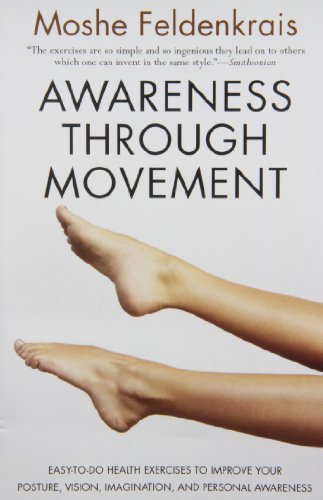
Awareness Through Movement: Easy-to-Do Health Exercises to Improve Your Posture, Vision, Imagination, and Personal Awareness: Feldenkrais, Moshe
Awareness Through Movement: <strong>Easy-to-Do Health Exercises to Improve Your Posture, Vision, Imagination, and Personal Awareness</strong> [Feldenkrais, Moshe] on Amazon.com. *FREE* shipping on qua

Manduka PRO Yoga Mat – Premium 6mm Thick Mat, High Performance Grip, Ultra Dense Cushioning for Support and Stability in Yoga, Pilates, Gym and Any General Fitness
Amazon.com : Manduka PRO Yoga Mat – Premium 6mm Thick Mat, High Performance Grip, <strong>Ultra Dense Cushioning for Support and Stability in Yoga, Pilates, Gym and Any General Fitness</strong> : Spor

Hugger Mugger Mexican Yoga Blanket (Colors Vary)
hugger mugger bolsters · manduka bolster · Previous · 1 · 2 · Next · Visit the help section or contact us · Go back to filtering menu · Skip to main search results · Popular Shopping Ideas · Bolster ·
Evidence & Sources
Promising research with growing clinical support from multiple studies
- National Center for Complementary and Integrative Health (NCCIH)
- BMC Geriatrics
- Evidence-Based Complementary and Alternative Medicine
- Complementary Therapies in Clinical Practice
- Frontiers in Human Neuroscience
- Journal of Bodywork and Movement Therapies
- The Feldenkrais Journal
- Cochrane Library
This content is for informational purposes only and does not constitute medical advice. Always consult a qualified healthcare provider before starting, stopping, or changing any supplement or medication regimen.