

Emotional Freedom Techniques
Also known as: EFT, Tapping Therapy, EFT Tapping
Emotional Freedom Techniques (EFT): Overview
Emotional Freedom Techniques (EFT) is a mind-body modality that combines elements of exposure-based psychological techniques, cognitive reframing, and rhythmic tapping on specific body points often derived from acupuncture maps. It is commonly described as a form of "tapping", in which a person brings attention to a distressing emotion, memory, sensation, or craving while tapping a sequence of points on the face and upper body and repeating structured statements. EFT is widely used in self-help settings and by some integrative practitioners for concerns such as stress, anxiety, trauma-related symptoms, cravings, performance anxiety, and emotional regulation.
The method emerged in the late 20th century as part of the broader field often called energy psychology. In public and clinical discussions, EFT is often presented as accessible, low-cost, and easy to learn, which has contributed to its popularity. At the same time, it remains a controversial modality in conventional medicine because its proposed mechanisms vary depending on the framework used. Some advocates describe EFT in terms of balancing the body's energy systems, while many researchers interpret its effects through more familiar psychological and neurobiological processes such as attention regulation, somatic calming, expectancy effects, memory reconsolidation, and elements shared with exposure therapy.
Interest in EFT has grown because emotional distress is common and many people seek non-pharmacologic tools for immediate self-regulation. Research has examined EFT for a range of outcomes, including subjective stress, anxiety, depression, post-traumatic stress symptoms, pain, and food cravings. Findings from some trials and reviews suggest short-term improvements in selected symptoms, but study quality is mixed, populations are heterogeneous, and debate continues over whether tapping on acupoints adds benefits beyond established psychological techniques alone.
As with many integrative modalities, EFT sits at the intersection of behavioral health, somatic practice, and traditional point-based healing concepts. It is best understood as a technique with growing but still uneven evidence, particularly for stress-related outcomes. It is not generally regarded in mainstream medicine as a standalone replacement for established care, especially in severe psychiatric conditions, but it is often discussed as a complementary practice within broader mental and emotional wellness frameworks.
Medical Perspectives
Two Ways of Seeing Health

Western
scientific · clinical
Western medicine applies science, technology, and clinical experience to treat symptoms through testing, diagnosis, and targeted intervention.

Eastern
traditional · alternative
Eastern medicine focuses on treating the body naturally by applying traditional knowledge practiced for thousands of years, emphasizing balance and whole-person wellness.
Gold Bamboo presents both perspectives side-by-side so you can make informed decisions. We don't advocate for one over the other — your health choices are yours.
Western Medicine Perspective
Western / Conventional Medicine Perspective
From a conventional medicine perspective, EFT is typically evaluated not through the language of meridians, but through the lenses of clinical psychology, psychiatry, behavioral medicine, and psychophysiology. Researchers have proposed that EFT may work by combining several active ingredients: focused attention on a distressing issue, repeated verbal acknowledgment of that issue, elements of self-acceptance, paced breathing or rhythmic motor activity, and mild somatosensory stimulation. In this interpretation, the practice may function similarly to exposure-based approaches, cognitive restructuring, relaxation training, and grounding techniques.
Clinical studies have reported improvements in some people with anxiety, phobias, stress, and trauma-related symptoms, and several meta-analyses suggest potential benefit for anxiety, depression, and PTSD symptom reduction. However, conventional clinicians often note important limitations: many studies are small, some lack rigorous blinding or strong control conditions, and publication bias is difficult to exclude. A central question in the literature is whether EFT's benefits stem specifically from tapping on designated acupoints or from the broader therapeutic ritual and psychological components. As a result, EFT is often viewed as a promising but debated adjunctive intervention, rather than a fully established first-line treatment.
Safety discussions in conventional settings tend to frame EFT as low-risk for many adults when used for mild stress management, but potentially emotionally activating when used around traumatic memories or severe psychiatric symptoms. For that reason, clinical sources often emphasize that more serious concerns—such as complex trauma, suicidality, severe depression, psychosis, eating disorders, or substance dependence—require assessment and oversight by qualified healthcare or mental health professionals. In integrative care environments, EFT may be explored as one component of a broader, individualized care plan rather than as a substitute for evidence-based treatment.
Eastern & Traditional Perspective
Eastern / Traditional Medicine Perspective
Within Traditional Chinese Medicine (TCM)-influenced interpretations, EFT is often understood as working through stimulation of points that correspond to acupuncture meridians, with the goal of helping regulate disruptions in the flow of qi associated with emotional and physical distress. Although EFT is not a classical TCM practice, it borrows from the idea that emotional states and bodily function are interconnected and that point stimulation may influence both. From this perspective, tapping while consciously acknowledging distress may help reduce energetic stagnation or dysregulation linked to fear, worry, anger, grief, or shock.
Broader traditional and holistic systems also tend to view EFT as fitting within a mind-body-self-regulation model. In naturopathic and integrative wellness circles, it is often discussed as a noninvasive technique that may support resilience, calm autonomic arousal, and improve awareness of the relationship between thoughts, emotions, and bodily sensations. In these settings, EFT is less often treated as an isolated intervention and more often paired conceptually with breathwork, meditation, acupressure, yoga, counseling, or lifestyle-based healing practices.
From an Ayurvedic or holistic energetic perspective, emotional distress may be seen as reflecting imbalance in the person as a whole rather than a symptom occurring in isolation. Although EFT is not part of classical Ayurvedic texts, some practitioners interpret its effects as potentially helping settle excess activation, improve grounding, and support emotional processing. These traditional interpretations are based more on clinical tradition, energetic theory, and experiential use than on the same standards of mechanistic validation expected in biomedicine, which is an important distinction when comparing paradigms.
Supplements & Products
Recommended Products

The EFT Manual: Church, Dawson
"The research that's been conducted the past few years by Dawson Church has had enormous impact in terms of moving the needle on widespread acceptance of EFT. Now, with his updated EFT Manua
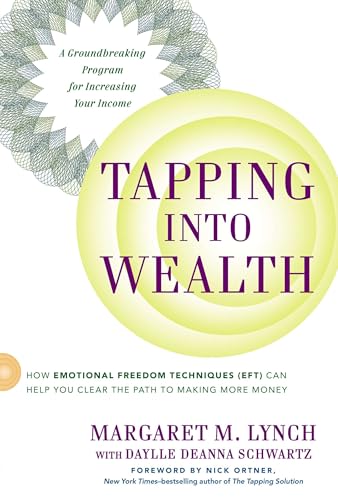
All Things EFT Tapping Manual: Emotional Freedom Technique: Cason, Tessa
It is <strong>a simple technique that involves making a statement while tapping different points along Traditional Chinese meridian pathways</strong>. EFT Tapping can eliminate, change, and heal: * Dy
Evidence & Sources
Promising research with growing clinical support from multiple studies
- NCCIH (National Center for Complementary and Integrative Health)
- American Psychological Association
- Journal of Nervous and Mental Disease
- Explore: The Journal of Science and Healing
- PLOS ONE
- Frontiers in Psychology
- Journal of Evidence-Based Integrative Medicine
- World Health Organization
This content is for informational purposes only and does not constitute medical advice. Always consult a qualified healthcare provider before starting, stopping, or changing any supplement or medication regimen.