

Clinical Ecology
Also known as: Environmental Medicine, Ecologic Medicine
Overview
Clinical Ecology is an environmental medicine approach that examines how foods, airborne substances, chemicals, molds, and other environmental exposures may influence health. The field developed around the idea that some people experience reproducible symptoms after contact with particular triggers, even when those exposures are tolerated by others. People commonly encounter this term while exploring multiple chemical sensitivity (MCS), indoor air quality concerns, mold-related illness, food reactions, chronic fatigue, headaches, brain fog, sinus symptoms, or other persistent complaints that seem difficult to explain through standard diagnostic categories.
In broad concept, Clinical Ecology proposes that health can be affected by the total burden of exposures across home, work, diet, and lifestyle. Practitioners in this tradition often emphasize detailed environmental histories, symptom patterns, and the possibility that repeated or cumulative exposure may contribute to chronic symptoms. Areas of interest may include volatile organic compounds, fragrances, pesticides, combustion byproducts, water-damaged buildings, allergens, and dietary triggers. This framework overlaps in part with environmental health, occupational medicine, allergy/immunology, toxicology, and integrative medicine, though its assumptions and methods are not uniformly accepted across these fields.
The topic remains controversial in conventional medicine. Some components of Clinical Ecology—such as the health impact of poor indoor air quality, occupational toxic exposures, asthma triggers, and allergic reactions—are well recognized. However, broader claims involving low-level chemical sensitivity or nonstandard diagnostic testing have been debated for decades. Research suggests that people reporting environmentally linked symptoms often experience a real and significant burden of illness, but the biological mechanisms may vary and are not always clearly established. Depending on the case, explanations considered in the literature may include allergy, irritant effects, toxic exposure, migraine biology, autonomic dysfunction, conditioned responses, stress physiology, mast cell-related processes, or other multisystem contributors.
Because Clinical Ecology sits at the intersection of environment, immunity, neurology, and chronic symptom syndromes, it attracts interest from people seeking a wider lens on unexplained illness. A balanced understanding distinguishes between recognized environmental hazards and hypotheses that remain under investigation. Consultation with qualified healthcare professionals—including environmental medicine, occupational health, allergy, pulmonology, or primary care clinicians, as appropriate—can help place symptoms and exposures into a broader medical context.
Medical Perspectives
Two Ways of Seeing Health

Western
scientific · clinical
Western medicine applies science, technology, and clinical experience to treat symptoms through testing, diagnosis, and targeted intervention.

Eastern
traditional · alternative
Eastern medicine focuses on treating the body naturally by applying traditional knowledge practiced for thousands of years, emphasizing balance and whole-person wellness.
Gold Bamboo presents both perspectives side-by-side so you can make informed decisions. We don't advocate for one over the other — your health choices are yours.
Western Medicine Perspective
Western Medicine Perspective
From a conventional medical standpoint, environmental exposures are an important part of health assessment, especially when symptoms involve the respiratory tract, skin, nervous system, or workplace/home exposures. Mainstream medicine clearly recognizes conditions such as allergic rhinitis, asthma, contact dermatitis, occupational lung disease, carbon monoxide exposure, heavy metal toxicity, pesticide poisoning, and illness related to damp or mold-contaminated buildings in certain contexts. Standard evaluation generally focuses on whether symptoms can be linked to established mechanisms such as allergy, irritation, inflammation, infection, toxicology, or organ-specific disease.
Western medicine is more cautious regarding the broader Clinical Ecology concept, particularly diagnoses such as multiple chemical sensitivity / idiopathic environmental intolerance. Major medical organizations have noted that people reporting these symptoms may be significantly impaired, yet evidence for a single, consistent toxicologic or immunologic mechanism has been limited. Studies indicate that symptom experiences can be multifactorial, with possible contributions from sensory reactivity, prior exposures, central nervous system processing, stress-related physiology, migraine pathways, and coexisting conditions. For this reason, conventional clinicians often emphasize careful differential diagnosis, validated testing when appropriate, and avoidance of unproven diagnostic methods.
In clinical practice, a western approach may include a detailed exposure history, review of timing and setting of symptoms, medication and occupational review, assessment of indoor environments, and targeted testing based on the suspected condition. Depending on the presentation, clinicians may consider allergy testing, pulmonary evaluation, dermatologic assessment, toxicology consultation, or industrial hygiene input. This perspective generally separates documented environmental disease from broader claims that remain insufficiently validated, while acknowledging that patients' symptoms are real and warrant thoughtful evaluation.
Eastern & Traditional Perspective
Eastern and Traditional Medicine Perspective
Traditional and integrative systems do not typically use the term Clinical Ecology, but many have long emphasized the relationship between the environment, diet, constitution, and symptom patterns. In Traditional Chinese Medicine (TCM), external influences such as Wind, Dampness, Heat, Cold, and toxicity are used as explanatory models for how surroundings may disturb the body's balance. Symptoms associated with moldy or damp environments, seasonal exposures, dietary reactions, or sensitivity to odors might be interpreted through patterns involving the Lung, Spleen, Liver, and defensive qi, rather than through a modern toxicologic framework.
In Ayurveda, health is understood in relation to constitution (prakriti), digestion/metabolism (agni), accumulated imbalance (ama), and responsiveness to climate, food, and sensory input. From this perspective, some individuals may be viewed as more vulnerable to environmental aggravation because of underlying imbalance or reduced resilience. Naturopathic traditions likewise place strong emphasis on the terrain of the individual, the impact of household and occupational exposures, food reactivity, and the value of reducing avoidable environmental burden where feasible.
These traditional perspectives tend to frame environmental sensitivity less as a single named disease and more as a sign of systemic imbalance, impaired adaptation, or heightened reactivity. Research on these frameworks in relation to chemical intolerance or environmentally linked chronic symptoms is still limited. As a result, much of the support for traditional approaches in this area remains historical, theoretical, or based on individualized clinical practice, rather than large modern trials. Integrative discussions often focus on complementing conventional environmental assessment rather than replacing it, particularly when serious exposure, asthma, infection, or toxicologic concerns are possible.
Supplements & Products
Recommended Products

Toxic, 2nd Edition: Heal Your Body from Mold Toxicity, Lyme Disease, Multiple Chemical Sensitivities, and Chronic Environmental Illness: Nathan, Neil
Neil Nathan <strong>delves deeper into the harmful impact of chronic inflammation in driving disease and presents the latest information that can help both doctors and patients achieve faster and more
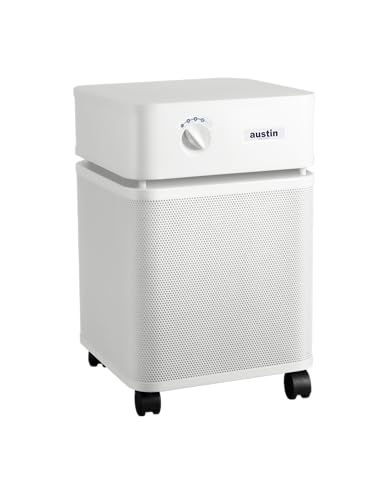
Austin Air HealthMate Standard Air Purifier, White - Advanced 4- Stage Filtration Air Purifiers For Home with Activated Carbon & Zeolite - Ideal as Air Purifiers for Bedroom, Model B400
Buy Austin Air HealthMate Standard Air Purifier, White - Advanced 4- Stage Filtration Air Purifiers For Home with Activated Carbon & Zeolite - Ideal as Air Purifiers for Bedroom, Model B400: HEPA

Airthings 2930 Wave Plus - Radon & Air Quality Monitor, Battery Powered (CO2, VOC, Humidity, Temp, Pressure): Amazon.com: Industrial & Scientific
Airthings Wave Plus measures radon ... products), humidity, temperature and air pressure sensors <strong>allow you to gain full visibility into six key indoor air factors</strong>...
Evidence & Sources
Early-stage research, mostly preclinical or preliminary human studies
- American Academy of Allergy, Asthma & Immunology (AAAAI)
- World Health Organization (WHO) indoor air quality guidance
- National Institute of Environmental Health Sciences (NIEHS)
- National Center for Complementary and Integrative Health (NCCIH)
- International Journal of Hygiene and Environmental Health
- Environmental Health Perspectives
- Archives of Environmental Health
- Cullen MR. Multiple chemical sensitivities and the occupational environment
This content is for informational purposes only and does not constitute medical advice. Always consult a qualified healthcare provider before starting, stopping, or changing any supplement or medication regimen.