

Biofeedback
Also known as: Biofeedback Therapy, Bio Feed Back, Biobiofeedback
Overview
Biofeedback is a mind-body modality that uses real-time information about physiological activity to help a person learn greater voluntary control over processes that are often considered automatic. Sensors may track measures such as heart rate, heart rate variability (HRV), muscle tension (EMG), skin temperature, respiration, sweat gland activity, or brain wave patterns (neurofeedback/EEG-based feedback). The feedback is then displayed through visual or auditory signals, allowing individuals to observe how stress, attention, breathing, posture, and mental state influence the body in the moment.
In clinical and wellness settings, biofeedback has been used in relation to stress-related symptoms, anxiety, tension headaches, migraine, pelvic floor dysfunction, urinary incontinence, and some forms of chronic pain. It is also studied in rehabilitation and performance settings, where the goal is often improved self-regulation rather than disease treatment alone. Its significance lies in bridging psychology and physiology: rather than acting directly through a drug or procedure, biofeedback aims to strengthen awareness and learned regulation of bodily responses.
A key feature of biofeedback is that it is generally considered a training-based approach. The process often involves repeated sessions in which patterns become more recognizable, and people may gradually develop skills in relaxation, breath pacing, attentional control, or muscle release. Research suggests outcomes can vary depending on the specific condition being addressed, the type of biofeedback used, the quality of practitioner guidance, and whether biofeedback is combined with behavioral therapies, physical therapy, or stress-management practices.
Biofeedback is often grouped with other mind-body medicine approaches because it emphasizes the interaction between the nervous system, emotional states, and physical function. While some applications are relatively well studied, others remain under active investigation. As with many integrative modalities, interpretation is strongest when the specific biofeedback method and clinical use are clearly defined, and it is generally appropriate for individuals to discuss its role with a qualified healthcare professional when used as part of broader care.
Medical Perspectives
Two Ways of Seeing Health

Western
scientific · clinical
Western medicine applies science, technology, and clinical experience to treat symptoms through testing, diagnosis, and targeted intervention.

Eastern
traditional · alternative
Eastern medicine focuses on treating the body naturally by applying traditional knowledge practiced for thousands of years, emphasizing balance and whole-person wellness.
Gold Bamboo presents both perspectives side-by-side so you can make informed decisions. We don't advocate for one over the other — your health choices are yours.
Western Medicine Perspective
Western Medicine Perspective
From a conventional medical perspective, biofeedback is understood as a form of behavioral and physiological self-regulation training. The underlying concept is that bodily processes influenced by the autonomic nervous system and somatic muscle activity can become more modifiable when they are measured and fed back in real time. In this model, symptom improvement may occur through mechanisms such as reduced sympathetic arousal, improved parasympathetic balance, decreased muscle overactivation, improved breathing patterns, and enhanced awareness of triggers linked to pain or stress responses.
Several forms of biofeedback are recognized in clinical research. EMG biofeedback has been studied for muscle tension and rehabilitation; thermal biofeedback and HRV biofeedback have been investigated in headache, stress, and autonomic regulation; and pelvic floor biofeedback is commonly discussed in urogynecology and gastroenterology contexts. Neurofeedback, which uses EEG signals, is also often discussed under the broader biofeedback umbrella, though its evidence base is more variable and debated across indications. Studies indicate stronger support for some uses than others, particularly when biofeedback is incorporated into structured multidisciplinary care.
In conventional practice, biofeedback is usually viewed as an adjunctive therapy rather than a standalone replacement for established medical evaluation. Clinical guidelines and reviews have reported meaningful evidence for certain headache disorders, some pelvic floor conditions, and stress-related symptom management, while evidence is more mixed for hypertension, generalized chronic pain syndromes, ADHD-related neurofeedback outcomes, and other complex conditions. Outcomes may depend heavily on patient engagement, therapist expertise, protocol consistency, and appropriate condition-specific selection.
Safety is generally favorable because biofeedback is noninvasive, but conventional medicine emphasizes the importance of proper assessment before attributing symptoms to stress or dysregulation alone. For example, chest symptoms, severe headaches, neurological symptoms, or marked blood pressure abnormalities would typically warrant medical evaluation. In this framework, biofeedback is best understood as a tool for improving self-regulation within an evidence-informed care plan tailored to the underlying condition.
Eastern & Traditional Perspective
Eastern/Traditional Medicine Perspective
In Traditional Chinese Medicine (TCM) and related East Asian health systems, biofeedback can be interpreted as a modern technological extension of longstanding practices aimed at cultivating awareness of the relationship between breath, mind, and bodily function. Although traditional systems did not use electronic sensors, they have long emphasized training attention to internal states through methods such as qigong, meditative breathing, and posture-based regulation. From this perspective, biofeedback may support a person's ability to perceive patterns associated with tension, agitation, depletion, or imbalance, making subtle internal changes more observable.
A TCM-oriented interpretation may relate biofeedback training to regulation of qi flow, calming of the Shen (spirit/mind), and harmonization of organ systems involved in stress responses, especially the Heart, Liver, and Kidney functional networks. For instance, patterns associated with irritability, muscle tightness, shallow breathing, or palpitations might traditionally be understood through concepts such as Liver qi constraint or Heart Shen disturbance. Biofeedback does not originate from TCM theory, but it can be seen as compatible with the traditional goal of restoring smoother internal regulation and improving resilience.
In Ayurveda, a similar parallel may be drawn with practices that strengthen self-awareness and autonomic balance through pranayama, meditation, and regulation of lifestyle rhythms. Biofeedback may be framed as a tool that helps individuals observe manifestations of dysregulation that traditional practitioners might describe in terms of disturbed vata, excess reactivity, or impaired mind-body coordination. Naturopathic and integrative practitioners often place biofeedback alongside relaxation training, mindfulness, and breathwork as a means of enhancing the body's self-regulatory capacity.
Traditional systems generally view healing as involving the whole person rather than isolated symptom control. In that sense, biofeedback may be appreciated less as a device-based intervention and more as a method of cultivating awareness, regulation, and mind-body coherence. Even so, traditional interpretations vary by practitioner and lineage, and when biofeedback is used in integrative settings, it is commonly considered alongside conventional diagnosis rather than as a substitute for appropriate medical assessment.
Supplements & Products
Recommended Products
Biofeedback: A Practitioner's Guide eBook : Schwartz PhD, Mark S., Andrasik PhD, Frank: Kindle Store
Past president of the Association for Applied Psychophysiology and Biofeedback (AAPB), Dr. Schwartz is board certified by the BCIA, a Diplomate in Clinical Sexology of the American Board of Sexology,
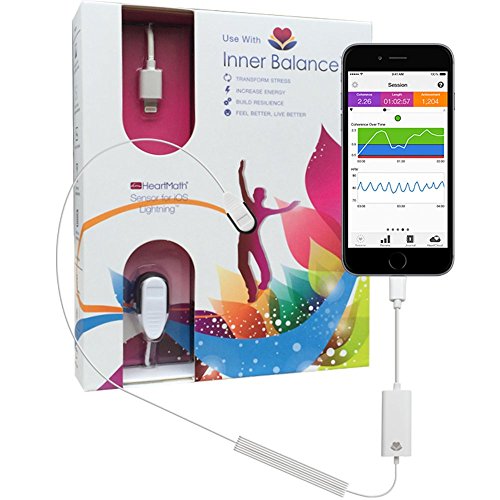
HeartMath Inner Balance Lightning
Research shows that when we are ... improved cognitive function. Inner Balance <strong>uses HeartMath's patented technology to monitor the subtle beat-to-beat changes in your heart rhythms</stron

RESPeRATE Ultra Blood Pressure Lowering Device - Doctor Recommended Non-Drug Medical Device - Clinically Proven to Lower Blood Pressure Naturally - Just 15 Minutes a Day
Clinical studies have shown that RESPeRATE delivers significant blood pressure reductions when it is used for 15 minutes at a time, at least four times per week, to attain 40 or more minutes per week
Evidence & Sources
Promising research with growing clinical support from multiple studies
- National Center for Complementary and Integrative Health (NCCIH)
- Association for Applied Psychophysiology and Biofeedback
- Applied Psychophysiology and Biofeedback
- Behavior Research and Therapy
- Headache
- Journal of Urology
- International Urogynecology Journal
- Journal of Neurotherapy
- Mayo Clinic Proceedings
- World Health Organization (WHO)
This content is for informational purposes only and does not constitute medical advice. Always consult a qualified healthcare provider before starting, stopping, or changing any supplement or medication regimen.