

Whole30
Also known as: Whole 30, 30-Day Diet
Overview
Whole30 is a short-term, 30-day elimination-style eating program centered on whole, minimally processed foods. It typically emphasizes vegetables, fruits, eggs, meat, seafood, and certain fats, while excluding added sugar, alcohol, grains, legumes, dairy, and many processed foods for the duration of the program. After the 30-day period, foods are generally reintroduced in stages to observe how they may affect digestion, energy, mood, sleep, or other subjective symptoms. The program is widely discussed in popular nutrition culture as a way to “reset” eating habits, though that language is more cultural than medical.
From a public health standpoint, Whole30 sits at the intersection of elimination diets, behavior change, and dietary quality improvement. Many people are drawn to it because it creates a clear structure and temporarily removes foods often associated with excess calories, highly processed ingredients, or habitual eating patterns. Research on elimination diets suggests that, in some contexts, carefully removing and reintroducing foods may help identify individual food sensitivities or symptom triggers, especially for certain gastrointestinal or inflammatory complaints. At the same time, Whole30 itself has not been extensively studied as a distinct clinical intervention.
Nutritionally, the program may increase intake of whole foods and home-prepared meals, which can improve overall diet quality for some individuals. However, the exclusions are broad. Removing entire food groups such as grains, legumes, and dairy may reduce intake of fiber, calcium, vitamin D, and other nutrients depending on how the diet is implemented. For some people, the strict rules may also create psychological stress around eating or reinforce all-or-nothing food beliefs. Because of this, clinicians and dietitians often view Whole30 less as a universally beneficial plan and more as a structured experiment whose effects depend heavily on a person’s health status, nutritional needs, and relationship with food.
Whole30 is best understood as a popular elimination framework rather than a medically standardized therapy. Some individuals report benefits such as improved awareness of eating habits, reduced consumption of ultra-processed foods, or clearer identification of symptom-associated foods after reintroduction. Others may find it unnecessarily restrictive or difficult to sustain. In balanced health discussions, its value is generally framed in terms of short-term self-observation and dietary simplification, with the important caveat that persistent symptoms, unintended weight changes, fatigue, digestive complaints, or suspected allergies warrant evaluation by a qualified healthcare professional rather than self-experimentation alone.
Medical Perspectives
Two Ways of Seeing Health

Western
scientific · clinical
Western medicine applies science, technology, and clinical experience to treat symptoms through testing, diagnosis, and targeted intervention.

Eastern
traditional · alternative
Eastern medicine focuses on treating the body naturally by applying traditional knowledge practiced for thousands of years, emphasizing balance and whole-person wellness.
Gold Bamboo presents both perspectives side-by-side so you can make informed decisions. We don't advocate for one over the other — your health choices are yours.
Western Medicine Perspective
Western Medicine Perspective
In conventional nutrition and medical practice, Whole30 would generally be classified as a short-term elimination diet with a strong behavioral component. Western medicine does recognize elimination-and-reintroduction methods in specific settings, particularly when evaluating suspected food-related symptoms such as some gastrointestinal complaints, migraine triggers, or certain intolerances. However, these protocols are usually more targeted and supervised than broad lifestyle programs. Whole30’s rationale overlaps with these ideas, but it is not considered a standard medical treatment for disease.
From a nutritional science perspective, Whole30 may produce benefits for some people largely by reducing ultra-processed foods, added sugars, and alcohol, all of which are associated with poorer health outcomes when consumed in excess. Studies of dietary patterns rich in minimally processed foods suggest potential improvements in weight management, metabolic markers, and satiety. That said, these benefits are not unique to Whole30 and may also be achieved through less restrictive dietary approaches. Concerns from dietitians often focus on the temporary exclusion of legumes, whole grains, and dairy, foods that are supported in many evidence-based dietary patterns and linked with beneficial nutrient intake and cardiometabolic health.
Clinically, western practitioners may also consider whether a restrictive program is appropriate for the individual. People with diabetes, kidney disease, gastrointestinal disease, a history of eating disorders, pregnancy, adolescence, or high athletic energy demands may require careful nutritional assessment before undertaking broad elimination diets. There is also a distinction between food intolerance, food sensitivity, and food allergy: true food allergy requires formal medical evaluation, and symptom patterns are not reliably diagnosed through self-observation alone. In this framework, Whole30 is viewed as a potentially informative but limited dietary experiment, with interpretation best grounded in nutritional adequacy and medical context.
Eastern & Traditional Perspective
Eastern/Traditional Medicine Perspective
In Traditional Chinese Medicine (TCM), a program like Whole30 may be interpreted less through macronutrients or food groups and more through the effects of foods on digestive strength, internal dampness, inflammation-like heat patterns, and overall balance. The emphasis on simple, home-cooked, less processed foods aligns with traditional principles that support the Spleen and Stomach system, which in TCM governs digestion and transformation of food into usable energy. Temporarily reducing heavy, greasy, overly sweet, or alcohol-containing foods may be seen as a way of decreasing burdens that contribute to sluggish digestion, damp accumulation, or feelings of heaviness.
At the same time, TCM does not typically apply one rigid food system to every person. Traditional practice is highly individualized: foods are considered according to constitution, climate, season, and symptom pattern. For example, strict avoidance of certain foods may not be considered ideal for someone with deficiency, dryness, or recovery from illness if the diet becomes overly austere. From this perspective, the concept of a short-term “reset” may resonate, but the exact exclusions of Whole30 are not classic TCM doctrine.
In Ayurveda, Whole30 may partly overlap with the idea of simplifying the diet to support agni (digestive fire) and reduce excess burden from highly processed or heavy foods. Many traditional systems value mindful eating, regular meal rhythms, and reducing reliance on refined sugar and alcohol. However, Ayurveda also places strong emphasis on tailoring foods to dosha balance, digestive capacity, and individual constitution, so a single elimination framework would not automatically be seen as universally appropriate. Some foods restricted by Whole30, such as properly prepared legumes or cultured dairy, may be viewed differently in traditional systems depending on the individual and preparation method.
In naturopathic and integrative settings, Whole30-like approaches may be discussed as a structured way to observe food-symptom relationships and encourage cleaner eating patterns. Even in these contexts, practitioners often emphasize that restrictive diets are tools with limits, not universal solutions. Traditional systems generally place equal importance on broader lifestyle factors such as sleep, stress regulation, movement, meal timing, and digestion-supportive routines, rather than viewing food elimination alone as the central answer.
Supplements & Products
Recommended Products

The Whole30: The 30-Day Guide to Total Health and Food Freedom: Urban, Melissa, Hartwig, Dallas
The Whole30: The 30-Day Guide to Total Health and Food Freedom [Urban, Melissa, Hartwig, Dallas] on Amazon.com. *FREE* shipping on qualifying offers. The Whole30: The 30-Day Guide to Total Health and

OXO Good Grips 3-Blade Tabletop Spiralizer with StrongHold Suction
<strong>Rotating handle turns fruits and vegetables to spiralize</strong>. Side handle advances fruits and vegetables through blades and folds up for compact storage · Stronghold suction cup for non-s
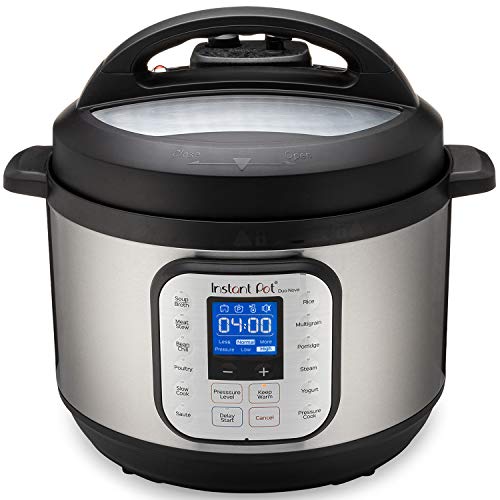
Instant Pot Duo 7-in-1 Electric Pressure Cooker, Slow Cooker, Rice, Steamer, Sauté, Yogurt Maker, Warmer & Sterilizer, Includes App With Over 800 Recipes, Stainless Steel, 6 Quart
<strong>Instant Pot 6QT RIO 7-in-1 Multi-Cooker, Pressure Cooker, Slow cook, Sauté, Steam, Rice Maker, Yogurt, & Warmer, Black, 6 Quarts</strong> · Instant Pot, 8-Quart Whisper Quiet 9-in-1 Electr
Evidence & Sources
Early-stage research, mostly preclinical or preliminary human studies
- National Center for Complementary and Integrative Health (NCCIH)
- National Institute of Diabetes and Digestive and Kidney Diseases (NIDDK)
- Academy of Nutrition and Dietetics
- The BMJ
- JAMA
- New England Journal of Medicine
- Nutrients
- World Health Organization (WHO)
This content is for informational purposes only and does not constitute medical advice. Always consult a qualified healthcare provider before starting, stopping, or changing any supplement or medication regimen.