

Weston A. Price Diet
Also known as: Weston Price diet, WAPF diet, Traditional foods diet, Weston A Price eating
Overview
The Weston A. Price Diet is a traditional-foods eating pattern inspired by the observations of dentist Weston A. Price, who documented the diets of diverse nonindustrialized populations in the early 20th century. In modern use, the approach emphasizes nutrient-dense whole foods, particularly organ meats, eggs, seafood, bone broth, fermented foods, animal fats, raw or minimally processed dairy, and traditionally prepared grains and legumes. It is often discussed in the context of ancestral nutrition, fertility, tooth and bone health, and the idea that industrialized diets may displace mineral- and fat-soluble vitamin-rich foods.
A central theme of the diet is food preparation and nutrient availability. Supporters often highlight practices such as soaking, sprouting, fermenting, and slow-cooking to improve digestibility and reduce naturally occurring compounds like phytates in grains and legumes. The pattern also tends to limit or avoid ultra-processed foods, refined sugar, industrial seed oils, and highly refined flours. As a result, many people encounter this diet while searching for a more traditional alternative to modern convenience eating.
From a nutritional standpoint, the Weston A. Price framework overlaps with several broader dietary principles that have stronger evidence bases: eating minimally processed foods, including fermented foods, obtaining adequate protein and micronutrients, and reducing reliance on refined products. At the same time, some hallmark features—especially raw dairy and a heavy emphasis on animal fats—remain debated in conventional nutrition because they raise important questions about food safety, saturated fat intake, and long-term cardiovascular effects.
Interest in the diet also reflects broader cultural concerns about soil depletion, food quality, fertility, and mineral intake. While the diet is widely discussed in wellness communities, the specific diet as a named system has not been studied as extensively as Mediterranean, DASH, or plant-forward dietary patterns. For that reason, many of its claims are best understood by separating historical observation and traditional practice from modern clinical evidence, and by interpreting it within an individual’s health context in consultation with qualified healthcare professionals.
Medical Perspectives
Two Ways of Seeing Health

Western
scientific · clinical
Western medicine applies science, technology, and clinical experience to treat symptoms through testing, diagnosis, and targeted intervention.

Eastern
traditional · alternative
Eastern medicine focuses on treating the body naturally by applying traditional knowledge practiced for thousands of years, emphasizing balance and whole-person wellness.
Gold Bamboo presents both perspectives side-by-side so you can make informed decisions. We don't advocate for one over the other — your health choices are yours.
Western Medicine Perspective
Western Medicine Perspective
In conventional medicine, the Weston A. Price Diet is not recognized as a standardized clinical diet, but many of its components can be evaluated through established nutrition science. Research consistently supports dietary patterns centered on whole foods, adequate protein, high-quality micronutrient intake, and lower consumption of ultra-processed foods. Fermented foods have been associated in some studies with beneficial effects on the gut microbiome, and properly prepared legumes and whole grains are generally viewed as nutritious foods that can contribute fiber, minerals, and metabolic benefits.
Potential strengths of the pattern include its focus on nutrient density, especially nutrients such as vitamin A, vitamin B12, choline, iron, zinc, calcium, and omega-3 fats, depending on food selection. This may be relevant for populations concerned about fertility, pregnancy nutrition, bone health, or recovery from highly processed diets. However, western clinicians would also note that nutritional adequacy depends heavily on implementation. A traditional-food pattern can be nutrient-rich, but it can also become imbalanced if it is overly restrictive, low in fiber-rich plant foods, or heavily reliant on high-saturated-fat animal products.
Several concerns commonly arise in conventional review of this diet. Raw milk and raw dairy products are associated with a documented risk of foodborne illness according to public health agencies including the CDC, FDA, and major medical organizations. In addition, the diet’s favorable view of butter, cream, lard, and other animal fats may conflict with conventional cardiometabolic guidance, which has generally encouraged replacing a portion of saturated fat with unsaturated fats, especially for people with elevated cardiovascular risk. Claims linking the diet broadly to improved dental health, fertility, or chronic disease prevention are plausible in part when they reflect improved overall diet quality, but they are not strongly validated in direct randomized trials of the named diet itself.
Overall, western medicine tends to view the Weston A. Price Diet as a mixed profile: potentially beneficial where it increases whole-food intake and micronutrient density, but requiring careful attention to food safety, lipid profile implications, and evidence limits. Healthcare providers may also distinguish between traditional culinary techniques that are nutritionally sensible and broader historical claims that remain difficult to confirm by modern research methods.
Eastern & Traditional Perspective
Eastern/Traditional Medicine Perspective
From an Eastern and traditional medicine standpoint, the Weston A. Price Diet aligns in several ways with long-standing principles that value seasonal eating, slow preparation, digestion support, and the restorative quality of traditional foods. In Traditional Chinese Medicine (TCM), foods such as bone broth, slow-cooked soups, egg yolks, liver, and fermented vegetables may be understood as nourishing to Qi, Blood, Jing, and Essence, especially when the body is seen as depleted by chronic stress, poor digestion, or long-term consumption of overly processed foods. Warm, cooked, mineral-rich foods are often viewed as easier to assimilate than cold, highly refined, or artificial foods.
In Ayurveda, there is a parallel emphasis on digestive strength (agni), food quality, and preparation methods. Fermentation, cultured dairy in some forms, ghee, broths, and properly prepared grains and legumes can be interpreted as examples of foods that may support nourishment when matched appropriately to constitution, season, and digestive capacity. Traditional systems generally place as much emphasis on how food is prepared and tolerated as on the food itself, which resonates strongly with the Weston A. Price approach to soaking, fermenting, sprouting, and slow cooking.
That said, traditional systems do not necessarily endorse every modern interpretation of the diet uniformly. In TCM and Ayurveda, rich foods, heavy dairy, and large amounts of animal fat may be seen as beneficial in some constitutions or deficiency states but less suitable in others, particularly where there are patterns analogous to dampness, stagnation, sluggish digestion, excess heat, or ama. This creates a more individualized framework than the broad adoption of a single dietary template.
Naturopathic and ancestral-health traditions often share the diet’s focus on food quality, mineral density, organ meats, and traditional fats, but they also tend to acknowledge that modern evidence for the complete dietary system remains limited. In these traditions, the diet is often framed less as a universal prescription and more as a return to heritage foodways and preparation methods that may support resilience, nourishment, and digestive function when adapted thoughtfully and discussed with knowledgeable practitioners.
Supplements & Products
Recommended Products
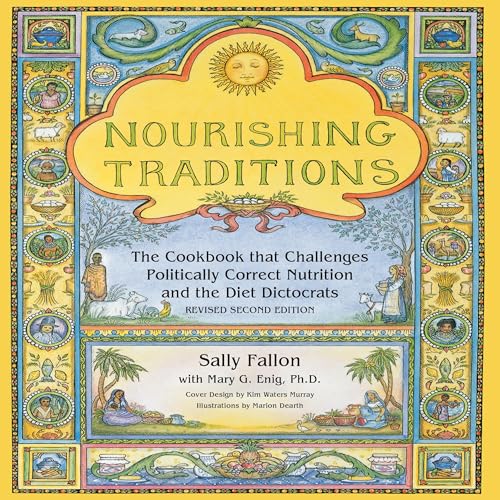
Nourishing Traditions: The Cookbook That Challenges Politically Correct Nutrition and the Diet Dictocrats: Fallon, Sally, Enig, Mary
As author of the best-selling nutritional cookbook Nourishing Traditions, Sally Fallon Morell is the <strong>leading spokesperson for a return to nutrient-dense diets including raw milk, animal fats,

Rosita Extra Virgin Cod Liver Oil Softgels
Rosita Extra Virgin Cod Liver Oil Softgels, 90 count

Masontops Complete Mason Jar Fermentation Kit - Pickle Kit, Sauerkraut Making Kit Kimchi Container - Fermentation Airlock Lids Wide Mouth Mason Jars
Your fermentation kit includes <strong>4 Pickle Pipe waterless airlock tops, 4 Pickle Pebble Easy Grip Glass Weights, 1 Pickle Packer Vegetable Tamper and a Bonus printed Recipe Book</strong> with com
Evidence & Sources
Promising research with growing clinical support from multiple studies
- NCCIH (National Center for Complementary and Integrative Health)
- National Institutes of Health Office of Dietary Supplements
- Centers for Disease Control and Prevention (CDC)
- U.S. Food and Drug Administration (FDA)
- World Health Organization (WHO)
- American Heart Association
- The BMJ
- The New England Journal of Medicine
- Cell
- Weston A. Price, Nutrition and Physical Degeneration
This content is for informational purposes only and does not constitute medical advice. Always consult a qualified healthcare provider before starting, stopping, or changing any supplement or medication regimen.