

Volumetrics Diet
Also known as: Volumetric diet, Low calorie density diet, Volumetrics eating plan
Overview
The Volumetrics Diet is a dietary pattern built around the concept of energy density—the number of calories in a given weight or volume of food. Popularized by nutrition researcher Barbara Rolls, the approach emphasizes foods that provide more bulk and water for fewer calories, such as vegetables, fruits, broth-based soups, legumes, and many minimally processed whole foods. The central idea is that people often eat a relatively consistent volume of food, so choosing lower-calorie-density options may support fullness while reducing overall calorie intake.
This approach is commonly discussed in the context of weight management, appetite control, and satiety. Rather than framing eating primarily around restriction, Volumetrics focuses on substitution and food composition—for example, increasing intake of high-fiber, high-water foods while reducing portions of foods that are more calorie dense, such as fried foods, sweets, and heavily processed snack products. Because it does not eliminate major food groups, it is often considered more flexible than highly restrictive diets.
From a public health perspective, the principles of Volumetrics overlap with broader nutrition guidance that encourages vegetables, fruits, whole grains, legumes, and lean protein sources. Research on satiety suggests that fiber content, water content, food texture, and protein intake all influence fullness and subsequent food intake. In this sense, Volumetrics is less a rigid branded plan and more a structured application of well-established nutritional principles related to hunger regulation and calorie balance.
Interest in the Volumetrics Diet also reflects a larger shift in nutrition science toward understanding eating behavior, not just nutrients in isolation. People often search for this approach because it appears to offer a way to feel satisfied on fewer calories, which may be relevant for long-term adherence. Still, individual responses vary, and factors such as metabolic health, medication use, cultural eating patterns, and gastrointestinal tolerance can shape how well this style of eating fits a person’s needs. As with any dietary strategy, questions about suitability are best discussed with a qualified healthcare professional, especially for those with chronic health conditions or a history of disordered eating.
Medical Perspectives
Two Ways of Seeing Health

Western
scientific · clinical
Western medicine applies science, technology, and clinical experience to treat symptoms through testing, diagnosis, and targeted intervention.

Eastern
traditional · alternative
Eastern medicine focuses on treating the body naturally by applying traditional knowledge practiced for thousands of years, emphasizing balance and whole-person wellness.
Gold Bamboo presents both perspectives side-by-side so you can make informed decisions. We don't advocate for one over the other — your health choices are yours.
Western Medicine Perspective
Western Medicine Perspective
In conventional nutrition science, the Volumetrics Diet is understood through the lens of energy density, satiety, and behavioral nutrition. Studies led by Barbara Rolls and others have found that reducing the energy density of meals—often by increasing foods rich in water and fiber—can lower total calorie intake while maintaining meal size. Broth-based soups, salads, vegetables, fruits, and other lower-calorie-density foods may increase fullness signals and reduce the likelihood of overeating later in the day. This makes Volumetrics particularly relevant in discussions of obesity management and appetite regulation.
Western medicine generally evaluates this approach based on measurable outcomes such as body weight, waist circumference, cardiometabolic markers, dietary quality, and adherence over time. Research suggests that diets emphasizing low-energy-density foods can support modest weight loss and may improve overall dietary quality by increasing intake of micronutrient-rich plant foods. Its principles also align with recommendations from organizations such as the CDC, USDA, and NIH, which highlight nutrient-dense, high-fiber foods for healthy weight management.
That said, conventional medicine also recognizes limitations. Satiety is influenced by more than food volume alone; protein intake, meal timing, sleep, stress, medications, and highly palatable processed foods all affect hunger and eating behavior. Some calorie-dense foods—such as nuts, seeds, olive oil, and avocado—can still play an important role in cardiometabolic health despite being less central in a strict low-energy-density framework. Clinicians may therefore view Volumetrics as a useful strategy within a broader dietary pattern, rather than a complete nutritional philosophy on its own.
In evidence-based practice, this diet is generally seen as plausible, practical, and compatible with mainstream weight-management principles, though not uniquely superior for every individual. Long-term success tends to depend on sustainability, food access, cultural fit, and overall dietary adequacy. People with digestive disorders, increased calorie needs, or complex medical conditions may require individualized guidance from a registered dietitian or other licensed clinician.
Eastern & Traditional Perspective
Eastern/Traditional Medicine Perspective
Traditional systems of medicine do not generally describe food in terms of calorie density, but many contain parallel ideas about satiety, digestive balance, food quality, and the effects of preparation and moisture content. In Traditional Chinese Medicine (TCM), foods are often categorized by properties such as thermal nature, flavor, and their effects on organ systems such as the Spleen and Stomach, which are seen as central to digestion and transformation of food into usable energy. From this perspective, a diet emphasizing lightly cooked vegetables, soups, legumes, and whole grains may be viewed as supportive of digestive harmony for some individuals, especially when meals are regular and not overly greasy or heavy.
At the same time, TCM does not automatically favor large amounts of raw produce for everyone. Practitioners may note that people with signs associated with digestive weakness, coldness, bloating, or loose stools may tolerate cooked foods and warm soups better than cold salads or large quantities of raw fruit. In that sense, a Volumetrics-style pattern might be adapted within TCM principles by favoring warming, cooked, water-rich meals rather than focusing solely on low-calorie foods. The concept of fullness is understood not just mechanically, but in relation to how well the body processes and assimilates food.
In Ayurveda, dietary evaluation centers on agni (digestive fire), individual constitution (dosha), season, and the qualities of foods such as heavy/light, dry/moist, and heating/cooling. Many foods commonly emphasized in Volumetrics—vegetables, legumes, fruits, and soups—can fit well within Ayurvedic eating patterns, particularly when prepared in ways that support digestion. However, Ayurveda typically places strong emphasis on digestibility, meal rhythm, and individual constitution, rather than pursuing satiety through volume alone.
Naturopathic and traditional whole-food approaches often overlap more directly with Volumetrics by valuing fiber-rich, minimally processed foods and emphasizing eating patterns that support stable appetite and metabolic health. Even so, traditional frameworks usually prioritize individualization. Across these systems, the broadest point of agreement is that foods with high water content, plant diversity, and lower levels of processing may support health for many people, though the ideal balance of raw versus cooked foods, grains versus legumes, and meal size may differ by constitution, symptoms, and context. Consultation with a qualified healthcare practitioner is appropriate when integrating traditional dietary frameworks with medical or metabolic concerns.
Supplements & Products
Recommended Products
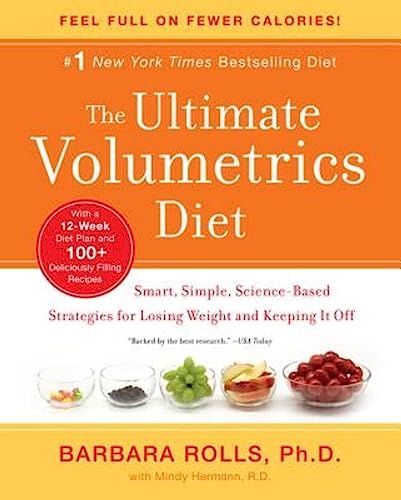
The Ultimate Volumetrics Diet: Smart, Simple, Science-Based Strategies for Losing Weight and Keeping It Off – A Cookbook and Twelve-Week Program with 105 Recipes: Rolls PhD, Barbara, Hermann, Mindy
The founder of the #1 New York Times bestselling Volumetrics diet combines new findings, user-friendly tools, and dozens of fabulous and filling recipes to help you lose weight without feeling hungry

NOW Foods Supplements, Glucomannan (Amorphophallus konjac) 575 mg, Supports Regularity*, Healthy Weight Management*, 180 Veg Capsules
575 mg - from Konjac Root <strong>Supports Healthy Cholesterol Levels Already within Healthy Range* Supports Regularity* Glucomannan is a soluble, bulk-forming fiber derived from the konjac root (Amor
Instant Pot Duo 7-in-1 Electric Pressure Cooker, Slow Cooker, Rice, Steamer, Sauté, Yogurt Maker, Warmer & Sterilizer, Includes App With Over 800 Recipes, Stainless Steel, 6 Quart
<strong>Instant Pot 6QT RIO 7-in-1 Multi-Cooker, Pressure Cooker, Slow cook, Sauté, Steam, Rice Maker, Yogurt, & Warmer, Black, 6 Quarts</strong> · Instant Pot, 8-Quart Whisper Quiet 9-in-1 Electr
Evidence & Sources
Promising research with growing clinical support from multiple studies
- Rolls BJ. energy density and satiety research, American Journal of Clinical Nutrition
- Rolls BJ et al. studies on low-energy-density diets and weight management, Obesity
- Centers for Disease Control and Prevention (CDC) — Healthy Weight, Eating Well
- National Institutes of Health (NIH) — Weight Management and Nutrition Resources
- Academy of Nutrition and Dietetics — Adult Weight Management Evidence Analysis
- U.S. Department of Agriculture (USDA) Dietary Guidelines for Americans
- National Institute of Diabetes and Digestive and Kidney Diseases (NIDDK) — Body Weight and Energy Balance
This content is for informational purposes only and does not constitute medical advice. Always consult a qualified healthcare provider before starting, stopping, or changing any supplement or medication regimen.