

Paleo Diet
Also known as: Caveman Diet, Stone Age Diet
Overview
The Paleo diet is a dietary pattern modeled on the idea of eating in a way that resembles the presumed food intake of pre-agricultural humans. In modern practice, it typically emphasizes whole, minimally processed foods such as vegetables, fruits, nuts, seeds, eggs, fish, and meats, while excluding or sharply limiting grains, legumes, dairy, refined sugar, and many ultra-processed foods. Its popularity stems from the broader belief that contemporary chronic disease may be linked, in part, to a mismatch between modern eating patterns and human evolutionary biology.
From a public health perspective, the Paleo diet sits at the intersection of several important nutrition debates: the role of food processing, the health effects of refined carbohydrates and added sugars, the value of dietary fiber and plant diversity, and the question of whether excluding entire food groups is beneficial or unnecessarily restrictive. Research suggests that Paleo-style diets may improve some short-term markers such as body weight, waist circumference, blood pressure, and blood sugar control in certain populations, particularly when they replace highly processed dietary patterns. At the same time, questions remain about long-term sustainability, nutritional adequacy, cost, environmental impact, and whether benefits arise from the specific “ancestral” framework or simply from eating fewer processed foods.
The term itself can be misleading, because there was no single prehistoric human diet; ancestral eating patterns varied widely by geography, season, climate, and food availability. As a result, the modern Paleo diet is better understood as a contemporary dietary philosophy rather than a historically precise reconstruction. Different versions may include different proportions of animal foods and plant foods, and some allow limited non-Paleo foods. This variation makes research interpretation more complex.
Nutritionally, a well-planned Paleo diet can be rich in protein, unsaturated fats, potassium, magnesium, and phytonutrients from vegetables and fruits. However, depending on food choices, it may also be low in calcium, vitamin D, certain B vitamins, and fermentable fibers that are commonly obtained from dairy, legumes, and whole grains. For this reason, healthcare professionals often view the Paleo diet less as a single standardized intervention and more as a dietary pattern with potential strengths and limitations that depend heavily on its implementation and on the individual’s health status, cultural context, and nutritional needs.
Medical Perspectives
Two Ways of Seeing Health

Western
scientific · clinical
Western medicine applies science, technology, and clinical experience to treat symptoms through testing, diagnosis, and targeted intervention.

Eastern
traditional · alternative
Eastern medicine focuses on treating the body naturally by applying traditional knowledge practiced for thousands of years, emphasizing balance and whole-person wellness.
Gold Bamboo presents both perspectives side-by-side so you can make informed decisions. We don't advocate for one over the other — your health choices are yours.
Western Medicine Perspective
Western / Conventional Medicine Perspective
In conventional nutrition science, the Paleo diet is usually evaluated not by its evolutionary narrative alone, but by its effects on measurable outcomes such as cardiometabolic risk factors, weight change, insulin sensitivity, lipid levels, satiety, and dietary quality. Studies indicate that Paleo-style eating patterns may produce short-term improvements in body composition and metabolic markers, especially when they replace diets high in ultra-processed foods, refined grains, and added sugars. Some clinical trials have reported improvements in glucose tolerance, triglycerides, blood pressure, and abdominal obesity. These effects may be partly explained by higher intake of whole foods, lower energy density, increased protein, and reduced consumption of refined carbohydrates.
At the same time, conventional medicine raises several important concerns. Major nutrition organizations generally do not consider the exclusion of whole grains, legumes, and dairy necessary for most people, because these foods are associated in many studies with beneficial health outcomes. Whole grains and legumes are linked with improved cardiovascular and metabolic health, and dairy can be a significant source of calcium and protein for many populations. Researchers also note that some Paleo diet versions are high in saturated fat depending on the balance of meats and fats chosen, and that long-term data are limited. In addition, restrictive dietary patterns can be difficult to maintain and may affect social eating, food access, and dietary diversity.
From a clinical standpoint, practitioners may view Paleo diets as potentially useful in some contexts as a framework for reducing processed food intake, while also recognizing the need to monitor nutrient adequacy and individual tolerance. Current evidence is best described as promising but mixed, with stronger support for short-term improvements in certain metabolic markers than for broad claims about long-term disease prevention. Conventional medicine generally emphasizes that overall dietary quality, nutrient sufficiency, and long-term adherence matter more than whether a diet aligns with an ancestral label.
Eastern & Traditional Perspective
Eastern / Traditional Medicine Perspective
Traditional systems of medicine generally do not classify diets according to prehistoric anthropology, but many of them share the Paleo diet’s emphasis on whole, natural, minimally processed foods. In Traditional Chinese Medicine (TCM), food is understood in terms of energetic qualities, flavor, thermal nature, and its effects on functional patterns in the body. From that perspective, a Paleo-style diet may be seen as beneficial when it reduces excessive intake of greasy, overly sweet, damp-forming, or heavily processed foods. However, TCM would not typically endorse a single universal diet for everyone. The suitability of a grain-free or dairy-free pattern would be interpreted through the individual’s constitution and pattern presentation, such as tendencies toward deficiency, dampness, heat, or digestive weakness.
Similarly, Ayurveda emphasizes digestion, constitution (dosha), season, age, and food preparation rather than one fixed dietary template. A Paleo approach rich in fresh vegetables, clean proteins, nuts, and fruits may align with Ayurvedic principles of eating less processed food, yet the exclusion of legumes, cultured dairy, or cooked grains would not automatically be considered ideal. In Ayurveda, foods are often evaluated for their digestibility, grounding quality, and effect on balance; for some individuals, warm cooked grains or legumes may be viewed as supportive, especially when digestion is delicate or when nourishment and stability are needed.
In naturopathic and integrative traditions, Paleo is sometimes interpreted as an elimination-oriented, whole-food pattern that may help reduce exposure to additives, excess sugar, and highly processed ingredients. Some practitioners discuss its possible relevance for inflammation, blood sugar regulation, or food sensitivity exploration, though research remains incomplete and these applications are not universally accepted. Across traditional systems, the common theme is that food quality and individualization matter greatly. Rather than validating Paleo as inherently superior, Eastern and traditional frameworks generally place more emphasis on context, constitution, digestion, and balance than on strict adherence to a historically framed food list.
Supplements & Products
Recommended Products

The Paleo Diet Revised: Lose Weight and Get Healthy by Eating the Foods You Were Designed to Eat: Cordain, Loren
Incorporating all the latest ... The Paleo Diet includes <strong>six weeks of meal plans to get you started on the Paleo path to weight loss, weight control, increased energy, and lifelong health</str
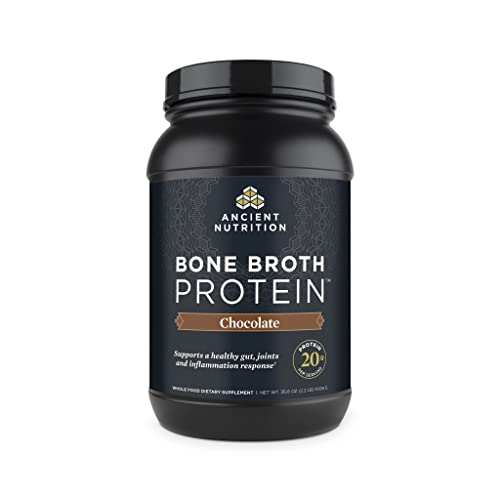
Ancient Nutrition Grass Fed & Cage Free Bone Broth Protein Powder, 20g Protein Per Serving, Hydrolyzed Collagen Peptides, Glucosamine, Chondroitin, Supports Joint & Gut Health, Pure, 20 Servings
Powerful Bone Broth Nutrition: <strong>Delivers 20g of protein per serving with hydrolyzed collagen types I, II & III, glucosamine, chondroitin, hyaluronic acid, and 18 amino acids to support over

Paderno World Cuisine 3-Blade Vegetable Slicer / Spiralizer, Counter-Mounted and includes 3 Stainless Steel Blades
Made by Paderno World Cuisine, a leader in healthy cuisine since 1925. Recognized for its stability, consistently producing long, even noodles and ribbons. ... Brieftons 5-Blade Vegetable Spiralizer:
Evidence & Sources
Promising research with growing clinical support from multiple studies
- American Heart Association
- Academy of Nutrition and Dietetics
- National Center for Complementary and Integrative Health (NCCIH)
- European Journal of Clinical Nutrition
- The American Journal of Clinical Nutrition
- Nutrition Reviews
- Diabetologia
- Mayo Clinic Proceedings
This content is for informational purposes only and does not constitute medical advice. Always consult a qualified healthcare provider before starting, stopping, or changing any supplement or medication regimen.