

Low-Residue Diet
Also known as: Low residue eating, Low-fiber medical diet, Bowel rest diet
Overview
A low-residue diet is an eating pattern designed to reduce the amount of undigested material moving through the intestines. In practice, it overlaps substantially with a low-fiber diet, but the term residue is broader: it refers not only to fiber, but also to food components that can increase stool bulk or stimulate bowel activity. These diets are often discussed in the context of digestive flare-ups, short-term bowel rest, post-surgical or post-procedure recovery, and certain phases of inflammatory bowel disease (IBD) management.
The concept is clinically significant because stool volume, intestinal motility, and mechanical irritation can matter in conditions affecting the gastrointestinal tract. A low-residue approach typically limits foods such as whole grains, nuts, seeds, raw fruits and vegetables, legumes, and other higher-fiber items, while emphasizing more easily digested foods. In some settings, it may be used temporarily before colon-related procedures, during recovery from bowel surgery, or when bowel narrowing, irritation, or high-output symptoms are present.
At the same time, this dietary pattern is usually understood as a short-term therapeutic strategy rather than a general wellness diet. Fiber is associated in broader nutrition research with cardiovascular, metabolic, and digestive benefits, so prolonged restriction may have drawbacks, including reduced dietary variety and lower intake of certain vitamins, minerals, and prebiotic fibers. For that reason, the context, duration, and medical reason for using a low-residue diet are important. Healthcare supervision is often relevant when symptoms are significant, prolonged, or linked to known digestive disease.
Search interest around low-residue diets commonly reflects practical concerns: people may be looking for ways to reduce diarrhea, abdominal pain, cramping, urgency, or bowel frequency, or to understand what to eat after a medical procedure. However, the term is not always used consistently across institutions. Some clinicians and dietitians now prefer low-fiber diet for clarity, while others still use low-residue to describe a broader symptom-reduction approach. In either case, the diet is generally framed as a tool to reduce bowel workload temporarily, not as a universal long-term eating pattern.
Medical Perspectives
Two Ways of Seeing Health

Western
scientific · clinical
Western medicine applies science, technology, and clinical experience to treat symptoms through testing, diagnosis, and targeted intervention.

Eastern
traditional · alternative
Eastern medicine focuses on treating the body naturally by applying traditional knowledge practiced for thousands of years, emphasizing balance and whole-person wellness.
Gold Bamboo presents both perspectives side-by-side so you can make informed decisions. We don't advocate for one over the other — your health choices are yours.
Western Medicine Perspective
Western Medicine Perspective
In conventional medicine, a low-residue diet is viewed as a medical nutrition strategy used to decrease stool bulk and lessen mechanical stimulation of the bowel. It may be discussed for people with acute gastrointestinal symptoms, after certain intestinal surgeries, in the presence of strictures or narrowed bowel segments, and in selected cases of Crohn’s disease, ulcerative colitis, diverticular complications, or partial bowel obstruction risk. Research and clinical guidance suggest that diet modification can help symptom management in specific circumstances, although the exact benefit depends on the underlying diagnosis.
From a clinical standpoint, the diet is typically built around foods that are easier to digest and less likely to leave substantial residue in the colon. This often includes refined grains, tender proteins, strained soups, certain dairy foods if tolerated, and cooked or peeled produce in limited amounts, while reducing bran, seeds, nuts, popcorn, legumes, and fibrous produce. In hospital and dietetic practice, the goal is often symptom control, reduced stool output, and temporary support during healing or evaluation. The approach may also be adapted case by case, since tolerance varies and some people react more to fat, lactose, or fermentable carbohydrates than to fiber alone.
Evidence in western medicine is mixed but clinically relevant. For example, low-fiber or low-residue diets have long been used around gastrointestinal procedures and in symptom-based management of bowel disorders, yet not all uses are strongly supported by large randomized trials. In IBD, nutrition guidance increasingly distinguishes between active flare, remission, stricturing disease, and post-operative care, rather than treating low-residue eating as universally appropriate. Studies indicate that while fiber restriction may reduce symptoms in selected patients, unnecessarily prolonged restriction could adversely affect microbiome diversity and overall diet quality. This is one reason many professional groups emphasize individualized dietary assessment, often involving a gastroenterologist or registered dietitian.
Conventional medicine also recognizes several cautions. Digestive symptoms that prompt interest in a low-residue diet—such as persistent diarrhea, blood in stool, unexplained weight loss, vomiting, severe abdominal pain, or signs of obstruction—may require prompt medical evaluation. In addition, long-term restrictive diets can increase risk of inadequate nutrient intake. As a result, the western medical view generally treats the low-residue diet as a targeted, time-limited intervention whose role depends on diagnosis, severity, and monitoring.
Eastern & Traditional Perspective
Eastern and Traditional Medicine Perspective
Traditional medical systems do not typically use the modern biomedical term low-residue diet, but many include comparable ideas: during periods of digestive weakness, inflammation, or bowel irritation, foods are often selected for being easy to digest, soothing, and less taxing on the gastrointestinal system. Rather than focusing primarily on stool bulk or fiber grams, these systems often assess the person’s broader digestive pattern, energy state, and the nature of symptoms such as looseness, cramping, bloating, heat, cold, or depletion.
In Traditional Chinese Medicine (TCM), digestive disturbance may be interpreted through patterns involving the Spleen and Stomach, Dampness, Heat in the intestines, or weakness of digestive transformation and transport. During acute diarrhea or bowel sensitivity, traditional dietary principles often favor soft, cooked, bland foods over raw, greasy, heavily spiced, or very rough-textured foods. Congee, broths, and simply prepared grains may be discussed traditionally as gentler on digestion. The emphasis is less on universal food rules and more on matching foods to the pattern—for example, whether symptoms reflect excess irritation, damp accumulation, or constitutional weakness.
In Ayurveda, bowel symptoms may be framed in relation to agni (digestive fire), ama (metabolic byproducts of incomplete digestion), and doshic imbalance, especially involving Vata in irregular bowel function or Pitta in inflammatory states. During digestive upset, traditional approaches often highlight warm, cooked, simple foods and avoidance of items considered hard to digest, drying, rough, or aggravating to the current state. This can resemble the practical effect of a low-residue plan, even though the explanatory framework differs substantially from western gastroenterology.
In naturopathic and integrative nutrition settings, practitioners may also use a short-term simplified diet during digestive flares, but often pair this with attention to food tolerance, gut barrier health, stress, and gradual diet liberalization when appropriate. The evidence base for traditional frameworks themselves is more limited than for modern clinical dietetics, yet their food principles often overlap with the common-sense goal of reducing digestive burden temporarily. As with conventional care, persistent or severe gastrointestinal symptoms generally warrant evaluation by a qualified healthcare professional, particularly because significant bowel disease cannot be diagnosed through dietary pattern assessment alone.
Supplements & Products
Recommended Products
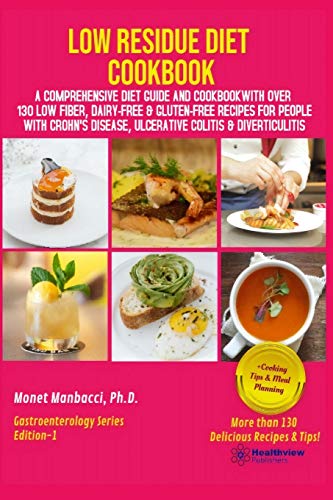
Low Residue Diet Cookbook: 70 Low Residue (Low Fiber) Healthy Homemade Recipes for People with IBD, Diverticulitis, Crohn’s Disease & Ulcerative Colitis (Low Residue Diet Cookbooks): Shah, Monika
The Low Residue Diet Cookbook: The cookbook has <strong>70 Low residue (Low Fiber) and healthy homemade recipes</strong> which are designed especially for people who have been suffering with either IB

Ensure Clear Mixed Fruit Nutritional Drink | 8g Protein,15 Vitamins & Minerals | Fat-Free-| Ready to-Drink-| Refreshing Taste-| 10 fl oz,(Pack of 24)
Ensure Clear Nutrition Drink, <strong>0g Fat, 8g Protein, Mixed Fruit & Blueberry Pomegranate Flavors, 10 Fl Oz, Pack of 12</strong>

Pedialyte AdvancedCare Plus Electrolyte Powder, Has 33% More Electrolytes and PreActiv Prebiotics, Berry Frost, 18 Powder Packets : Baby
Amazon.com: Pedialyte AdvancedCare Plus Electrolyte Powder, Has 33% More Electrolytes and PreActiv Prebiotics, Berry Frost, <strong>18 Powder Packets</strong> : Baby
Evidence & Sources
Promising research with growing clinical support from multiple studies
- National Institute of Diabetes and Digestive and Kidney Diseases (NIDDK)
- Academy of Nutrition and Dietetics
- Crohn’s & Colitis Foundation
- American Society for Parenteral and Enteral Nutrition (ASPEN)
- American Journal of Gastroenterology
- Clinical Gastroenterology and Hepatology
- Nutrients
- National Cancer Institute
This content is for informational purposes only and does not constitute medical advice. Always consult a qualified healthcare provider before starting, stopping, or changing any supplement or medication regimen.