

5:2 Diet
Also known as: 5 2 diet, Fast diet, Two-day fasting diet
Overview
The 5:2 diet is a form of intermittent energy restriction in which a person eats in a usual or less restricted pattern on five days of the week and markedly reduces calorie intake on two non-consecutive days. It is often discussed as a more flexible alternative to continuous daily calorie restriction, particularly for people interested in weight management, metabolic health, and a structured approach to eating that does not require constant tracking every day. In popular use, the plan is commonly associated with low-calorie “fasting days,” though the exact calorie targets and meal patterns can vary across studies and real-world practice.
Interest in the 5:2 diet has grown alongside broader research into intermittent fasting. Studies suggest that, for some adults, intermittent energy restriction may support modest weight loss, improve insulin sensitivity, and influence markers such as fasting glucose, lipids, and blood pressure. At the same time, results are mixed, and much of the benefit appears related to an overall reduction in energy intake rather than a unique metabolic effect specific to the 5:2 structure. Adherence is a major factor: some people find two restricted days easier than daily dieting, while others find fasting days difficult to sustain.
The 5:2 approach is also discussed in relation to metabolic flexibility, appetite regulation, and circadian eating patterns, although these areas remain under active investigation. Research indicates that individual responses vary depending on age, baseline metabolic health, medications, sleep, stress, physical activity, and the quality of food consumed on both restricted and non-restricted days. As with many diet patterns, outcomes depend not only on timing and calories but also on overall dietary quality, social context, and long-term sustainability.
From a safety perspective, the 5:2 diet is not appropriate for everyone. People who are pregnant or breastfeeding, those with a history of eating disorders, individuals who are underweight, and people with certain medical conditions or glucose-lowering medications may face higher risk from fasting-based patterns. For that reason, conventional and integrative sources alike generally emphasize that dietary changes involving fasting are best evaluated in the context of a person’s broader health status and, when relevant, with guidance from a qualified healthcare professional.
Medical Perspectives
Two Ways of Seeing Health

Western
scientific · clinical
Western medicine applies science, technology, and clinical experience to treat symptoms through testing, diagnosis, and targeted intervention.

Eastern
traditional · alternative
Eastern medicine focuses on treating the body naturally by applying traditional knowledge practiced for thousands of years, emphasizing balance and whole-person wellness.
Gold Bamboo presents both perspectives side-by-side so you can make informed decisions. We don't advocate for one over the other — your health choices are yours.
Western Medicine Perspective
Western Medicine Perspective
In conventional medicine, the 5:2 diet is understood as one subtype of intermittent fasting or intermittent energy restriction. Researchers evaluate it primarily through outcomes such as body weight, waist circumference, HbA1c, fasting insulin, lipid profile, blood pressure, and inflammatory markers. Clinical trials and systematic reviews generally suggest that the 5:2 pattern can produce similar short- to medium-term weight loss when compared with standard continuous calorie restriction, especially when overall calorie intake is reduced and adherence is maintained. Some studies indicate improvements in insulin resistance and cardiometabolic markers, though these benefits are not always superior to other structured dietary approaches.
Western clinicians also consider practical and physiological concerns. On restricted days, some individuals experience hunger, irritability, headaches, reduced concentration, dizziness, or fatigue, particularly during the early adaptation period. There is also interest in how fasting affects lean mass preservation, exercise tolerance, menstrual health, and nutrient adequacy. For people with type 1 diabetes, type 2 diabetes treated with insulin or sulfonylureas, chronic kidney disease, frailty, gastrointestinal disorders, or a history of disordered eating, fasting-based diets may carry added risks. Because of this, conventional medicine generally frames the 5:2 diet as a potentially useful dietary pattern for some adults, but not as universally suitable or inherently superior to other evidence-based nutrition strategies.
A further point in western practice is that the 5:2 diet is not assessed only by fasting-day calories. Dietary quality on non-fasting days remains central. Research on Mediterranean-style eating, minimally processed foods, adequate protein, fiber intake, and cardiometabolic risk reduction suggests that what is eaten across the full week may matter as much as when and how much is eaten on two restricted days. In this sense, the 5:2 diet is often viewed less as a standalone metabolic intervention and more as one possible framework for reducing overall energy intake within a broader nutrition plan.
Eastern & Traditional Perspective
Eastern/Traditional Medicine Perspective
Traditional medical systems do not typically describe the 5:2 diet in modern numerical terms, but many include long-standing concepts of periodic light eating, digestive rest, moderation, and seasonal restraint. In Traditional Chinese Medicine (TCM), overeating and irregular eating are often understood as burdens on the Spleen and Stomach, affecting the body’s transformation and transportation of food and fluids. Within that framework, periods of lighter intake may be interpreted as a way of reducing internal burden and supporting digestive balance. However, TCM is highly individualized: a fasting-based pattern might be seen as less suitable for people with signs associated with Qi deficiency, Blood deficiency, weakness, dizziness, or coldness, where further restriction could be viewed as depleting.
In Ayurveda, digestive strength (agni) is central to health, and traditions often emphasize eating in ways that support efficient digestion rather than constant grazing or heavy intake. Concepts analogous to fasting or simplified eating appear in practices intended to lighten the system and reduce ama (a term often translated as metabolic or digestive residue). Even so, Ayurveda also stresses constitution, season, life stage, and resilience. A pattern involving low-calorie days may be considered more tolerable for some constitutions than others, and excessive restriction is traditionally viewed as potentially destabilizing, especially when it aggravates weakness, dryness, anxiety, or irregularity.
In naturopathic and other integrative traditions, intermittent fasting is often discussed in relation to metabolic reset, digestive rest, and behavioral structure around eating. These systems may highlight the importance of food quality, hydration, sleep, stress regulation, and gentle personalization rather than focusing only on calorie targets. Across eastern and traditional frameworks, the recurring theme is balance: periods of reduced intake may have a place, but they are generally interpreted through a broader lens that includes constitution, vitality, digestion, and the risk of over-restriction. Because these systems are individualized, practitioners typically contextualize fasting patterns within the whole person rather than treating one schedule as universally appropriate.
Supplements & Products
Recommended Products
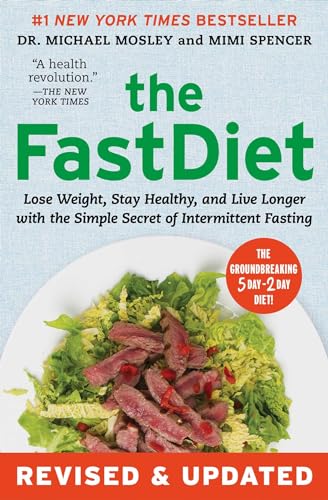
The FastDiet - Revised & Updated: Lose Weight, Stay Healthy, and Live Longer with the Simple Secret of Intermittent Fasting: Mosley, Dr Dr Michael, Spencer, Mimi
Michael Mosley, author of The 8-Week Blood Sugar Diet, and Mimi Spencer comes <strong>a revised and updated edition of the #1 New York Times bestseller The FastDiet, complete with new science, recipes

REDMOND Re-Lyte Hydration Electrolyte Powder Mix (Mixed Berry)
THE SECRET's IN THE SALT: <strong>Powered by our Redmond Real Salt, this optimal blend of essentail electrolytes helps you hydrate and feel your best -with clean ingredients and no added sugar</s

Etekcity Food Kitchen Scale, Digital Grams and Ounces for Weight Loss, Baking, Cooking, Keto and Meal Prep, LCD Display, Medium, 304 Stainless Steel
This Etekcity digital scale has endless uses for personal or commercial environments - great for homes, kitchens, offices, and more. The scale has an easy-to-read LCD display with beautiful clear back
Evidence & Sources
Promising research with growing clinical support from multiple studies
- The New England Journal of Medicine
- JAMA Network Open
- The BMJ
- Obesity Reviews
- Annual Review of Nutrition
- National Institute of Diabetes and Digestive and Kidney Diseases (NIDDK)
- National Center for Complementary and Integrative Health (NCCIH)
- American Heart Association
This content is for informational purposes only and does not constitute medical advice. Always consult a qualified healthcare provider before starting, stopping, or changing any supplement or medication regimen.