

Vitamin B12 deficiency
Overview
Vitamin B12 deficiency is a condition in which the body does not have enough cobalamin, an essential water-soluble vitamin needed for DNA synthesis, red blood cell formation, and healthy neurologic function. Because B12 plays a central role in cell division and myelin maintenance, deficiency can affect multiple organ systems, especially the blood, nervous system, and gastrointestinal tract. The condition may develop gradually over months to years, and early symptoms can be subtle, including fatigue, weakness, reduced exercise tolerance, numbness or tingling, memory changes, mood symptoms, and soreness of the tongue. In more advanced cases, deficiency may contribute to megaloblastic anemia, gait disturbance, cognitive impairment, and peripheral neuropathy.
B12 deficiency is clinically important because it is common, often underrecognized, and potentially reversible when identified early. Risk is higher in older adults, people with pernicious anemia, those with gastrointestinal disorders or surgeries that reduce absorption, individuals taking certain medications such as metformin or acid-suppressing therapies, and people whose dietary patterns exclude or greatly limit animal-derived foods unless B12 is adequately fortified or supplemented. Infants of mothers with low B12 status may also be vulnerable. Prevalence estimates vary depending on age, population, and the laboratory definition used, but studies consistently suggest that low or borderline B12 status becomes more frequent with aging.
From a biomedical standpoint, deficiency can result from inadequate intake, impaired absorption, defective transport, or increased physiologic demand. Absorption is complex: B12 in food is released in the stomach, binds intrinsic factor produced by stomach parietal cells, and is absorbed in the terminal ileum. Disruption at any step can reduce B12 availability. This is why deficiency may occur even in people whose diets contain B12-rich foods. Laboratory assessment often includes serum B12, and in selected cases methylmalonic acid, homocysteine, complete blood count, and intrinsic factor antibody testing to clarify the diagnosis and underlying cause.
The broader significance of B12 deficiency lies in the overlap between hematologic and neurologic symptoms and the fact that neurologic injury may occur even without obvious anemia. This makes clinical recognition especially important. Conventional medicine focuses on identifying the cause and restoring B12 status, while traditional systems may view the condition through patterns of depletion, impaired digestion, reduced vitality, or blood and nerve imbalance. Across perspectives, an important theme is that persistent fatigue, numbness, cognitive change, or unexplained anemia warrants evaluation by a qualified healthcare professional.
Medical Perspectives
Two Ways of Seeing Health

Western
scientific · clinical
Western medicine applies science, technology, and clinical experience to treat symptoms through testing, diagnosis, and targeted intervention.

Eastern
traditional · alternative
Eastern medicine focuses on treating the body naturally by applying traditional knowledge practiced for thousands of years, emphasizing balance and whole-person wellness.
Gold Bamboo presents both perspectives side-by-side so you can make informed decisions. We don't advocate for one over the other — your health choices are yours.
Western Medicine Perspective
Western Medicine Perspective
In conventional medicine, vitamin B12 deficiency is understood primarily as a nutritional, malabsorptive, autoimmune, medication-related, or gastrointestinal condition with measurable biochemical effects. Common causes include pernicious anemia (an autoimmune loss of intrinsic factor), atrophic gastritis, celiac disease, Crohn's disease, ileal resection, bariatric surgery, long-term use of metformin or proton pump inhibitors, chronic alcohol misuse, and low dietary intake. Clinicians also consider inherited disorders of cobalamin transport or metabolism, though these are much less common. The deficiency impairs DNA synthesis, leading to large immature red blood cells, and can increase methylmalonic acid and homocysteine, which helps explain some of the metabolic findings seen in diagnosis.
Diagnostic evaluation typically combines history, dietary review, medication assessment, physical examination, and laboratory testing. A complete blood count may show macrocytic or megaloblastic anemia, although some people have neurologic symptoms with a normal hemoglobin level. Serum B12 testing is widely used but has limitations, so borderline results are often interpreted alongside methylmalonic acid or homocysteine. Additional testing may include intrinsic factor antibodies, parietal cell antibodies, folate status, iron studies, and thyroid testing, depending on the clinical picture. When neurologic symptoms are present, timely evaluation is emphasized because some nerve-related complications may become only partially reversible if deficiency is prolonged.
Treatment in conventional care is based on repletion of vitamin B12 and management of the underlying cause. Depending on the severity and mechanism, this may involve oral high-dose supplementation or intramuscular/injectable replacement, with monitoring of blood counts, symptom response, and follow-up laboratory markers. Research indicates that oral therapy can be effective for many patients, while parenteral therapy is often used in severe deficiency, significant neurologic involvement, or clear malabsorption. Long-term management varies by cause; for example, pernicious anemia often requires ongoing replacement. Conventional medicine also places importance on distinguishing B12 deficiency from folate deficiency, because folate can correct anemia while allowing neurologic B12-related injury to progress unnoticed.
Eastern & Traditional Perspective
Eastern/Traditional Medicine Perspective
Traditional medical systems do not describe vitamin B12 deficiency using the same biochemical framework as modern laboratory medicine, but many of its manifestations have long been recognized through broader patterns of fatigue, weakness, pallor, numbness, poor cognition, dizziness, and depleted vitality. In Traditional Chinese Medicine (TCM), presentations resembling B12 deficiency may be interpreted through patterns such as Blood deficiency, Spleen Qi deficiency, Kidney essence deficiency, or impaired nourishment of the marrow and channels. Symptoms such as tingling, limb weakness, forgetfulness, and dizziness may be viewed as signs that the blood and essence are insufficient to nourish the nerves, brain, and muscles. Digestive weakness, poor appetite, or loose stools might be understood as a Spleen-related contribution to poor nutrient transformation and transport.
In Ayurveda, a similar clinical picture may be framed in terms of dhatu depletion, weakened agni (digestive/metabolic capacity), and imbalance involving Vata, especially when neurologic symptoms predominate. Fatigue, poor concentration, neuropathic sensations, and generalized weakness may be viewed as consequences of inadequate tissue nourishment and disturbed nerve function. Traditional approaches often emphasize restoring digestive resilience, supporting blood and tissue quality, and improving overall vitality through individualized diet, herbal frameworks, and lifestyle balancing. In naturopathic traditions, B12 deficiency is often discussed through a functional lens that includes dietary adequacy, digestive integrity, medication effects, and absorption capacity.
A balanced interpretation is important: while traditional frameworks may offer meaningful ways to understand the person as a whole, B12 deficiency is a medically significant condition with objective laboratory markers and potentially serious neurologic consequences. For that reason, integrative care models generally regard conventional diagnosis and biochemical correction as central, while traditional systems may be used as complementary perspectives for understanding digestion, energy, recovery, and constitutional patterns. Research on traditional interventions specifically for laboratory-confirmed B12 deficiency remains limited compared with the strong biomedical evidence for identifying and correcting the deficiency itself.
Related Topics
Metformin
Metformin — medication topic in the Gold Bamboo health ontology.
How They Relate
Vitamin B12 deficiency & Metformin
Metformin is a first-line medication for type 2 diabetes and is also used off-label for polycystic ovary syndrome (PCOS). A well-documented, though often under-recognized, effect of long-term metfo...
Supplements & Products
Recommended Products
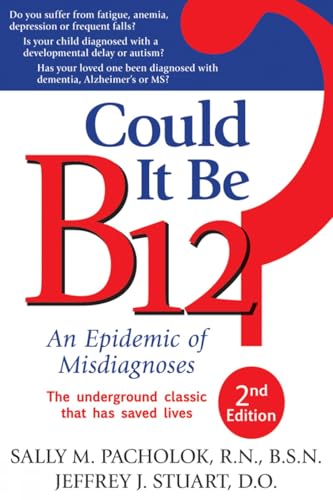
Could It Be B12?: An Epidemic of Misdiagnoses: Pacholok, Sally M, Stuart, Jeffrey J.
Sally M. Pacholok, RN, has worked as an emergency room nurse and paramedic for 25 years. A member of the Emergency Nurses Association, <strong>Pacholok diagnosed herself with vitamin B12 deficiency af

Jarrow Formulas Methyl Vitamin B12 5000 mcg - 60 Chewable Tablets, Naturally Fruit Flavored- Bioactive B12 Vitamin - Supports Cellular Energy Production, Brain Health & Metabolism - 60 Servings
Better Retained With Jarrow B12: ... and vegans (1) Convenient Chewable Tablet: <strong>Each naturally fruit flavored chewable tablet delivers 5000 micrograms (mcg) of methyl B-12</strong>; our B12 me

Garden of Life Organics B12 Vitamin - Whole Food B-12 for Metabolism and Energy, Raspberry, 2oz Liquid
The biggest innovation in vitamins ... Our delicious Raspberry flavored spray is <strong>Third-Party tested and Certified USDA Organic, Non-GMO Project Verified, Vegan, Gluten Free and Kosher</strong>
Evidence & Sources
Supported by multiple clinical trials and systematic reviews
- National Institutes of Health Office of Dietary Supplements: Vitamin B12 Fact Sheet for Health Professionals
- American Academy of Family Physicians (AAFP): Vitamin B12 Deficiency: Recognition and Management
- British Journal of Haematology
- New England Journal of Medicine
- National Institute for Health and Care Excellence (NICE)
- World Health Organization (WHO)
- National Center for Complementary and Integrative Health (NCCIH)
This content is for informational purposes only and does not constitute medical advice. Always consult a qualified healthcare provider before starting, stopping, or changing any supplement or medication regimen.