

Sleep Disorders
Overview
Sleep disorders are a broad group of conditions that disrupt the ability to obtain restful, restorative, and appropriately timed sleep. They include insomnia, obstructive sleep apnea, restless legs syndrome, circadian rhythm sleep-wake disorders, narcolepsy, parasomnias such as sleepwalking, and other disturbances that affect sleep quality, duration, or timing. Because sleep plays a central role in brain function, metabolism, immune regulation, cardiovascular health, mood, and daily performance, persistent sleep disruption can have wide-ranging effects on overall well-being.
Sleep problems are highly prevalent worldwide. Research from public health and sleep medicine organizations indicates that insufficient sleep, chronic insomnia symptoms, and sleep-disordered breathing affect a substantial portion of adults, with important consequences for attention, work performance, emotional regulation, accident risk, and long-term disease burden. In children and older adults, the presentation may differ, but the impact can be equally significant, influencing growth, cognition, behavior, independence, and quality of life.
Sleep disorders are often multifactorial. Contributors may include stress, mental health conditions, chronic pain, hormonal shifts, neurological disease, cardiometabolic illness, airway anatomy, medication effects, substance use, irregular schedules, and environmental factors such as light exposure or noise. In many cases, sleep disturbance is both a symptom and a contributing factor in broader health patterns, creating a cycle in which poor sleep worsens inflammation, mood, pain sensitivity, and metabolic regulation, which in turn may further disrupt sleep.
A comprehensive understanding of sleep disorders typically distinguishes between symptoms such as fatigue or difficulty falling asleep and specific diagnoses defined by characteristic patterns, sleep studies, or clinical criteria. Conventional medicine emphasizes classification, risk stratification, and targeted therapies, while traditional systems often interpret disordered sleep through broader patterns of imbalance involving the nervous system, digestion, vitality, stress adaptation, or mind-body regulation. Across perspectives, there is broad agreement that persistent sleep disturbance deserves careful evaluation, particularly when associated with daytime impairment, loud snoring, breathing pauses, sudden sleep attacks, or significant mental health symptoms. Consultation with a qualified healthcare professional is important for accurate diagnosis and safe management.
Medical Perspectives
Two Ways of Seeing Health

Western
scientific · clinical
Western medicine applies science, technology, and clinical experience to treat symptoms through testing, diagnosis, and targeted intervention.

Eastern
traditional · alternative
Eastern medicine focuses on treating the body naturally by applying traditional knowledge practiced for thousands of years, emphasizing balance and whole-person wellness.
Gold Bamboo presents both perspectives side-by-side so you can make informed decisions. We don't advocate for one over the other — your health choices are yours.
Western Medicine Perspective
Western Medicine Perspective
In conventional medicine, sleep disorders are understood through the lens of sleep physiology, circadian biology, airway mechanics, neurology, and behavioral health. Major diagnostic frameworks such as the International Classification of Sleep Disorders categorize conditions by their underlying mechanisms and clinical features. For example, insomnia disorder is typically defined by difficulty initiating sleep, maintaining sleep, or waking too early with daytime consequences; obstructive sleep apnea involves recurrent upper-airway collapse during sleep; narcolepsy relates to dysregulation of wake-sleep control; and circadian rhythm disorders reflect mismatch between internal timing and desired sleep schedules.
Assessment commonly includes a detailed sleep history, medication review, screening for depression and anxiety, evaluation of substance use, and consideration of comorbid conditions such as obesity, cardiovascular disease, reflux, chronic pain, menopause, and neurodegenerative disease. Depending on the presentation, clinicians may use sleep diaries, actigraphy, validated questionnaires, and polysomnography or home sleep apnea testing. This diagnostic approach is important because treatments differ considerably by disorder, and interventions helpful for one condition may be insufficient or inappropriate for another.
Research supports several evidence-based approaches within conventional care. Cognitive behavioral therapy for insomnia (CBT-I) is widely regarded as a first-line nonpharmacologic treatment for chronic insomnia. For obstructive sleep apnea, therapies may include positive airway pressure devices, oral appliances, positional strategies, or selected procedural approaches depending on anatomy and severity. Other disorders may be addressed with chronotherapy, light-based interventions, medication, behavioral strategies, or management of underlying neurological or psychiatric conditions. Conventional medicine also emphasizes safety issues, such as risks related to drowsy driving, cardiovascular strain from untreated sleep apnea, and the careful use of sedating medications, particularly in older adults.
From a public health perspective, western medicine views healthy sleep as a pillar of prevention alongside nutrition, movement, and mental health care. Studies suggest that durable improvement often depends not only on symptom-focused treatment but also on attention to schedule regularity, light exposure, stress load, occupational demands, and coexisting medical conditions. Persistent or severe symptoms warrant evaluation by a sleep specialist or other licensed clinician.
Eastern & Traditional Perspective
Eastern/Traditional Medicine Perspective
In Traditional Chinese Medicine (TCM), sleep disturbance is generally not seen as a single disease entity but as a manifestation of broader disharmony affecting the Heart, Liver, Spleen, Kidney, and the balance of Yin and Yang. Insomnia, vivid dreaming, restless sleep, or frequent waking may be interpreted through patterns such as Heart and Spleen deficiency, Liver qi stagnation transforming into heat, Yin deficiency with empty heat, or disharmony between the Heart and Kidney. Traditional evaluation may consider emotional strain, overthinking, digestive weakness, constitutional depletion, and the timing of night waking as clues to the pattern involved.
TCM approaches have traditionally included acupuncture, moxibustion, herbal formulas, breath regulation, and lifestyle balancing practices aimed at calming the spirit (Shen), regulating qi, and nourishing deficient systems. Contemporary research suggests acupuncture may offer benefit for some individuals with insomnia, though study quality varies and findings are not uniformly conclusive across all sleep disorders. Herbal medicine is also widely used in East Asian practice, but formula selection is traditionally individualized and safety considerations are important, particularly regarding herb-drug interactions and product quality.
In Ayurveda, disturbed sleep is often discussed under the concept of nidra as a foundational pillar of health. Sleep problems may be associated with imbalance in Vata (restlessness, variable sleep, heightened nervous system activity), Pitta (waking during the night, irritability, heat), or Kapha disturbances affecting heaviness or excessive sleep. Ayurvedic frameworks frequently connect sleep quality with digestion, daily routine, mental state, seasonal rhythms, and sensory overstimulation. Traditional practices may include herbal preparations, oil-based therapies, meditation, gentle movement, and routine stabilization, with the goal of restoring systemic balance rather than isolating sleep as a standalone symptom.
Other traditional and integrative systems, including naturopathic and mind-body approaches, often emphasize stress regulation, circadian alignment, autonomic balance, and behavioral rhythms. Practices such as meditation, yoga, tai chi, relaxation training, and breathwork have been studied for sleep-related outcomes and may support sleep quality in some populations, especially where stress, anxiety, or chronic pain are contributing factors. Even so, traditional perspectives generally coexist best with appropriate medical assessment, particularly when symptoms suggest sleep apnea, narcolepsy, severe depression, parasomnias, or other conditions requiring specialized evaluation.
Supplements & Products
Recommended Products
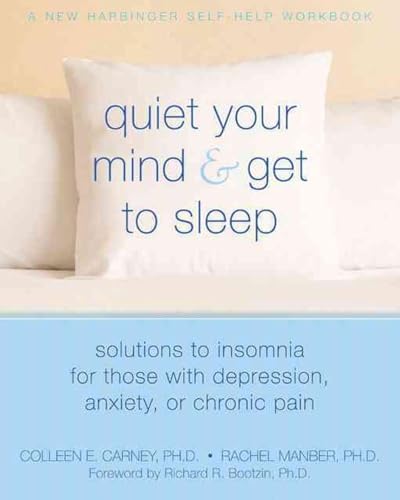
Quiet Your Mind and Get to Sleep: Solutions to Insomnia for Those with Depression, Anxiety, or Chronic Pain (New Harbinger Self-Help Workbook): Colleen Carney, Rachel Manber
"Colleen Carney and Rachel Manber clearly understand the broad domain of insomnia and the suffering it causes. Their book reflects the authors’ deep knowledge of sleep medicine and their experien

Life Extension Melatonin, 300 mcg, Gentle Sleep Support, Healthy circadian Rhythms, Cellular Defense, Gluten-Free, Non-GMO, Vegetarian, 100 Capsules
... Melatonin is a hormone produced ... This 300 mcg sleep supplement <strong>promotes healthy sleep-wake patterns, promotes falling asleep, and encourages the duration and quality of your sleep</stro

Carex Day-Light Classic Plus Sunlight Therapy Lamp - 10000 LUX Therapy Lamp at 12 Inches, LED Bright White Light with Adjustable Height and Brightness Levels for Mood, White
Optimal 10,000 LUX Light Therapy at 12 Inches: <strong>Experience the recommended 10,000 LUX of glare-free white light</strong> with the Carex Day-Light Classic Plus Sunlight Therapy Lamp.
Evidence & Sources
Supported by multiple clinical trials and systematic reviews
- American Academy of Sleep Medicine (AASM)
- National Heart, Lung, and Blood Institute (NHLBI)
- National Center for Complementary and Integrative Health (NCCIH)
- Centers for Disease Control and Prevention (CDC)
- The Lancet
- New England Journal of Medicine
- Sleep
- Journal of Clinical Sleep Medicine
- BMJ
- World Health Organization (WHO)
This content is for informational purposes only and does not constitute medical advice. Always consult a qualified healthcare provider before starting, stopping, or changing any supplement or medication regimen.