

Pelvic Floor Dysfunction
Also known as: Pelvic Floor Disorder, Hypertonic Pelvic Floor
Overview
Pelvic floor dysfunction (PFD) is an umbrella term describing problems with the muscles, connective tissues, and nerves that support the bladder, bowel, reproductive organs, and core stability. Rather than a single disease, it refers to impaired coordination, overactivity, underactivity, weakness, tension, or difficulty relaxing the pelvic floor muscles. Depending on the pattern involved, pelvic floor dysfunction may be associated with pelvic pain, urinary urgency or leakage, constipation, incomplete bowel emptying, painful intercourse, pressure symptoms, or difficulty with bladder and bowel control. The condition can affect people of all sexes, though it is often discussed in relation to pregnancy, postpartum recovery, menopause, chronic pelvic pain, and aging.
Pelvic floor dysfunction is clinically important because symptoms may be multifactorial and frequently overlap with other conditions, including interstitial cystitis/bladder pain syndrome, irritable bowel syndrome, endometriosis, prostatitis/chronic pelvic pain syndrome, pudendal neuralgia, and pelvic organ prolapse. Contributing factors may include childbirth-related tissue changes, surgery, chronic straining, trauma, persistent coughing, high-impact activities, hypermobility, stress-related muscle guarding, or chronic pain sensitization. In some people, the issue is primarily one of muscle tightness and poor relaxation; in others, it is more related to weakness or reduced support. This is why careful evaluation is central to understanding the specific pattern involved.
Research and clinical practice increasingly recognize that pelvic floor dysfunction is not purely structural. It may reflect a combination of musculoskeletal, neurologic, behavioral, hormonal, and psychosocial influences. The pelvic floor works in coordination with the diaphragm, abdominal wall, hips, spine, and nervous system. When this system becomes dysregulated, symptoms can appear in the bladder, bowel, sexual function, posture, and pain processing. For many patients, this helps explain why integrative searches frequently center on pelvic floor physical therapy, breathing retraining, relaxation-based approaches, biofeedback, and mind-body care.
Because symptoms can be embarrassing or misunderstood, pelvic floor dysfunction is often underrecognized and undertreated. A balanced, evidence-informed view considers both conventional rehabilitation approaches and traditional systems that emphasize whole-body regulation, stress reduction, breathing, movement quality, and restoration of balanced pelvic energy and function. Anyone with persistent pelvic pain, bleeding, neurologic symptoms, significant incontinence, prolapse symptoms, or major bowel or urinary changes is generally advised to seek evaluation from a qualified healthcare professional, since serious conditions can sometimes mimic pelvic floor disorders.
Medical Perspectives
Two Ways of Seeing Health

Western
scientific · clinical
Western medicine applies science, technology, and clinical experience to treat symptoms through testing, diagnosis, and targeted intervention.

Eastern
traditional · alternative
Eastern medicine focuses on treating the body naturally by applying traditional knowledge practiced for thousands of years, emphasizing balance and whole-person wellness.
Gold Bamboo presents both perspectives side-by-side so you can make informed decisions. We don't advocate for one over the other — your health choices are yours.
Western Medicine Perspective
Western Medicine Perspective
In conventional medicine, pelvic floor dysfunction is typically understood as a neuromuscular and functional disorder involving the pelvic floor muscles and related support structures. Clinicians often distinguish between hypertonic or nonrelaxing pelvic floor dysfunction—where muscles are tense, shortened, or poorly coordinated—and hypotonic dysfunction, where support and contractile force are reduced. Diagnosis is usually based on a detailed symptom history and physical examination, with attention to urinary, bowel, sexual, pain, obstetric, gynecologic, colorectal, orthopedic, and neurologic factors. Depending on the presentation, evaluation may also involve bladder testing, anorectal testing, imaging, or referral to gynecology, urology, gastroenterology, colorectal surgery, pain medicine, or physiatry.
A major concept in western care is that treatment depends on the specific functional pattern, not just the symptom label. For example, urinary leakage associated with weak support differs from constipation caused by dyssynergic defecation, and both differ from chronic pelvic pain linked to overactive muscles and central sensitization. Pelvic floor physical therapy is widely regarded as a cornerstone of care, particularly when it includes individualized assessment, movement retraining, relaxation training, manual therapy, bladder and bowel habit education, and biofeedback where appropriate. Biofeedback has especially strong evidence in certain defecatory disorders, while multimodal physical therapy is commonly used for pelvic pain, urinary symptoms, and postpartum recovery.
Conventional medicine also emphasizes management of coexisting conditions and contributing behaviors. This may include addressing constipation, chronic coughing, obesity, postoperative scar restrictions, hormonal changes, trauma history, or pain-related fear and guarding. Studies suggest that outcomes improve when care recognizes the interaction of pelvic floor muscles with sleep, stress physiology, mood symptoms, and central pain processing. In this framework, mind-body interventions are not viewed as alternatives to medical care, but as part of a broader biopsychosocial approach. Persistent or complex cases often benefit from coordinated, interdisciplinary evaluation because pelvic floor symptoms may reflect more than one underlying problem.
Eastern & Traditional Perspective
Eastern/Traditional Medicine Perspective
In Traditional Chinese Medicine (TCM), pelvic floor dysfunction is not classified under a single modern diagnostic term, but symptoms may be interpreted through patterns involving the Kidney, Spleen, Liver, and Ren channels, as well as the flow of Qi and Blood in the lower abdomen and pelvis. From this perspective, urinary leakage, prolapse, heaviness, and fatigue may be associated with forms of Qi deficiency or sinking, while pelvic pain, spasm, and difficult voiding may be viewed through patterns of Qi stagnation, Blood stasis, Damp accumulation, or constrained Liver function. TCM assessment traditionally considers the whole pattern of symptoms, including digestion, stress, menstruation, sleep, energy, and emotional strain, rather than focusing only on the pelvic muscles in isolation.
Traditional East Asian medicine has historically used acupuncture, moxibustion, breathing regulation, therapeutic movement, and herbal formulas in symptom patterns involving pelvic pain, urinary complaints, bowel dysfunction, and postpartum recovery. Contemporary integrative research suggests acupuncture may have a supportive role for some pelvic pain and overactive bladder symptoms, though the quality of evidence varies by condition and study design. Traditional frameworks also place importance on the relationship between stress, breath, and lower abdominal tension, which overlaps in part with modern interest in autonomic regulation and down-training of an overactive pelvic floor.
In Ayurveda, pelvic floor-related symptoms may be interpreted through disturbances of Apana Vata, the subtype of Vata associated with elimination, menstruation, reproductive function, and downward movement in the pelvis. Constipation, pelvic pain, disturbed elimination, and postpartum depletion may be described in terms of imbalance in pelvic circulation, tissue tone, and nervous system regulation. Ayurvedic care has traditionally emphasized individualized assessment, with attention to digestion, stress, recovery after childbirth, breath, posture, and gentle restorative practices.
Naturopathic and other traditional systems often frame pelvic floor dysfunction within a whole-person model that includes inflammation, connective tissue health, bowel regularity, nervous system balance, trauma-informed care, and the effects of chronic stress on muscle guarding. While many of these approaches are widely used in integrative practice, the evidence base is uneven, and traditional use does not necessarily equate to high-quality clinical proof. For this reason, many integrative clinicians present eastern approaches as potentially supportive modalities best considered alongside appropriate medical assessment, especially when symptoms are severe, progressive, or diagnostically unclear.
Supplements & Products
Recommended Products

Heal Pelvic Pain: The Proven Stretching, Strengthening, and Nutrition Program for Relieving Pain, Incontinence,& I.B.S, and Other Symptoms Without Surgery: STEIN, Amy
For over 20 years, Amy Stein, PT, ... men, women, and children. She is the founder of and premier practitioner at <strong>Beyond Basics Physical Therapy</strong>, with three locations in New York City
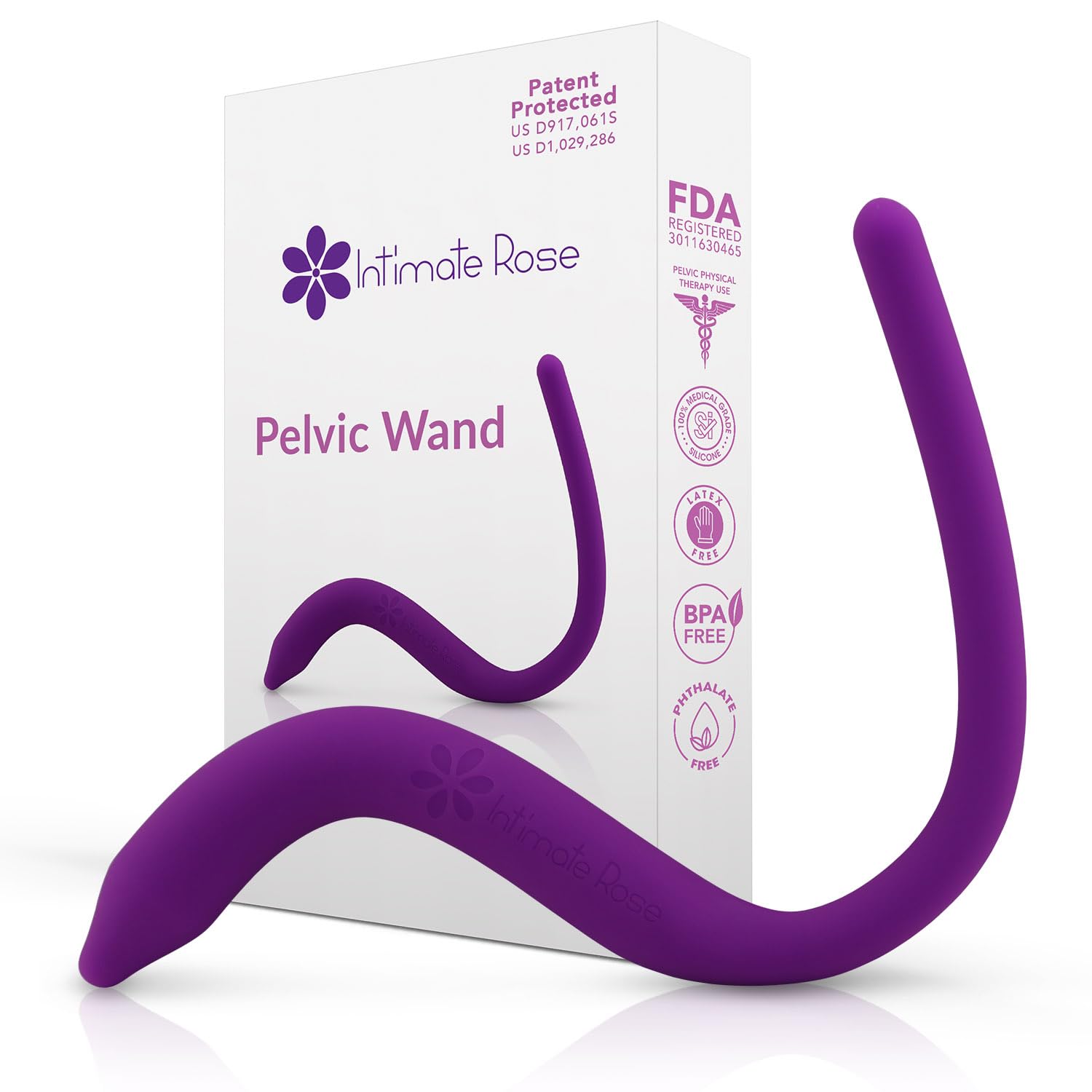
Intimate Rose Pelvic Wand, Pelvic Floor Muscle Trigger Point Massager, Perineal Massage Tool for Pelvic Physical Therapy & Pain Relief, BPA-Free, Latex-Free, Standard (Non-Vibration)
IntimateRose Vibrating Pelvic Wand, Pelvic Floor Muscle Trigger Point Massager, Perineal Massage Tool for Pelvic Physical Therapy & Pain Relief, BPA-Free, Latex-Free (Vibration)

Squatty Potty The Original Bathroom Toilet Stool, 7 Inch height, White
This 7” toilet stool is <strong>ready to support your feet and legs while you poop</strong>. It repositions your body to make pooping easier. There are no nuts, bolts or difficult instructions involve
Evidence & Sources
Promising research with growing clinical support from multiple studies
- National Institute of Diabetes and Digestive and Kidney Diseases (NIDDK)
- National Center for Complementary and Integrative Health (NCCIH)
- American College of Obstetricians and Gynecologists (ACOG)
- International Urogynecology Journal
- Neurourology and Urodynamics
- Diseases of the Colon & Rectum
- Cochrane Database of Systematic Reviews
- American Urogynecologic Society
- Journal of Pelvic, Obstetric and Gynaecological Physiotherapy
- World Health Organization (WHO)
This content is for informational purposes only and does not constitute medical advice. Always consult a qualified healthcare provider before starting, stopping, or changing any supplement or medication regimen.