

Irritable Bladder
Also known as: Sensitive Bladder, Overactive Bladder, OAB
Overview
"Irritable bladder" is a common, non-technical term people often use to describe a pattern of urinary urgency, frequent urination, bladder sensitivity, pressure, and sometimes discomfort without a clear infection. In conventional medicine, these symptoms may overlap with several recognized conditions, including overactive bladder (OAB), bladder pain syndrome/interstitial cystitis (IC/BPS), pelvic floor dysfunction, or urinary symptoms influenced by stress, hormonal change, or irritation from diet and lifestyle factors. Because the phrase is informal, it does not point to a single diagnosis; rather, it describes a symptom cluster that can have multiple possible causes.
This symptom pattern is common and can meaningfully affect sleep, work, travel, intimacy, exercise, and emotional well-being. People may report needing to urinate often, rushing to the bathroom, waking multiple times overnight, or feeling that the bladder reacts strongly to caffeine, acidic foods, stress, or pressure in the pelvic region. In some cases, symptoms occur without pain; in others, bladder discomfort, pelvic heaviness, or burning may be part of the picture. The broadness of the term is one reason evaluation matters: similar symptoms can be caused by urinary tract infection, stones, medication effects, menopause-related changes, prostate enlargement, nerve-related bladder dysfunction, or pelvic floor tension.
From a broader health perspective, irritable bladder symptoms are increasingly understood as part of a multifactorial pelvic health issue rather than a problem isolated to the bladder alone. Research and clinical practice both recognize important contributions from the nervous system, bladder muscle signaling, pelvic floor coordination, inflammation, fluid habits, constipation, stress physiology, and sensory hypersensitivity. This helps explain why two people with similar urgency and frequency may have very different underlying drivers and may respond to different approaches.
Many people exploring this topic are interested in bladder-calming, pelvic wellness, and integrative strategies. Conventional care often focuses on identifying red flags and clarifying the likely diagnosis, while traditional systems may frame symptoms in terms of imbalance, irritation, deficient support, or disrupted flow in the pelvic region. Across both perspectives, a common theme is the importance of individualized assessment, especially when symptoms are new, worsening, associated with blood in the urine, fever, significant pain, incontinence, or recurrent infections. Consultation with a qualified healthcare professional is important to distinguish benign functional symptoms from conditions that require targeted medical evaluation.
Compare Treatment Options
Overactive bladder (OAB) is a symptom-based condition marked by urinary urgency, often with daytime frequency, nocturia, and sometimes urge urinary incontinence. In Western medicine, OAB is often understood as a problem of bladder signaling and detrusor overactivity, though symptoms can also overlap with pelvic floor dysfunction, benign prostatic hyperplasia, recurrent urinary tract infection, interstitial cystitis/bladder pain syndrome, medication effects, and neurologic conditions. That overlap is one reason evaluation matters: the same symptom pattern can have different drivers. Treatment options vary because OAB is not a single uniform disease and because people value different tradeoffs. Some prefer lower-risk behavioral strategies first; others prioritize faster symptom reduction even if side effects are more likely. In Gold Bamboo's East-meets-West framework, Western care often emphasizes bladder training, pelvic floor rehabilitation, medications, neuromodulation, and procedure-based therapies, while Eastern approaches may frame symptoms through patterns involving kidney, spleen, liver, or damp-heat imbalance and use acupuncture or traditional herbal strategies. Research suggests that a combined, individualized approach is often most realistic, especially when symptoms affect sleep, work, travel, intimacy, or confidence.
View treatment comparison (7 options)Medical Perspectives
Two Ways of Seeing Health

Western
scientific · clinical
Western medicine applies science, technology, and clinical experience to treat symptoms through testing, diagnosis, and targeted intervention.

Eastern
traditional · alternative
Eastern medicine focuses on treating the body naturally by applying traditional knowledge practiced for thousands of years, emphasizing balance and whole-person wellness.
Gold Bamboo presents both perspectives side-by-side so you can make informed decisions. We don't advocate for one over the other — your health choices are yours.
Western Medicine Perspective
Western Medicine Perspective
In conventional medicine, the term irritable bladder is not a formal diagnosis. Instead, clinicians typically evaluate the symptom pattern under recognized categories such as overactive bladder, urinary frequency syndrome, interstitial cystitis/bladder pain syndrome, or pelvic floor dysfunction. Overactive bladder is generally defined by urgency, often with frequency and nocturia, with or without urge incontinence, in the absence of infection or other obvious pathology. By contrast, bladder pain syndrome places more emphasis on pain, pressure, or discomfort perceived to be related to the bladder, often accompanied by urinary frequency. Pelvic floor dysfunction can mimic both patterns when tight, poorly coordinated pelvic muscles create urgency, incomplete emptying sensations, or suprapubic discomfort.
Evaluation in a western framework generally begins with history, urinalysis, symptom review, medication review, and assessment for contributing conditions. Common areas of consideration include urinary tract infection, diabetes, diuretic use, constipation, neurologic disease, pelvic organ prolapse, menopause-related urogenital changes, prostate issues, and prior pelvic surgery. Depending on symptoms, further workup may include bladder diaries, post-void residual testing, pelvic examination, urine culture, cystoscopy, or imaging. Clinicians are especially attentive to red-flag features such as visible blood in the urine, recurrent infections, unexplained weight loss, severe pelvic pain, or new symptoms in older adults.
Management in conventional care is often multimodal. Studies and guideline-based care support the role of bladder training, pelvic floor physical therapy, fluid and bladder irritant review, behavioral interventions, and treatment of constipation or pelvic floor overactivity for many patients. In selected cases, medications that affect bladder signaling may be used, and more advanced therapies may be considered for persistent overactive bladder. For bladder pain syndrome, management may involve a broader pain and sensory regulation framework. Current research increasingly emphasizes the role of sensory hypersensitivity, autonomic nervous system activation, and cross-talk between bowel, bladder, and pelvic floor.
The conventional evidence base is strongest for defined conditions like overactive bladder and bladder pain syndrome, rather than for the lay concept of irritable bladder itself. This means symptom-based self-labeling can be imprecise. From a medical perspective, the central goal is not just symptom suppression but accurate differentiation among overlapping urinary and pelvic conditions so that symptoms are interpreted in the right clinical context.
Eastern & Traditional Perspective
Eastern/Traditional Medicine Perspective
In Traditional Chinese Medicine (TCM), bladder urgency, frequency, and pelvic sensitivity are not grouped under a single disease label equivalent to irritable bladder. Instead, practitioners traditionally assess patterns such as Damp-Heat in the Lower Burner, Kidney Qi or Yang deficiency, Spleen Qi deficiency with fluid dysregulation, or Liver Qi stagnation affecting pelvic function. A presentation with burning, dark urine, and irritability may be interpreted differently from one marked by fatigue, weakness, coldness, and frequent clear urination. In TCM, the bladder is also viewed in relationship with the Kidneys, Spleen, and Liver, making whole-body pattern recognition central to interpretation.
Traditional East Asian approaches have historically used acupuncture, moxibustion, herbal formulas, and lifestyle regulation to support urinary comfort and pelvic balance. Contemporary research suggests acupuncture may have potential benefits for overactive bladder symptoms and quality of life in some patients, though study quality varies and protocols differ widely. Traditional herbal approaches are also described in the literature, but standardization, safety screening, and product quality remain important considerations. In integrative settings, TCM is often explored as a way of addressing stress-related symptom flares, pelvic tension, and constitutional patterns of weakness or heat.
In Ayurveda, urinary irritation and altered urinary flow may be interpreted through imbalances involving Apana Vata, excess Pitta in the urinary tract, or reduced tissue resilience and hydration balance. Symptoms such as urgency, burning, sensitivity, and pelvic discomfort may be understood in relation to disturbed downward-moving energy, heat, dryness, or depletion. Ayurvedic care traditionally considers digestion, elimination, stress, daily rhythm, and the broader constitutional pattern rather than focusing only on the bladder itself.
Naturopathic and holistic pelvic health frameworks often emphasize that urinary urgency and frequency can be influenced by nervous system activation, food sensitivities, pelvic floor guarding, hydration habits, hormonal shifts, and gut-bladder interactions. These approaches tend to view symptoms through a systems lens and may incorporate mind-body support, pelvic relaxation, and non-pharmacologic strategies. As with conventional medicine, traditional practitioners generally recognize the need for referral when symptoms suggest infection, bleeding, severe pain, or other potentially serious pathology. Integrative care is typically most appropriate when coordinated with licensed medical evaluation, particularly because the symptom term itself can mask different underlying diagnoses.
Supplements & Products
Recommended Products

Heal Pelvic Pain: The Proven Stretching, Strengthening, and Nutrition Program for Relieving Pain, Incontinence,& I.B.S, and Other Symptoms Without Surgery: STEIN, Amy
For over 20 years, Amy Stein, PT, ... men, women, and children. She is the founder of and premier practitioner at <strong>Beyond Basics Physical Therapy</strong>, with three locations in New York City
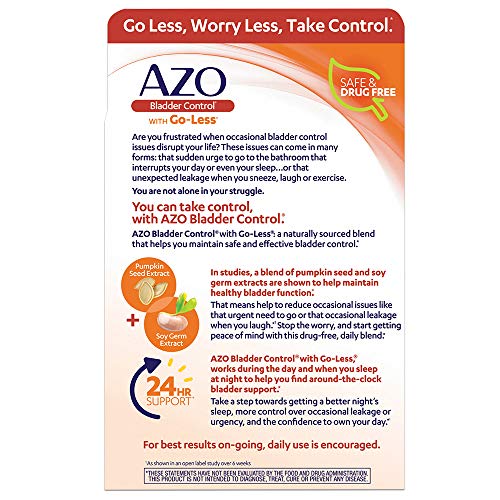
AZO Bladder Control with Go-Less Daily Supplement | Helps Reduce Occasional Urgency* | Helps reduce occasional leakage due to laughing, sneezing and exercise | 54 Count Capsules
NATURALLY-SOURCED INGREDIENTS: AZO Bladder Control is <strong>sourced from pumpkin seed and soy germ</strong>
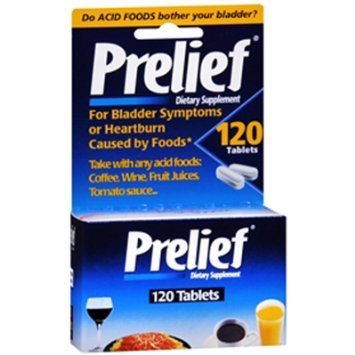
Prelief Dietary Supplement - 120 Tablets Pack of 4
Prelief Dietary Supplement is <strong>formulated with calcium glycerophosphate to help reduce acid content in foods and beverages before consumption</strong>. Each tablet contains calcium glycerophosp
Evidence & Sources
Promising research with growing clinical support from multiple studies
- American Urological Association (AUA) Guideline on Diagnosis and Treatment of Idiopathic Overactive Bladder
- American Urological Association (AUA) Guideline on Interstitial Cystitis/Bladder Pain Syndrome
- International Continence Society (ICS) terminology reports
- National Institute of Diabetes and Digestive and Kidney Diseases (NIDDK)
- National Center for Complementary and Integrative Health (NCCIH)
- Cochrane Reviews on overactive bladder and bladder training interventions
- European Association of Urology (EAU) Guidelines on Non-neurogenic Female LUTS and Chronic Pelvic Pain
- Neurourology and Urodynamics
- The Journal of Urology
- World Journal of Urology
This content is for informational purposes only and does not constitute medical advice. Always consult a qualified healthcare provider before starting, stopping, or changing any supplement or medication regimen.