

Inflammatory Bowel Disease (IBD)
Overview
Inflammatory bowel disease (IBD) is a chronic, immune-mediated group of disorders characterized by ongoing inflammation in the gastrointestinal tract. The two main forms are Crohn’s disease and ulcerative colitis. Crohn’s disease can affect any part of the digestive tract from the mouth to the anus and often involves deeper layers of the bowel wall, while ulcerative colitis primarily affects the colon and rectum and usually involves the innermost lining. Although they share some symptoms—such as abdominal pain, diarrhea, rectal bleeding, fatigue, weight loss, and urgency—they differ in their distribution, tissue involvement, and patterns of complications.
IBD is considered a significant global health condition because it often begins in adolescence or early adulthood, tends to follow a relapsing-remitting course, and can substantially affect quality of life. Rates have historically been highest in North America and Europe, but incidence and prevalence are rising in newly industrialized regions as well. Research suggests that IBD develops through a complex interaction among genetic susceptibility, immune dysregulation, environmental exposures, the intestinal microbiome, and barrier dysfunction. It is distinct from irritable bowel syndrome (IBS), which does not involve the same structural inflammation, although symptom overlap can occur.
Beyond intestinal symptoms, IBD may be associated with extraintestinal manifestations affecting the joints, skin, eyes, liver, and biliary system. Long-standing disease can also increase risks such as strictures, fistulas, malnutrition, anemia, bone loss, and, in some cases, colorectal cancer. Because disease severity and complications vary widely, evaluation commonly includes endoscopy, imaging, laboratory markers, and stool testing to assess inflammation and rule out other causes. Early recognition and longitudinal care are often central themes in modern management.
From a broader health perspective, IBD is increasingly understood as a systemic inflammatory condition rather than only a bowel disorder. Nutritional status, mental health, sleep, stress burden, infection risk, and medication effects may all influence the patient experience. Many individuals explore both conventional gastroenterology care and complementary or traditional approaches to symptom relief, resilience, and quality of life. As with many chronic conditions, an integrative framework often emphasizes coordinated care and discussion with qualified healthcare professionals before adding supplements, herbs, or other nonstandard therapies.
Western Medicine Perspective
Western Medicine Perspective
In conventional medicine, IBD is understood as a chronic inflammatory disease driven by an inappropriate immune response in genetically predisposed individuals. Current models emphasize disruptions in the relationship between the intestinal immune system, gut microbes, epithelial barrier function, and environmental triggers such as smoking, diet patterns, infections, and certain medications. Diagnosis generally relies on a combination of clinical history, blood tests, inflammatory markers, fecal calprotectin, colonoscopy with biopsy, and cross-sectional imaging when small bowel disease or complications are suspected. Distinguishing Crohn’s disease from ulcerative colitis—and differentiating both from infection, ischemia, celiac disease, or functional disorders—is a central diagnostic goal.
Conventional management focuses on inducing remission, maintaining remission, reducing steroid exposure, healing mucosa when possible, and preventing complications. Therapeutic categories may include aminosalicylates in selected settings, corticosteroids for short-term control, immunomodulators, biologic therapies targeting inflammatory pathways, and newer small-molecule agents. Surgery remains an important part of care for some patients, particularly in Crohn’s disease with strictures, fistulas, or refractory disease, and in ulcerative colitis when medical therapy is insufficient or complications arise. Nutritional assessment, vaccination review, cancer surveillance, and monitoring for anemia, bone health, and medication adverse effects are also standard components of comprehensive care.
Research increasingly supports a treat-to-target strategy, in which symptom control is considered important but not sufficient on its own; objective markers of inflammation and mucosal healing are also used to guide long-term care. Mental health support, dietary counseling, and smoking cessation are often incorporated because they can influence disease burden and outcomes. While dietary interventions may help some individuals, conventional medicine generally views them as adjunctive rather than universally curative, and responses vary considerably across patients.
Eastern & Traditional Perspective
Eastern and Traditional Medicine Perspective
In Traditional Chinese Medicine (TCM), symptom patterns associated with IBD are not viewed as a single disease entity but may be interpreted through diagnostic frameworks such as damp-heat in the intestines, spleen qi deficiency, liver-spleen disharmony, blood stasis, or kidney deficiency, depending on the presentation and chronicity. Long-standing diarrhea, abdominal pain, urgency, and fatigue may be seen as reflecting an imbalance in digestion, transformation, and the movement of qi and fluids. TCM approaches have traditionally included individualized herbal formulas, acupuncture, moxibustion, and dietary regulation aimed at restoring pattern balance rather than targeting one named disease alone.
In Ayurveda, presentations resembling chronic inflammatory bowel disorders may be understood through disturbances in agni (digestive fire), altered doshic balance—often involving pitta and vata—and impaired tissue nourishment. Traditional interpretations may connect bloody diarrhea, abdominal cramping, weakness, and irregular digestion with specific syndromic patterns rather than the modern categories of Crohn’s disease or ulcerative colitis. Ayurvedic care has historically emphasized personalized dietary structure, herbal preparations, digestive support, and lifestyle rhythm, always within a broader constitutional framework.
From a broader naturopathic and integrative medicine perspective, IBD is often approached with attention to the gut barrier, inflammatory load, nutritional depletion, stress physiology, sleep, and microbiome-related factors. Complementary strategies sometimes explored include curcumin, specific probiotics in selected contexts, omega-3 fatty acids, mind-body practices, and acupuncture. However, evidence quality varies considerably: some interventions show promising adjunctive data—particularly in ulcerative colitis—while others remain preliminary or inconsistent. Because active IBD can involve serious complications and because herbal products or supplements may interact with immunosuppressive therapy or affect the liver, coordinated care with gastroenterology and qualified traditional medicine practitioners is considered important.
Supplements & Products
Recommended Products

Integrative Gastroenterology: Mullin, Gerard
Gerard E. Mullin is <strong>Associate Professor of Medicine, Director of Integrative GI Nutrition Services, and Director of Capsule Endoscopy for the Gastroenterology Division at the Johns Hopkins Hos

THORNE - Curcumin Phytosome 1000 mg (Meriva) - Clinically Studied, High Absorption - Supports Healthy Inflammatory Response in Joints, Muscles, GI Tract, Liver, Brain & Nerves* - 30 Servings
THORNE - Curcumin Phytosome 500 mg (Meriva) - Sustained Release, Clinically Studied - <strong>Supports Healthy Inflammatory Response in Joints, Muscles, GI Tract, Liver, Brain & Nerves</strong>* -
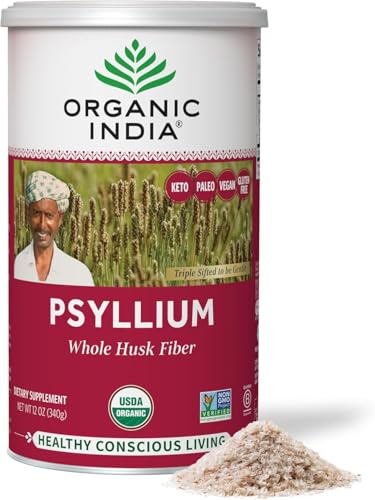
ORGANIC INDIA Psyllium Herbal Powder - Whole Husk Fiber, Vegan, Gluten-Free, USDA Certified Organic, Non-GMO, Soluble & Insoluble Fiber Source - 12 Oz Canister (Pack of 1) : Psyllium Nutritional Supplements
Amazon.com : ORGANIC INDIA Psyllium Herbal Powder - Whole Husk Fiber, Vegan, Gluten-Free, USDA Certified Organic, Non-GMO, Soluble & Insoluble Fiber Source - 12 Oz Canister (Pack of 1) : Psyllium
Evidence & Sources
Promising research with growing clinical support from multiple studies
- National Institute of Diabetes and Digestive and Kidney Diseases (NIDDK)
- American College of Gastroenterology (ACG) Clinical Guidelines
- American Gastroenterological Association (AGA)
- European Crohn’s and Colitis Organisation (ECCO)
- Crohn’s & Colitis Foundation
- National Center for Complementary and Integrative Health (NCCIH)
- The Lancet
- Nature Reviews Gastroenterology & Hepatology
- New England Journal of Medicine
- Cochrane Database of Systematic Reviews
This content is for informational purposes only and does not constitute medical advice. Always consult a qualified healthcare provider before starting, stopping, or changing any supplement or medication regimen.