

Hot Flashes
Also known as: Hot Flushes, Menopausal Hot Flashes
Overview
Hot flashes are sudden episodes of warmth, flushing, and sweating that commonly affect the face, neck, and chest. They are most often associated with the menopausal transition, but they can also occur in other contexts, including certain medications, endocrine conditions, cancer treatment, or surgical removal of the ovaries. In menopause-related cases, hot flashes are considered part of a broader group of symptoms called vasomotor symptoms, which may also include night sweats and sleep disruption. Episodes can last from seconds to several minutes and may vary widely in frequency and intensity.
Hot flashes are among the most common symptoms of perimenopause and menopause, affecting a substantial proportion of women during the menopausal transition. Research suggests they can begin years before the final menstrual period and may persist for years afterward. While often discussed as a normal physiologic feature of hormonal change, their impact can be significant, affecting sleep quality, mood, concentration, work performance, intimacy, and overall quality of life. Severity is highly individual, and some people experience only occasional mild warmth while others report frequent, disruptive episodes.
From a biologic standpoint, hot flashes are thought to reflect changes in the body's thermoregulatory system, influenced by shifting estrogen levels and neurochemical signaling in the brain. These changes appear to narrow the body's temperature-neutral zone, making relatively small internal or environmental shifts more likely to trigger sweating and vasodilation. Commonly reported triggers include warm rooms, stress, alcohol, caffeine, spicy foods, and layered clothing, though triggers are not the same for everyone.
Because hot flashes may overlap with symptoms of thyroid disease, infection, medication effects, anxiety, or other medical conditions, clinical evaluation may be appropriate when symptoms are severe, occur outside the expected menopausal context, or are accompanied by other concerning signs. In integrative health settings, hot flashes are often discussed not only as a hormone-related symptom but also as a multifactorial concern shaped by sleep, stress, metabolism, autonomic balance, and overall resilience.
Medical Perspectives
Two Ways of Seeing Health

Western
scientific · clinical
Western medicine applies science, technology, and clinical experience to treat symptoms through testing, diagnosis, and targeted intervention.

Eastern
traditional · alternative
Eastern medicine focuses on treating the body naturally by applying traditional knowledge practiced for thousands of years, emphasizing balance and whole-person wellness.
Gold Bamboo presents both perspectives side-by-side so you can make informed decisions. We don't advocate for one over the other — your health choices are yours.
Western Medicine Perspective
Western Medicine Perspective
In conventional medicine, hot flashes are primarily understood as vasomotor symptoms linked to fluctuating and declining estrogen levels during perimenopause and menopause. Contemporary research also emphasizes the role of the hypothalamus and neurotransmitter systems, including norepinephrine and serotonin, in altering temperature regulation. Conventional assessment typically considers the pattern of symptoms, menstrual history, age, medications, cancer therapies, and other possible causes such as hyperthyroidism or infection. Clinicians may also evaluate associated concerns like sleep disturbance, mood symptoms, and cardiovascular risk factors.
Management in western medicine may include several categories of care, depending on symptom burden, medical history, and patient preferences. Menopausal hormone therapy is among the most studied approaches for moderate to severe vasomotor symptoms, though its suitability depends on individual risk factors. Nonhormonal prescription options have also been studied, including certain antidepressants, gabapentinoids, clonidine, and newer neurokinin-targeted therapies. In addition, conventional care often includes counseling around behavioral and environmental strategies that may reduce symptom burden for some individuals, such as cooling techniques, trigger awareness, weight management, and sleep support.
Research into lifestyle and mind-body approaches shows mixed but growing evidence. Studies indicate that cognitive behavioral therapy, clinical hypnosis, and some structured behavioral interventions may help reduce distress or improve coping, even when the number of hot flashes does not change dramatically. Interest has also grown in the relationship between vasomotor symptoms and long-term health markers, including sleep disruption and potential associations with cardiovascular and metabolic health, although these links remain an active area of study rather than a settled clinical conclusion.
From a safety standpoint, conventional medicine generally emphasizes individualized evaluation, especially for people with a history of breast cancer, thromboembolic disease, liver disease, or unexplained bleeding. When hot flashes occur in people outside typical menopausal age ranges or alongside weight loss, palpitations, fever, or other systemic symptoms, further medical assessment may be warranted.
Eastern & Traditional Perspective
Eastern and Traditional Medicine Perspective
In Traditional Chinese Medicine (TCM), hot flashes are often interpreted through patterns involving imbalance of Yin and Yang, particularly forms of Kidney Yin deficiency, sometimes with empty heat rising upward. Depending on the presentation, practitioners may also consider involvement of the Heart, Liver, and Spleen systems, especially when symptoms occur with irritability, insomnia, palpitations, dryness, or emotional volatility. The traditional framework does not map directly onto hormone levels, but rather views hot flashes as part of a broader pattern of internal imbalance affecting temperature regulation, fluids, and vitality.
TCM approaches have traditionally included acupuncture, moxibustion, herbal formulas, dietary patterning, and stress-regulating practices such as qigong or tai chi. Modern research on acupuncture for menopausal vasomotor symptoms shows mixed but meaningful signals: some studies suggest improvement in symptom frequency, severity, or quality of life, while sham-controlled trials have produced variable results. As a result, acupuncture is often considered an area of moderate but not definitive evidence, especially for symptom relief and overall well-being rather than a uniform physiologic effect.
In Ayurveda, hot flashes are often discussed in relation to shifts in Pitta dosha, sometimes with depletion or instability associated with aging and reproductive transition. Symptoms such as heat, irritability, flushing, and night sweats may be understood as expressions of excess heat or disturbed balance in the body's regulatory systems. Traditional Ayurvedic care may involve individualized assessment of constitution, digestion, stress, sleep, and daily routine, with possible use of herbs, cooling foods, oil therapies, breathwork, and meditation practices.
Naturopathic and broader traditional systems frequently frame hot flashes as a sign of systemic transition rather than an isolated symptom. These models often emphasize whole-person context—including stress load, sleep, nutrition, emotional health, and environmental triggers. However, while many botanical and traditional approaches are widely used, the quality of evidence varies considerably, and herb-drug interactions or hormone-sensitive conditions may be important considerations. Consultation with qualified healthcare professionals is especially important when integrating conventional and traditional therapies.
Supplements & Products
Recommended Products

Hormone Repair Manual: Every Woman's Guide to Healthy Hormones After 40: Briden ND, Lara
Her books Period Repair Manual, Hormone Repair Manual, and Metabolism Repair for Women are <strong>practical guides to better health using nutrition, supplements, and body-identical hormones</strong>.
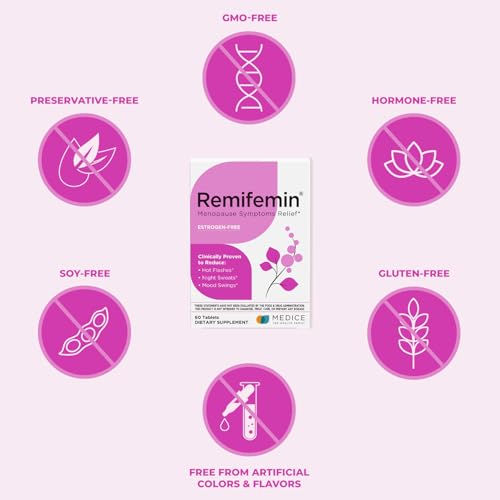
Remifemin Menopause Symptoms Relief - Clinically Proven Ingredients - Menopause Supplements - Black Cohosh - Estrogen-Free - Made in Germany - 60 Tablets
MENOPAUSE SYMPTOMS RELIEF: Remifemin is a trusted solution for managing menopause symptoms. It is <strong>clinically proven to reduce hot flashes, night sweats, mood swings, and irritability associate

Life Extension Menopause Relief – Siberian Rhubarb, Menopause Supplement for Women, Ease hot Flashes, Mood Swings, Night Sweats Relief, Hormone-Free, Gluten-Free, Non-GMO, Vegetarian, 30 Tablets : Everything Else
Our menopause relief supplement ... to <strong>provide up to 83% reduction of total common and uncommon menopausal discomforts, including hot flashes, mood swings, night sweats, sleep disturbances and
Evidence & Sources
Promising research with growing clinical support from multiple studies
- The North American Menopause Society (NAMS)
- American College of Obstetricians and Gynecologists (ACOG)
- National Institute on Aging (NIA)
- National Center for Complementary and Integrative Health (NCCIH)
- JAMA
- Menopause
- The Lancet
- Cochrane Database of Systematic Reviews
- Endocrine Society
- BMJ
This content is for informational purposes only and does not constitute medical advice. Always consult a qualified healthcare provider before starting, stopping, or changing any supplement or medication regimen.