

Frozen Shoulder
Also known as: Natural Remedies for Frozen Shoulder (Adhesive Capsulitis), Adhesive Capsulitis, Frozen Shoulder (Adhesive Capsulitis)
Frozen Shoulder (Adhesive Capsulitis)
Frozen shoulder, also called adhesive capsulitis, is a condition marked by progressive pain and significant loss of shoulder motion, especially both active and passive range of motion. It typically affects the capsule of the shoulder joint, a connective tissue structure that can become inflamed, thickened, and stiff over time. The condition is often described as moving through phases—commonly a painful “freezing” phase, a stiff “frozen” phase, and a gradual “thawing” phase—although not every person follows the same pattern.
Frozen shoulder is clinically important because it can significantly disrupt daily function, including dressing, reaching overhead, grooming, sleep, and work activities. It most often occurs in middle age, and research suggests it is more common in women and in people with certain metabolic or systemic conditions, especially diabetes mellitus and thyroid disease. It may arise without a clear cause (primary/idiopathic adhesive capsulitis) or after shoulder injury, surgery, or prolonged immobility (secondary adhesive capsulitis).
From a biomedical standpoint, the condition involves a combination of capsular inflammation, fibrosis, and contracture, particularly in parts of the joint capsule such as the rotator interval and coracohumeral ligament. This helps explain why the hallmark feature is not only pain but also a measurable restriction in motion. While many cases improve over time, recovery may be prolonged, sometimes lasting many months to years, and some individuals continue to have residual symptoms or reduced mobility.
Because shoulder pain can arise from many causes—such as rotator cuff disease, osteoarthritis, cervical spine disorders, or inflammatory arthritis—accurate assessment matters. Conventional evaluation typically emphasizes clinical history, physical examination, and selective imaging to exclude other diagnoses. Integrative and traditional systems often frame frozen shoulder more broadly, linking it to impaired circulation, biomechanical imbalance, constitutional factors, or stagnation patterns. Across systems, the condition is generally viewed as one that benefits from careful, individualized management and realistic expectations about the pace of recovery.
Compare Treatment Options
Frozen shoulder, also called adhesive capsulitis, is a condition involving painful restriction of shoulder movement that develops when the joint capsule becomes inflamed, thickened, and stiff. It often progresses through overlapping phases: a freezing phase with increasing pain, a frozen phase where stiffness dominates, and a thawing phase in which motion slowly improves. The condition can arise without a clear trigger, but it is more common after shoulder injury or immobilization and is seen more often in people with diabetes, thyroid disease, and midlife age ranges. Treatment options vary because frozen shoulder is not just a pain problem; it is also a mobility and tissue remodeling problem. Some approaches focus on pain control and maintaining function while the condition runs its course, while others aim to restore motion more actively through rehabilitation, injections, or procedures. Eastern and integrative approaches such as acupuncture and manual therapies are also commonly explored, especially for pain modulation, muscle guarding, and quality-of-life support. The best fit often depends on the stage of symptoms, how much stiffness versus pain is present, how urgently function is needed, and an individual's comfort with procedural risk and time commitment.
View treatment comparison (7 options)Medical Perspectives
Two Ways of Seeing Health

Western
scientific · clinical
Western medicine applies science, technology, and clinical experience to treat symptoms through testing, diagnosis, and targeted intervention.

Eastern
traditional · alternative
Eastern medicine focuses on treating the body naturally by applying traditional knowledge practiced for thousands of years, emphasizing balance and whole-person wellness.
Gold Bamboo presents both perspectives side-by-side so you can make informed decisions. We don't advocate for one over the other — your health choices are yours.
Western Medicine Perspective
Western / Conventional Medicine Perspective
In conventional medicine, adhesive capsulitis is understood as a painful restriction of the glenohumeral joint capsule associated with synovial inflammation and subsequent fibrotic tightening. Diagnosis is usually clinical, based on the characteristic loss of both active and passive range of motion, especially external rotation, along with pain and functional limitation. Imaging such as plain radiographs may be used to rule out other problems, while ultrasound or MRI can provide supportive findings in some cases, though they are not always necessary for diagnosis.
Conventional care generally focuses on the stage of the condition and the degree of pain and stiffness. Research supports a range of approaches, including activity modification, physical therapy-based mobility work, anti-inflammatory strategies, oral medications, intra-articular corticosteroid injections, hydrodilatation, and in selected cases procedural interventions such as manipulation under anesthesia or arthroscopic capsular release. Studies indicate that corticosteroid injections may offer short-term relief, particularly in earlier painful stages, while rehabilitation approaches are often used to address function and range of motion over time. Outcomes vary, and no single strategy is universally effective for all patients.
Western medicine also pays attention to associated health conditions and risk factors. Frozen shoulder is strongly linked with diabetes, and evidence suggests people with diabetes may experience more severe symptoms and slower recovery. Associations have also been reported with thyroid disorders, cardiovascular disease, and prolonged immobilization. For this reason, conventional evaluation often includes consideration of broader metabolic and systemic health, especially when symptoms are persistent, severe, or atypical.
A key feature of the conventional perspective is that adhesive capsulitis is usually considered self-limiting but not always self-resolving in a complete or timely way. Current research increasingly recognizes that some patients recover incompletely or require longer-term support. This has led to more nuanced discussions around prognosis, earlier recognition, and multimodal management rather than assuming that all cases fully resolve on their own.
Eastern & Traditional Perspective
Eastern / Traditional Medicine Perspective
In Traditional Chinese Medicine (TCM), frozen shoulder is often discussed under categories related to shoulder pain, obstruction syndromes (Bi syndrome), and restricted movement due to stagnation. Symptoms may be interpreted as arising from impaired flow of qi and blood through the shoulder channels, often influenced by patterns described as wind-cold-damp invasion, local trauma, overuse, aging-related deficiency, or blood stasis. The pronounced stiffness and fixed pain commonly associated with frozen shoulder may be viewed as a sign that obstruction has persisted long enough to create deeper tissue restriction.
Traditional East Asian approaches have historically used methods such as acupuncture, moxibustion, manual therapy, movement practices, and herbal formulas chosen according to pattern differentiation. Contemporary research suggests acupuncture may help reduce pain and improve function in some patients with shoulder disorders, including adhesive capsulitis, though study quality is mixed and protocols vary widely. In traditional frameworks, treatment is individualized rather than based solely on the biomedical label, meaning two people with the same diagnosis might be understood as having different underlying patterns.
In Ayurveda, shoulder stiffness and pain may be interpreted through concepts involving vata imbalance, impaired tissue nourishment, and restricted movement in the joints and soft tissues. Traditional approaches may include external therapies, medicated oils, heat-based applications, gentle mobilization, and herbal preparations selected according to constitution and symptom pattern. Naturopathic and other traditional systems may frame the condition in terms of inflammation, connective tissue restriction, circulatory impairment, stress load, and whole-person recovery, often emphasizing supportive lifestyle context alongside local therapies.
Across traditional systems, frozen shoulder is generally understood not only as a local joint problem but also as a reflection of broader imbalance, vulnerability, or slowed recovery capacity. While many traditional practices have long histories of use, the modern evidence base remains variable. As with conventional care, practitioners commonly emphasize individualized assessment and the importance of ruling out more serious structural or systemic causes of shoulder pain through appropriate medical evaluation.
Supplements & Products
Recommended Products
Treat Your Own Shoulder: McKenzie, Robin
<strong>This patient handbook provides an easy-to-follow self-treatment plan to quickly and effectively diagnose, alleviate, treat and manage debilitating shoulder and related pains, even for the long

Voltaren Arthritis Pain Relief Gel, Diclofenac Sodium, 1% (NSAID), Clinically Proven Powerful Pain Reliever with Easy Open Flip Top Cap, No Prescription Needed, 5.3oz
Buy Voltaren Arthritis Pain Relief Gel, Diclofenac Sodium, 1% (NSAID), Clinically Proven Powerful Pain Reliever with Easy Open Flip Top Cap, No Prescription Needed, 5.3oz on Amazon.com ✓ FREE SHIPPING
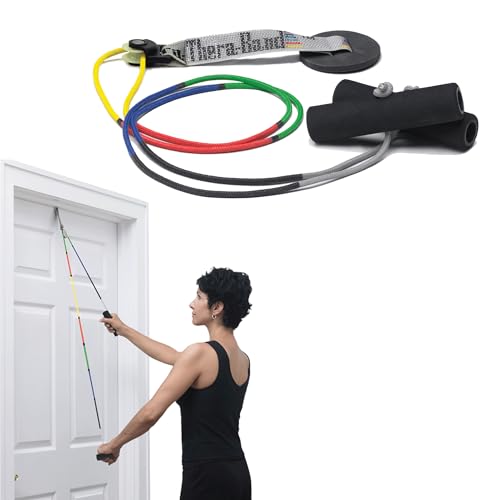
THERABAND Shoulder Pulley, Overhead Shoulder Pulley for Physical Therapy, Over the Door Pulley with Foam Handles and Color Coded Rope for Increasing Range of Motion, Overdoor System for Rehabilitation
Over the door shoulder pulley system with color-coded ropes specifically designed to assist patients undergoing shoulder rehab and physical therapy by providing immediate feedback on progress
Evidence & Sources
Promising research with growing clinical support from multiple studies
- American Academy of Orthopaedic Surgeons (AAOS)
- Journal of Shoulder and Elbow Surgery
- The Lancet
- BMJ
- Cochrane Database of Systematic Reviews
- American Family Physician
- National Center for Complementary and Integrative Health (NCCIH)
- Mayo Clinic Proceedings
This content is for informational purposes only and does not constitute medical advice. Always consult a qualified healthcare provider before starting, stopping, or changing any supplement or medication regimen.