

Essential Tremor
Also known as: Benign Essential Tremor
Essential Tremor Overview
Essential tremor (ET) is a common neurological movement disorder characterized by rhythmic, involuntary shaking, most often affecting the hands and arms, especially during action such as writing, eating, or holding objects. It can also involve the head, voice, jaw, and less commonly the legs or trunk. Unlike tremor associated with Parkinson’s disease, essential tremor typically appears during movement or when maintaining a posture, rather than primarily at rest. The condition can range from mild and intermittent to more persistent and functionally disruptive.
ET is considered one of the most prevalent movement disorders worldwide. It may occur at any age but becomes more common with aging, and it often runs in families, suggesting a significant genetic component in many cases. At the same time, essential tremor is not always straightforward to diagnose, because tremor can also arise from medication effects, thyroid disease, anxiety, metabolic disturbances, or other neurological conditions. For that reason, clinical evaluation generally focuses on distinguishing ET from other causes of shaking.
The impact of essential tremor extends beyond visible movement symptoms. Research and patient reports indicate that tremor can affect handwriting, drinking from a cup, using utensils, grooming, dressing, technology use, and occupational tasks. Many people also describe a social and emotional burden, including embarrassment, self-consciousness, or avoidance of public situations. Stress, fatigue, caffeine, and sleep disruption are commonly reported as factors that may worsen symptoms, which is why supportive strategies often include attention to stress regulation, daily function, and quality of life.
From an integrative health perspective, essential tremor is often discussed through both neurological mechanisms and broader whole-person factors such as nervous system regulation, sleep, emotional health, and physical resilience. Conventional medicine emphasizes diagnosis, symptom characterization, and evidence-based management options, while traditional systems may frame tremor in terms of imbalance, depletion, excess internal movement, or dysregulation of vital energy. Across perspectives, a balanced approach typically recognizes that persistent tremor warrants professional assessment, especially when symptoms are new, rapidly changing, or interfering with daily living.
Compare Treatment Options
Essential tremor (ET) is a common neurological movement disorder that causes rhythmic shaking during action or posture, most often in the hands and arms, but sometimes also in the head, voice, jaw, or legs. Unlike the resting tremor more classically associated with Parkinson’s disease, ET often becomes more noticeable when a person is writing, eating, pouring, shaving, applying makeup, or holding an object against gravity. Severity varies widely: for some people it is a mild nuisance, while for others it meaningfully interferes with work, social confidence, and day-to-day function. Treatment options vary because ET exists on a spectrum and can be influenced by symptom severity, body region involved, anxiety or stress sensitivity, age, other medical conditions, and tolerance for medication side effects or procedures. Western care often emphasizes diagnosis confirmation, medication, botulinum toxin for selected tremors, and device- or surgery-based approaches for severe functional impairment. Eastern and integrative approaches such as acupuncture, mind-body regulation, and selected supplements are traditionally used or studied as supportive options, often with the goal of reducing symptom burden, stress amplification, or quality-of-life impact rather than eliminating tremor entirely. Careful evaluation matters because tremor can also overlap with medication effects, thyroid disease, Parkinsonism, anxiety, and other neurologic conditions.
View treatment comparison (7 options)Medical Perspectives
Two Ways of Seeing Health

Western
scientific · clinical
Western medicine applies science, technology, and clinical experience to treat symptoms through testing, diagnosis, and targeted intervention.

Eastern
traditional · alternative
Eastern medicine focuses on treating the body naturally by applying traditional knowledge practiced for thousands of years, emphasizing balance and whole-person wellness.
Gold Bamboo presents both perspectives side-by-side so you can make informed decisions. We don't advocate for one over the other — your health choices are yours.
Western Medicine Perspective
Western / Conventional Medicine Perspective
In conventional medicine, essential tremor is understood as a neurological disorder of movement control, with current research pointing to abnormal signaling within brain networks involved in motor coordination, particularly circuits linking the cerebellum, thalamus, and motor cortex. The exact cause is not fully settled, and ET is increasingly viewed as a heterogeneous syndrome rather than a single uniform disease. Family history is common, and genetic susceptibility appears important, although no single cause explains all cases.
Diagnosis is primarily clinical, based on the pattern of tremor, medical history, neurological examination, and exclusion of other causes. Clinicians often distinguish ET from Parkinsonian tremor, dystonic tremor, enhanced physiologic tremor, medication-induced tremor, and tremor related to endocrine or metabolic issues. Depending on the presentation, evaluation may include medication review, thyroid testing, and assessment for other neurological signs. Functional impact is also central to care, since symptom severity is often judged not only by tremor amplitude but by how much it affects eating, writing, work, communication, and independence.
Conventional management may include monitoring, rehabilitation strategies, assistive devices, behavioral adaptation, and medical or procedural therapies when symptoms are significantly disruptive. Research also supports the importance of addressing aggravating factors such as anxiety, stress, sleep loss, stimulants, and certain medications. Occupational therapy approaches may help with adaptive techniques for handwriting, utensil use, drinking, and other daily tasks, while broader supportive care may include mental health support when tremor contributes to distress or social withdrawal. Any treatment planning is typically individualized and guided by a qualified healthcare professional.
Eastern & Traditional Perspective
Eastern / Traditional Medicine Perspective
In Traditional Chinese Medicine (TCM), tremor is often interpreted through patterns involving internal wind, often associated with dysfunction of the Liver system, and sometimes compounded by Kidney or Blood deficiency, phlegm, or depletion with age. From this perspective, involuntary shaking may reflect a loss of internal nourishment or anchoring, allowing excessive movement to arise. Emotional strain, overwork, aging, and constitutional weakness may be viewed as contributing factors. Traditional assessment focuses on the overall pattern rather than the tremor alone, incorporating sleep, digestion, energy, emotional state, pulse, and tongue findings.
Traditional East Asian approaches may discuss supportive care in terms of calming internal wind, nourishing Blood and Yin, supporting Kidney essence, and regulating the shen. Practices such as acupuncture, breathing exercises, meditative movement, and lifestyle regulation are traditionally used with the aim of improving overall balance and reducing symptom aggravation related to tension or fatigue. Research into acupuncture for essential tremor is still limited and mixed, so these approaches are generally described as adjunctive or supportive rather than definitive within an evidence-based framework.
In Ayurveda, tremor-like symptoms may be understood largely through Vata imbalance, especially when there is excess movement, nervous system instability, dryness, fatigue, or heightened sensitivity to stress. Ayurvedic interpretation often considers tremor in the context of aging, depletion, mental strain, and irregular routines. Supportive approaches traditionally emphasize grounding, nervous system steadiness, restorative practices, and individualized constitutional assessment. In naturopathic and other traditional systems, similar themes appear: attention to stress reduction, sleep, nourishment, and functional adaptation is often considered important alongside appropriate medical evaluation.
Across traditional systems, a common theme is that tremor reflects not just a local motor symptom but a broader pattern of systemic imbalance or dysregulation. While many people seek complementary approaches to improve resilience and quality of life, these systems also generally acknowledge the importance of medical assessment for persistent tremor, particularly when symptoms are progressive or accompanied by other neurological changes.
Supplements & Products
Recommended Products
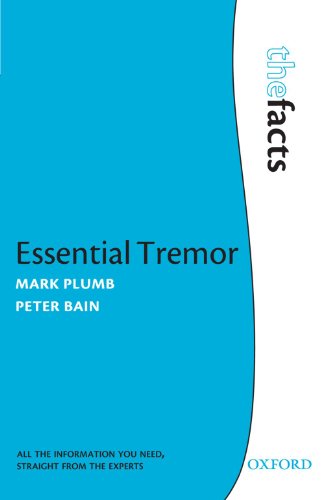
Essential Tremor: The Facts (The ^AFacts Series)
Essential Tremor: The Facts is <strong>a practical guide for sufferers designed to minimise the impact the condition has upon their lives</strong>. Written by an ET sufferer and a movement disorders s

Liftware Steady Starter Kit for Hand Tremor : Toys & Games
Steady is <strong>designed to counteract tremors and shaky hands that may be related to conditions like Parkinson's disease or essential tremor</strong>. The Liftware Steady Starter Kit includes

BUNMO Weighted Utensils for Hand Tremors - Elderly, Weak Hand Grip & Handicapped - Stainless Steel - Eat Independently - Weighted 3 Piece Set
Weighted Utensils for Hand Tremors and Parkinson's Patients - <strong>4 Piece Set Weighted Silverware for Elderly, Arthritis, Weak Hand Grip - Convenient Travel Bag, Stainless Steel, 7 Oz</strong
Evidence & Sources
Promising research with growing clinical support from multiple studies
- National Institute of Neurological Disorders and Stroke (NINDS)
- International Parkinson and Movement Disorder Society
- Nature Reviews Neurology
- The Lancet Neurology
- Neurology
- Tremor and Other Hyperkinetic Movements
- National Center for Complementary and Integrative Health (NCCIH)
- BMJ
This content is for informational purposes only and does not constitute medical advice. Always consult a qualified healthcare provider before starting, stopping, or changing any supplement or medication regimen.