

Alopecia (Hair Loss)
Overview
Alopecia is the medical term for hair loss, a broad condition that can affect the scalp, beard area, eyebrows, eyelashes, or body hair. It is not a single disorder but a group of conditions with different causes, patterns, and implications. Common forms include androgenetic alopecia (pattern hair loss), alopecia areata (an autoimmune form of hair loss), telogen effluvium (diffuse shedding often triggered by stress, illness, hormonal shifts, or nutritional problems), and scarring alopecias, in which inflammation can permanently damage the hair follicle. Hair loss may develop gradually over years or occur more suddenly, depending on the underlying process.
Hair loss is extremely common and often carries effects that go far beyond appearance. Research and clinical experience indicate that alopecia can affect self-image, mood, social functioning, and quality of life, particularly when onset is rapid or occurs at a younger age. Pattern hair loss is highly prevalent in both men and women, while alopecia areata affects a smaller but still significant portion of the population. Because hair growth is tied to a dynamic cycle of growth, transition, rest, and shedding, disruptions in immune signaling, hormones, genetics, inflammation, medications, or systemic illness can all contribute.
From a clinical standpoint, alopecia is best understood as a visible sign with many possible drivers rather than a diagnosis in itself. Evaluation often considers the pattern of loss, whether follicles remain intact, whether the scalp shows redness, scaling, or scarring, and whether there are clues pointing to internal factors such as thyroid disease, iron deficiency, autoimmune illness, recent childbirth, infection, or medication exposure. This is one reason healthcare evaluation is often emphasized when hair loss is sudden, patchy, painful, associated with scalp changes, or accompanied by other symptoms.
Across medical systems, alopecia is viewed as a condition with both local and whole-body dimensions. Conventional dermatology focuses on follicle biology, immune pathways, hormonal influences, and underlying medical triggers. Traditional systems such as Traditional Chinese Medicine (TCM), Ayurveda, and naturopathic frameworks often interpret hair loss through broader patterns involving stress, vitality, circulation, digestion, constitution, and aging. While these frameworks differ in language and theory, both western and eastern perspectives often share an interest in identifying root contributors rather than viewing hair loss as purely cosmetic.
Western Medicine Perspective
Western Medicine Perspective
In conventional medicine, alopecia is classified according to cause and pattern. Androgenetic alopecia is linked to genetic susceptibility and follicular sensitivity to androgens, especially dihydrotestosterone (DHT), leading to progressive miniaturization of hair follicles over time. Alopecia areata is understood as an autoimmune condition in which immune cells target hair follicles, often causing sharply defined patches of hair loss and, in some cases, more extensive scalp or body involvement. Telogen effluvium reflects a shift in the hair cycle, where more hairs enter the shedding phase after a physiologic or emotional stressor. Scarring alopecias are less common but clinically important because inflammation can irreversibly destroy follicles.
Diagnostic assessment typically involves history, physical examination, and sometimes additional testing to clarify the subtype and identify associated conditions. Dermatologists may use scalp examination, dermoscopy, pull testing, laboratory evaluation, and in selected cases scalp biopsy. Conventional workup may consider factors such as thyroid dysfunction, iron status, autoimmune disease, nutritional deficiency, hormonal changes, medication effects, infection, or traction from hairstyling practices. Clinical literature emphasizes that prompt recognition is especially important in suspected scarring alopecia, where permanent loss can occur if inflammatory damage progresses.
Research on treatment is strongest for certain forms of alopecia and more limited for others. For example, evidence supports several medical approaches for pattern hair loss and increasingly for alopecia areata, including therapies that target immune signaling pathways. At the same time, outcomes vary, relapse can occur, and response often depends on the specific diagnosis, duration, severity, and individual biology. Conventional medicine generally frames hair loss management as a combination of diagnostic clarification, treatment of reversible contributors where possible, and long-term monitoring when the condition is chronic.
Eastern & Traditional Perspective
Eastern and Traditional Medicine Perspective
In Traditional Chinese Medicine (TCM), hair is often described as being related to the Blood and the Kidney essence, with healthy hair reflecting adequate nourishment and balance within the body. Hair loss may be interpreted through patterns such as Blood deficiency, Liver and Kidney deficiency, Qi stagnation, Blood stasis, or wind-heat affecting the scalp, depending on the presentation. Sudden patchy loss may be viewed differently from gradual thinning or hair loss associated with stress, fatigue, or postpartum changes. TCM approaches traditionally aim to restore systemic balance and support circulation and nourishment to the scalp, rather than focusing only on the hair follicle itself.
In Ayurveda, hair loss may be associated with imbalances in doshas, especially Pitta, as well as factors involving tissue nutrition, stress, digestion, and constitutional tendencies. Traditional Ayurvedic interpretation may connect thinning hair with excess heat, depleted vitality, or impaired nourishment of deeper tissues. Classical and modern Ayurvedic practice often discusses the role of lifestyle strain, sleep disruption, emotional stress, and dietary imbalance in contributing to hair shedding or premature thinning.
In naturopathic and integrative traditions, alopecia is often considered through a whole-person lens that includes inflammation, stress physiology, micronutrient status, endocrine balance, gut health, and environmental exposures. Some complementary approaches have been traditionally used to support scalp health or reduce stress-related contributors, but the quality of evidence is mixed and often depends on the specific intervention and type of alopecia. Integrative clinicians frequently emphasize careful assessment because hair loss can reflect broader health issues, and because not all natural or traditional approaches have equivalent research support.
Overall, eastern and traditional systems tend to interpret alopecia as a sign of internal imbalance expressed externally. These frameworks may offer meaningful perspectives on stress, constitution, and long-term vitality, though their diagnostic models differ from biomedical dermatology. As with conventional care, consultation with a qualified healthcare professional is important, particularly when hair loss is sudden, severe, scarring, or associated with other symptoms.
Supplements & Products
Recommended Products
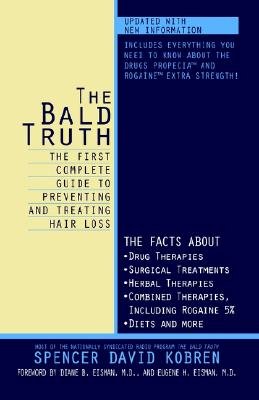
The Bald Truth : The First Complete Guide To Preventing And Treating Hair Loss: Spencer David Kobren, Diane B. Eisman, Eugene H. Eisman
The Bald Truth : <strong>The First Complete Guide To Preventing And Treating Hair Loss</strong> [Spencer David Kobren, Diane B. Eisman, Eugene H. Eisman] on Amazon.com. *FREE* shipping on qualifying o

Kirkland Minoxidil 5% for Men, Topical Solution Extra Strength Hair Regrowth Treatment, 6 Months Supply, Total 12 Fl Oz, Dropper Applicator, Exclusive 2 MicroFiber Cleaning Cloths and Comb Included
KIRKLAND Signature Minoxidil 5% Hair Regrowth Treatment for Men | 6 Months Supply | Topical Solution | Extra Strength | Clinically Proven | Unscented Drops | Dropper Included

Hairmax LaserBand 82 - Hair Growth and Regrowth Treatment - Restores Natural Hair Cycle
The Hairmax LaserBand 82 is <strong>a clinically proven laser hair growth device for men and women</strong>. It uses medical-grade lasers to deliver low-level laser therapy, stimulating hair follicles
Evidence & Sources
Promising research with growing clinical support from multiple studies
- American Academy of Dermatology
- National Institute of Arthritis and Musculoskeletal and Skin Diseases (NIAMS)
- National Alopecia Areata Foundation
- National Center for Complementary and Integrative Health (NCCIH)
- Journal of the American Academy of Dermatology
- JAMA Dermatology
- The Lancet
- Nature Reviews Disease Primers
This content is for informational purposes only and does not constitute medical advice. Always consult a qualified healthcare provider before starting, stopping, or changing any supplement or medication regimen.