

Adrenal insufficiency
Overview
Adrenal insufficiency is a disorder in which the adrenal glands do not produce enough steroid hormones—most importantly cortisol, and in some forms aldosterone. Cortisol helps regulate energy metabolism, blood pressure, immune activity, and the body’s response to physical and emotional stress. Aldosterone helps maintain sodium, potassium, and fluid balance. When these hormones are deficient, symptoms may develop gradually or appear abruptly, ranging from fatigue, weight loss, low blood pressure, salt craving, abdominal symptoms, and muscle weakness to life-threatening adrenal crisis in severe cases.
Clinicians generally classify adrenal insufficiency into primary, secondary, and tertiary forms. Primary adrenal insufficiency—often called Addison’s disease when chronic—is caused by direct damage to the adrenal glands, commonly from autoimmune destruction in higher-income settings, though infections such as tuberculosis remain important causes globally. In primary disease, both cortisol and aldosterone production may be impaired. Secondary adrenal insufficiency results from inadequate adrenocorticotropic hormone (ACTH) release from the pituitary, while tertiary adrenal insufficiency reflects reduced hypothalamic signaling, often associated with suppression from long-term glucocorticoid exposure. These distinctions matter because the hormone pattern, associated features, and medical approach differ.
The condition is considered uncommon but clinically significant because it can be difficult to recognize early. Symptoms often overlap with more common problems such as chronic fatigue, gastrointestinal upset, depression, or unexplained weight loss. Hyperpigmentation may occur in primary adrenal insufficiency because elevated ACTH can stimulate skin pigment pathways. Laboratory abnormalities may include hyponatremia, hyperkalemia in primary disease, hypoglycemia, and anemia. In acute adrenal crisis, severe hypotension, dehydration, confusion, vomiting, or shock can occur and require urgent conventional medical care.
Adrenal insufficiency is distinct from the popularized but medically controversial concept of “adrenal fatigue.” Major endocrine organizations do not recognize adrenal fatigue as a validated diagnosis, whereas adrenal insufficiency is a well-defined endocrine disorder with established diagnostic testing and potentially serious consequences if untreated. On integrative health platforms, this distinction is important: research supports careful endocrinologic evaluation for true adrenal hormone deficiency, while traditional systems may interpret chronic low-energy states through different frameworks that are not equivalent to confirmed adrenal failure.
Medical Perspectives
Two Ways of Seeing Health

Western
scientific · clinical
Western medicine applies science, technology, and clinical experience to treat symptoms through testing, diagnosis, and targeted intervention.

Eastern
traditional · alternative
Eastern medicine focuses on treating the body naturally by applying traditional knowledge practiced for thousands of years, emphasizing balance and whole-person wellness.
Gold Bamboo presents both perspectives side-by-side so you can make informed decisions. We don't advocate for one over the other — your health choices are yours.
Western Medicine Perspective
Western Medicine Perspective
In conventional medicine, adrenal insufficiency is understood as a disorder of the hypothalamic-pituitary-adrenal (HPA) axis or the adrenal glands themselves. Diagnosis typically relies on a combination of clinical suspicion, morning serum cortisol, ACTH measurement, and confirmatory dynamic testing such as the cosyntropin (ACTH stimulation) test. Additional evaluation may include electrolytes, plasma renin and aldosterone, adrenal autoantibodies, pituitary hormone assessment, and imaging when a structural cause is suspected. The main goals of evaluation are to confirm hormone deficiency, identify whether the condition is primary or central, and determine the underlying cause.
Primary adrenal insufficiency most often reflects autoimmune adrenalitis, but etiologies also include tuberculosis, fungal infection, adrenal hemorrhage, metastatic disease, infiltrative disorders, genetic syndromes, and medication-related causes. Secondary and tertiary forms are commonly linked to pituitary disease, hypothalamic disease, or suppression after prolonged glucocorticoid use. Research and guidelines emphasize that untreated adrenal insufficiency can lead to recurrent illness burden and adrenal crisis, especially during surgery, infection, trauma, or other physiologic stressors.
Conventional management focuses on physiologic hormone replacement and education about stress-related risk. In primary disease, both glucocorticoid and sometimes mineralocorticoid replacement are used; in central forms, mineralocorticoid deficiency is generally absent because aldosterone regulation is often preserved. Long-term care also includes monitoring symptoms, blood pressure, weight, electrolyte balance, associated autoimmune conditions, and factors that may raise crisis risk. Medical societies stress the importance of individualized endocrine supervision, because both under-replacement and over-replacement can carry health consequences.
From an evidence standpoint, the biomedical understanding of adrenal insufficiency is strong, particularly regarding diagnosis, hormone physiology, autoimmune mechanisms, and emergency recognition of adrenal crisis. By contrast, many nonspecific fatigue-related syndromes discussed in popular wellness spaces do not meet the same evidentiary standard. This distinction remains central in conventional endocrinology.
Eastern & Traditional Perspective
Eastern / Traditional Medicine Perspective
Traditional medical systems do not describe adrenal insufficiency in the same hormone-based terms used in endocrinology, but they have long recognized patterns involving profound fatigue, weakness, dizziness, low resilience, digestive disturbance, cold intolerance, and collapse after stress or chronic illness. In Traditional Chinese Medicine (TCM), such presentations may be interpreted through patterns such as Kidney deficiency, Spleen Qi deficiency, or depletion of Yang and Essence, depending on the broader symptom picture. The Kidney system in TCM is associated with constitutional vitality, stress adaptation, growth, and fluid balance, making it the framework most commonly referenced in integrative discussions of adrenal-related disorders.
In Ayurveda, comparable patterns may be framed in terms of dhatu depletion, impaired vitality, weakened digestive/metabolic fire, or derangements involving Vata with reduced overall resilience. In naturopathic and other traditional frameworks, the emphasis is often placed on restoring systemic balance, conserving energy, supporting digestion, improving sleep quality, and reducing the physiologic burden of chronic stress. These models are holistic and pattern-based rather than gland-specific, and they are not considered diagnostic substitutes for confirmed endocrine testing.
Herbal traditions and adjunctive practices are sometimes discussed in relation to fatigue, stress tolerance, and recovery. Research on selected botanicals sometimes explores effects on perceived stress, energy, or HPA-axis signaling, but this literature is generally indirect relative to true adrenal insufficiency. Importantly, because confirmed adrenal insufficiency can become medically dangerous, traditional and integrative practitioners generally distinguish supportive constitutional care from the urgent need for endocrine evaluation and standard treatment when actual hormone deficiency is present.
A balanced integrative view recognizes that eastern and traditional systems may offer useful quality-of-life frameworks for understanding the broader experience of depletion and chronic stress, while conventional medicine remains essential for diagnosis and management of adrenal hormone failure. The two perspectives address overlapping symptoms, but they do not define the condition in the same way.
Related Topics
Corticosteroids
Corticosteroids — medication topic in the Gold Bamboo health ontology.
How They Relate
Adrenal insufficiency & Corticosteroids
Adrenal insufficiency (AI) is a state of inadequate cortisol availability. Corticosteroids are life‑saving anti‑inflammatory and immunosuppressive drugs that can also suppress the body’s own cortis...
Supplements & Products
Recommended Products

Living With Addison's Disease: A Guide For People With Addison's, Supporters and Professionals
This ground-breaking book <strong>provides practical, evidence-based health advice for people affected by Addison's Disease</strong>, a rare endocrine disorder in which the adrenal glands do not
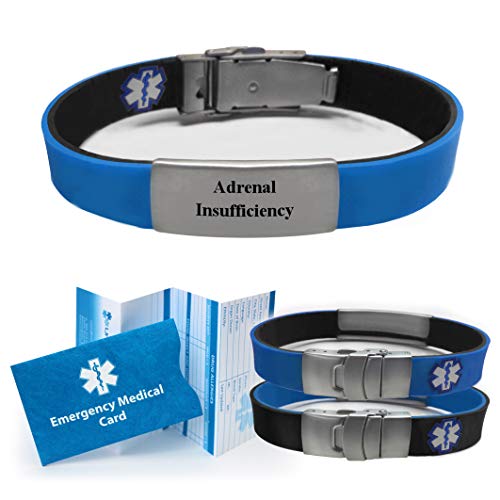
"ADRENAL INSUFFICIENCY" Sport/Slim Reversible Medical Alert ID Bracelet for Men and Women: Clothing, Shoes & Jewelry
This fully waterproof silicone medical alert ID bracelet has a <strong>matte finished stainless steel engraving plate and buckle clasp</strong> combining all the best for both form and function
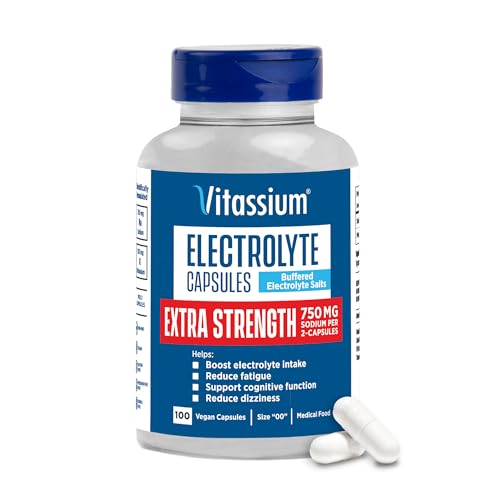
Vitassium Electrolyte Capsules, Electrolytes for The Management of POTS and High Sodium Diets (500mg Sodium - 100mg Potassium), Unflavored, 100 Salt Pills (Size 0) : Everything Else
Buy Vitassium Electrolyte Capsules, Electrolytes for The Management of POTS and High Sodium Diets (500mg Sodium - 100mg Potassium), Unflavored, 100 Salt Pills (Size 0) on Amazon.com ✓ FREE SHIPPING on
Evidence & Sources
Supported by multiple clinical trials and systematic reviews
- Endocrine Society Clinical Practice Guidelines
- Journal of Clinical Endocrinology & Metabolism
- Lancet Diabetes & Endocrinology
- The Lancet
- National Institute of Diabetes and Digestive and Kidney Diseases (NIDDK)
- National Organization for Rare Disorders (NORD)
- Merck Manual Professional Edition
- NCCIH
This content is for informational purposes only and does not constitute medical advice. Always consult a qualified healthcare provider before starting, stopping, or changing any supplement or medication regimen.