

Thymus
Also known as: Thymus Gland, Thymic Function, Thymus Health
Overview
The thymus is a specialized lymphoid organ located in the upper chest, behind the sternum and in front of the heart. It plays a central role in the development of the adaptive immune system, especially during infancy, childhood, and adolescence. Its primary function is to support the maturation and selection of T lymphocytes (T cells), the white blood cells that help the body distinguish between harmful invaders and the body’s own tissues. Through this process, the thymus contributes to immune defense while also helping maintain self-tolerance, a key mechanism in reducing inappropriate immune attacks on the body.
The thymus is largest and most active early in life. With age, it gradually undergoes thymic involution, meaning much of its functional tissue is replaced by fatty tissue. Even so, its early-life role has lasting importance because it helps establish the repertoire of T cells that supports immune function throughout life. Interest in the thymus extends beyond anatomy because age-related changes in thymic function have been associated in research with immunosenescence, infection vulnerability, vaccine responsiveness, and broader questions about healthy aging.
Clinically, the thymus is relevant in several areas of medicine. Disorders involving the thymus include thymoma, thymic hyperplasia, congenital absence or underdevelopment of the thymus, and associations with autoimmune conditions such as myasthenia gravis. In immune research, the thymus is also studied in relation to primary immunodeficiencies, transplantation, endocrine-immune interactions, and recovery of immune function after chemotherapy or severe illness.
In integrative health discussions, the thymus is sometimes framed as a marker or symbol of immune vitality. While traditional systems did not define the thymus in modern immunologic terms, some have long described constitutional strength, resistance to illness, and developmental resilience in ways that loosely overlap with thymus-related functions. Contemporary integrative conversations may explore nutrition, stress, sleep, and mind-body practices as factors that can influence broader immune regulation, though these approaches are not equivalent to directly modifying thymic output. Any concerns about thymus health or immune function are best evaluated by qualified healthcare professionals.
Medical Perspectives
Two Ways of Seeing Health

Western
scientific · clinical
Western medicine applies science, technology, and clinical experience to treat symptoms through testing, diagnosis, and targeted intervention.

Eastern
traditional · alternative
Eastern medicine focuses on treating the body naturally by applying traditional knowledge practiced for thousands of years, emphasizing balance and whole-person wellness.
Gold Bamboo presents both perspectives side-by-side so you can make informed decisions. We don't advocate for one over the other — your health choices are yours.
Western Medicine Perspective
Western Medicine Perspective
In conventional medicine, the thymus is understood as a primary lymphoid organ essential for T-cell education. Immature T-cell precursors migrate from the bone marrow to the thymus, where they undergo a tightly regulated process of differentiation, positive selection, and negative selection. This allows functional T cells to mature while reducing the survival of cells that react strongly against the body’s own tissues. This process is fundamental to immune competence and to the prevention of certain forms of autoimmunity.
The thymus is also influenced by hormones, cytokines, and systemic health. Research suggests that infection, malnutrition, chronic stress physiology, cancer therapies, and aging can affect thymic structure and output. In newborns and children, abnormal thymic development can contribute to severe immune dysfunction, as seen in conditions such as DiGeorge syndrome. In adults, thymic abnormalities are more often evaluated through imaging, pathology, and their association with autoimmune disease or mediastinal masses.
Conventional evaluation of thymus-related disease depends on the clinical context. Physicians may use CT or MRI imaging, antibody testing, immune cell profiling, and sometimes biopsy or surgical pathology. Management in mainstream medicine focuses on the underlying diagnosis rather than on the thymus as an isolated wellness target. For example, thymectomy may be considered in selected cases of thymoma or myasthenia gravis, while immune deficiencies are approached through specialized immunologic care. Current biomedical research is also exploring thymic regeneration, T-cell reconstitution, and ways to support immune recovery in aging or post-treatment settings, though these remain active areas of investigation rather than routine general practice.
Eastern & Traditional Perspective
Eastern/Traditional Medicine Perspective
Traditional medical systems such as Traditional Chinese Medicine (TCM) and Ayurveda did not historically describe the thymus as a distinct immune organ in the modern anatomical sense. Instead, they interpreted immune resilience through broader patterns involving vitality, development, defense, and constitutional balance. In TCM, concepts such as Wei Qi (defensive qi), the functional roles of the Lung, Spleen, and Kidney systems, and the balance between upright qi and pathogenic factors are often used to explain susceptibility to recurrent illness, recovery capacity, and developmental strength.
From an Ayurvedic perspective, analogous themes may be discussed through ojas, the concept associated with vitality, resilience, and the body’s capacity to maintain strength and stability. Traditional frameworks may link weakened resistance or poor recovery to systemic imbalance rather than to dysfunction of one isolated organ. In naturopathic and other integrative traditions, the thymus is sometimes referenced symbolically in relation to immune development, stress adaptation, and constitutional health, particularly in children or in discussions of long-term immune regulation.
Traditional and integrative approaches often emphasize foundational influences such as diet, sleep, emotional balance, breathing practices, and restorative routines as contributors to overall immune harmony. Some herbal traditions have historically used botanical medicines classified as tonics, adaptogens, or restorative agents for people with low vitality or frequent illness. However, evidence does not establish that traditional practices specifically enhance thymus function in a direct, measurable way in the general population. As a result, eastern and integrative interpretations are best understood as whole-system approaches to immune balance, rather than precise thymus-targeted models comparable to modern immunology.
Supplements & Products
Recommended Products

Janeway's Immunobiology eBook : Murphy, Kenneth M., Weaver, Casey, Berg, Leslie J.: Kindle Store
The gold standard, with the most up-to-date research and resources Immunobiology is <strong>the premier text for immunology at the advanced undergraduate, graduate, and medical school levels</strong>.
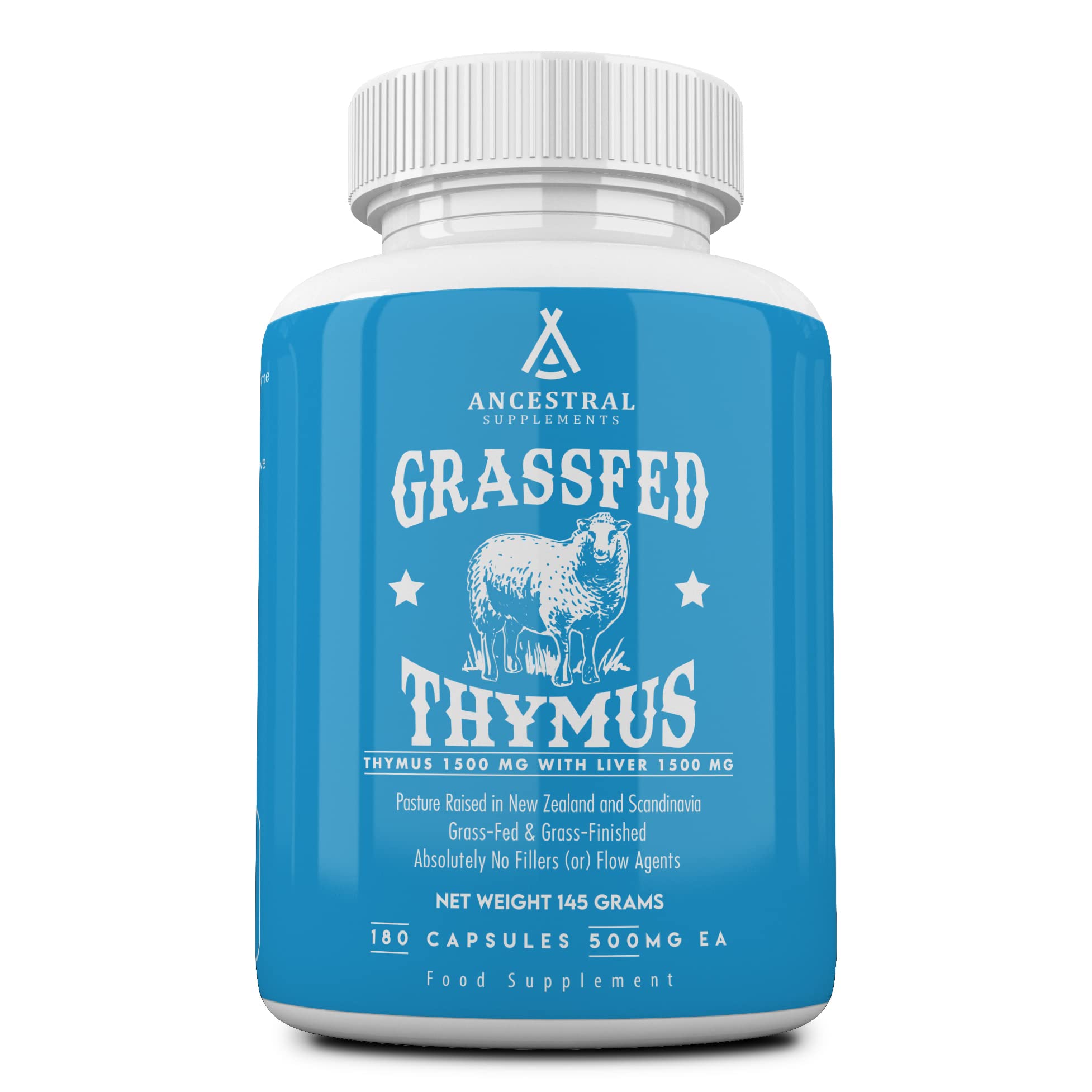
Ancestral Supplements Grass Fed Ovine (Sheep) Thymus Glandular Extract, 3000mg, Histamine, Energy, Allergy and Immune Support Supplement with Grass Fed Beef Liver, Non GMO, 180 Capsules : Everything Else
POWERFUL CELL SUPPORT: Along with immunologically active proteins that may support macrophage stimulation and NK cell activity, thymosin and other peptides present in thymus may promote the developmen

Allergy Research Group Thymus Supplement - Thymus Tissue, Glandular Extract, 1000mg Raw Thymus Glandular, Ovine, Lyophilized, Hypoallergenic - 75 Count
Allergy Research Group Thymus Supplement - Thymus Tissue, Glandular Extract, 1000mg Raw Thymus Glandular, Ovine, Lyophilized, Hypoallergenic - 75 Count · Organic Glandular Lyophilized, Hypoallergenic
Evidence & Sources
Promising research with growing clinical support from multiple studies
- Nature Reviews Immunology
- The Lancet
- New England Journal of Medicine
- NIH National Institute of Allergy and Infectious Diseases (NIAID)
- National Cancer Institute (NCI)
- NCCIH
- World Health Organization (WHO)
- Journal of Clinical Investigation
This content is for informational purposes only and does not constitute medical advice. Always consult a qualified healthcare provider before starting, stopping, or changing any supplement or medication regimen.