

Hypothalamus
Also known as: Hypothalamic System, Hypothalamus Health, Neuroendocrine Control Center
Overview
The hypothalamus is a small but highly influential region deep within the brain that acts as a central regulator of homeostasis—the body’s effort to maintain internal balance. Although it is only about the size of an almond, it links the nervous system with the endocrine system through its close relationship with the pituitary gland. Through this neuroendocrine connection, the hypothalamus helps coordinate body temperature, hunger and satiety, thirst, sleep-wake cycles, sexual and reproductive signaling, stress responses, and many hormone-driven processes.
Functionally, the hypothalamus receives input from the brain, bloodstream, autonomic nervous system, and sensory pathways, then integrates that information into hormonal and autonomic outputs. It helps regulate the hypothalamic-pituitary-adrenal (HPA) axis, which is central to stress physiology; the hypothalamic-pituitary-thyroid (HPT) axis, which influences metabolism; and the hypothalamic-pituitary-gonadal (HPG) axis, which shapes reproductive function. It also produces key releasing and inhibiting hormones that signal the pituitary, and synthesizes oxytocin and vasopressin (ADH), which are released through the posterior pituitary.
Because the hypothalamus participates in so many regulatory systems, disturbances in its function may affect multiple aspects of health at once. Research associates hypothalamic dysfunction with disorders involving sleep, appetite regulation, body weight, temperature control, stress adaptation, puberty and fertility, and certain endocrine conditions such as diabetes insipidus or hypothalamic amenorrhea. In holistic health discussions, the hypothalamus is often viewed as a key hub in neuroendocrine balance, especially where chronic stress, circadian disruption, metabolic strain, and hormonal signaling intersect.
From a broader health perspective, the hypothalamus is significant not only because of its endocrine role, but because it helps translate environmental and emotional inputs into physiological responses. Conventional medicine studies it through anatomy, physiology, endocrinology, sleep medicine, and neuroscience. Traditional and integrative systems do not typically describe the hypothalamus by name in classical texts, but many of their frameworks address patterns—such as dysregulated sleep, stress reactivity, fatigue, appetite imbalance, and reproductive irregularity—that overlap conceptually with hypothalamic regulatory functions.
Medical Perspectives
Two Ways of Seeing Health

Western
scientific · clinical
Western medicine applies science, technology, and clinical experience to treat symptoms through testing, diagnosis, and targeted intervention.

Eastern
traditional · alternative
Eastern medicine focuses on treating the body naturally by applying traditional knowledge practiced for thousands of years, emphasizing balance and whole-person wellness.
Gold Bamboo presents both perspectives side-by-side so you can make informed decisions. We don't advocate for one over the other — your health choices are yours.
Western Medicine Perspective
Western Medicine Perspective
In conventional medicine, the hypothalamus is understood as a master regulatory center that coordinates endocrine, autonomic, behavioral, and circadian functions. It contains specialized nuclei that monitor internal states such as temperature, osmolarity, energy availability, and hormonal feedback. These nuclei communicate with the pituitary gland using releasing hormones such as corticotropin-releasing hormone (CRH), thyrotropin-releasing hormone (TRH), and gonadotropin-releasing hormone (GnRH). Through these pathways, the hypothalamus influences cortisol production, thyroid function, growth, reproduction, lactation, water balance, and more.
Clinical attention to the hypothalamus often arises when symptoms suggest dysregulation across several body systems. For example, hypothalamic involvement may be considered in cases of sleep and circadian disorders, pubertal abnormalities, unexplained changes in appetite or weight, thermoregulatory disturbances, pituitary hormone abnormalities, or disorders of thirst and urination. Structural causes can include tumors, inflammation, trauma, congenital conditions, or infiltrative disease; functional disturbances may also occur in contexts such as chronic stress, low energy availability, overtraining, or severe illness. In some conditions—such as functional hypothalamic amenorrhea—research suggests that stress, inadequate caloric intake, and high physical strain may alter hypothalamic signaling and suppress reproductive hormone release.
Modern research also highlights the hypothalamus as a key player in circadian biology and metabolic regulation. The suprachiasmatic nucleus, located within the hypothalamus, serves as the body’s primary circadian clock, helping synchronize sleep-wake rhythms, hormone release, and metabolism with light-dark cycles. Studies further indicate that hypothalamic pathways are involved in leptin, ghrelin, insulin, and other signals that affect hunger, satiety, and energy expenditure. While the hypothalamus is central to many disease models, conventional medicine generally treats identifiable underlying disorders rather than framing the organ itself as an isolated target.
In integrative clinical discussions, the HPA axis is often emphasized because chronic stress exposure may affect cortisol rhythms, sleep quality, mood, metabolic function, and immune signaling. However, conventional medicine typically distinguishes clearly between established endocrine disorders and broader wellness language. Terms such as “neuroendocrine dysregulation” may be useful descriptively, but diagnosis relies on specific clinical findings, laboratory evaluation, imaging when indicated, and specialist assessment by endocrinology, neurology, gynecology, sleep medicine, or psychiatry depending on the presentation.
Eastern & Traditional Perspective
Eastern and Traditional Medicine Perspective
Classical systems such as Traditional Chinese Medicine (TCM) and Ayurveda do not define the hypothalamus as a discrete anatomical control center in the way modern neuroscience does. Instead, they interpret patterns of sleep, appetite, reproductive rhythm, emotional stress, temperature balance, and energy regulation through broader functional networks. As a result, the hypothalamus is often discussed in contemporary integrative medicine as a modern physiological correlate for traditional concepts related to systemic regulation rather than as a direct classical entity.
In TCM, symptoms that overlap with hypothalamic dysregulation may be understood through patterns involving the Heart, Liver, Kidney, Spleen, and Shen. For example, disturbed sleep and emotional agitation may be linked to Heart or Liver disharmony; menstrual irregularity and reproductive depletion may be associated with Kidney deficiency or Liver constraint; appetite and metabolic weakness may be interpreted through Spleen qi dysfunction. TCM theory also places importance on the smooth circulation of qi and blood, and chronic stress is often framed as disrupting this regulatory flow. Within integrative interpretations, the hypothalamus may be viewed as part of the body’s central stress-adaptation network, especially where hormonal rhythms and autonomic arousal appear affected.
In Ayurveda, comparable patterns may be discussed in terms of imbalance among the doshas, particularly Vata in relation to the nervous system, circadian variability, and stress reactivity, with Pitta contributing to metabolic and heat regulation and Kapha to anabolic and endocrine steadiness. Sleep disruption, appetite changes, irregular menstruation, fatigue, and emotional instability may be interpreted as signs of systemic imbalance affecting the mind-body axis. Ayurvedic practitioners may also relate these patterns to agni (metabolic function), ojas (vital resilience), and the coordination of subtle channels involved in hormonal and nervous system communication.
Other traditional and naturopathic frameworks often emphasize restoration of rhythm, stress resilience, and whole-body balance rather than targeting the hypothalamus directly. These perspectives frequently focus on the interaction between mind, sleep, digestion, reproductive health, and environmental inputs. While many such interpretations are longstanding and clinically meaningful within their traditions, their concepts are not always directly measurable by biomedical methods. For that reason, integrative discussions typically present them as complementary explanatory models rather than equivalents to modern hypothalamic physiology.
Supplements & Products
Recommended Products
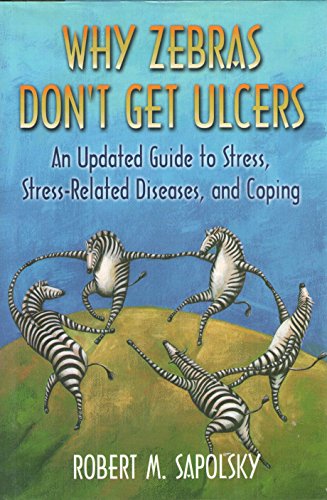
Why Zebras Don't Get Ulcers: An Updated Guide to Stress, Stress Related Diseases, and Coping (2nd Edition): Sapolsky, Robert M.
In a fascinating look at the science of stress, biologist Robert Sapolsky presents an intriguing case, that <strong>people develop such diseases partly because our bodies aren't designed for the

Jarrow Formulas Ashwagandha Capsules, 300 mg Supplement Supports Normalized Resistance to Mental and Physical Stress, 120 Veggie Capsules, 60 Day Supply
Clean Ingredients: These gluten-free, ... · Daily Use: <strong>Take one KSM 66 Ashwagandha 300 mg capsule two times each day by mouth with water to support your cognitive health, endurance, and muscle

Verilux HappyLight Luxe - Light Therapy Lamp with 10,000 Lux, UV-Free, LED Bright White Light with Adjustable Brightness, Color, Countdown Timer, & Stand - Boost Mood, Sleep, Focus (White)
Verilux HappyLight Lumi Plus - Light Therapy Lamp with 10,000 Lux, <strong>UV-Free, LED Bright White Light with Adjustable Brightness, Countdown Timer, & Detachable Stand - Boost Mood, Sleep, and
Evidence & Sources
Supported by multiple clinical trials and systematic reviews
- Endocrine Reviews
- Nature Reviews Endocrinology
- Williams Textbook of Endocrinology
- StatPearls
- National Institute of Diabetes and Digestive and Kidney Diseases (NIDDK)
- National Institute of Neurological Disorders and Stroke (NINDS)
- National Center for Complementary and Integrative Health (NCCIH)
- Frontiers in Neuroendocrinology
This content is for informational purposes only and does not constitute medical advice. Always consult a qualified healthcare provider before starting, stopping, or changing any supplement or medication regimen.