

Gut-Brain Axis
Also known as: GBA, Gut-Brain Connection
Gut-Brain Axis Overview
The gut-brain axis refers to the complex, bidirectional communication network linking the gastrointestinal tract, the central nervous system, and a wider set of hormonal, immune, and metabolic signaling pathways. Rather than a single structure, it is a functional system involving the brain, enteric nervous system, vagus nerve, endocrine signals, immune mediators, and the gut microbiome. This network helps regulate digestion, appetite, mood, stress responses, pain perception, and aspects of cognition. Interest in the gut-brain axis has expanded rapidly as research has suggested that intestinal health and microbial composition may influence not only digestive symptoms but also emotional and neurological well-being.
From a public health standpoint, the topic is significant because disorders that may involve gut-brain signaling are common. Irritable bowel syndrome (IBS), functional dyspepsia, inflammatory bowel disease, anxiety, depression, and stress-related gastrointestinal symptoms have all been studied in relation to this axis. Researchers have also explored possible links with obesity, neurodevelopmental conditions, neurodegenerative disease, and chronic pain, although many of these areas remain under active investigation. The gut-brain axis is therefore best understood as a framework for explaining how digestive, mental, and immune processes can interact rather than as a diagnosis itself.
Several major mechanisms are commonly discussed. The vagus nerve provides rapid neural communication between the gut and brain. The hypothalamic-pituitary-adrenal (HPA) axis helps connect psychological stress with digestive function through cortisol and related stress hormones. The immune system plays a major role, as inflammation and cytokine signaling can alter both brain and intestinal activity. The gut microbiota adds another layer, producing metabolites such as short-chain fatty acids, influencing intestinal barrier function, and interacting with neurotransmitter-related pathways involving serotonin, GABA, and dopamine. Much of the serotonin in the body, for example, is produced in the gut, though its functions there differ from serotonin signaling in the brain.
Current understanding of the gut-brain axis is scientifically promising but still evolving. Research increasingly supports the idea that gut and brain function are deeply interconnected, yet cause-and-effect relationships are often difficult to establish. Findings from animal studies do not always translate directly to humans, and microbiome research in particular is complicated by differences in diet, genetics, geography, medication use, and study design. As a result, experts generally view the gut-brain axis as a biologically meaningful concept with important clinical relevance, while emphasizing that individual symptoms still require careful assessment by qualified healthcare professionals.
Medical Perspectives
Two Ways of Seeing Health

Western
scientific · clinical
Western medicine applies science, technology, and clinical experience to treat symptoms through testing, diagnosis, and targeted intervention.

Eastern
traditional · alternative
Eastern medicine focuses on treating the body naturally by applying traditional knowledge practiced for thousands of years, emphasizing balance and whole-person wellness.
Gold Bamboo presents both perspectives side-by-side so you can make informed decisions. We don't advocate for one over the other — your health choices are yours.
Western Medicine Perspective
Western Medicine Perspective
In conventional medicine, the gut-brain axis is understood through neurogastroenterology, immunology, endocrinology, and microbiome science. Clinicians recognize that the digestive system has its own extensive neural network, the enteric nervous system, sometimes described as a “second brain” because it can coordinate many intestinal functions independently while also remaining closely linked to the central nervous system. Disorders of gut-brain interaction, a category that includes conditions such as IBS and functional dyspepsia, are now widely accepted in gastroenterology. These conditions are not considered purely psychological or purely structural; rather, they may involve altered motility, visceral hypersensitivity, stress responsiveness, microbiome changes, and dysregulated communication between the gut and brain.
Research in Western medicine has focused heavily on the role of the microbiome, intestinal permeability, inflammatory signaling, and stress physiology. Studies indicate that chronic stress can affect motility, secretion, barrier integrity, and microbial composition, while gastrointestinal inflammation or microbial imbalance may influence mood, cognition, and pain processing. There is also growing interest in how early-life exposures—such as diet, infection, antibiotics, and stress—may shape long-term gut-brain signaling. In psychiatry and neurology, investigators have examined whether microbiome-related pathways may contribute to depression, anxiety, autism spectrum conditions, Parkinson’s disease, and other disorders, though these associations vary in strength and remain an area of active research rather than settled clinical consensus.
The conventional approach typically emphasizes multifactorial assessment. Depending on the clinical context, evaluation may include gastrointestinal symptoms, stress history, sleep, diet, medications, inflammatory markers, and screening for mood disorders. Standard medical management may involve evidence-based dietary strategies, behavioral interventions, psychotherapy, stress reduction approaches, and condition-specific pharmacologic care. Microbiome-targeted strategies such as probiotics, prebiotics, and dietary modification are being studied extensively, but findings are mixed across populations and conditions. For that reason, mainstream medicine generally treats the gut-brain axis as an important scientific model that informs care, while maintaining caution about oversimplified claims.
Eastern & Traditional Perspective
Eastern and Traditional Medicine Perspective
Traditional medical systems have long described relationships between digestion, emotional balance, and overall vitality, even though they use conceptual frameworks that differ from modern biomedicine. In Traditional Chinese Medicine (TCM), digestive function is often associated with the Spleen and Stomach systems, which are understood to transform food into usable energy and nourishment. Emotional states such as excessive worry or pensiveness have traditionally been said to affect these systems, while digestive weakness may in turn contribute to fatigue, mental fog, and emotional imbalance. The Liver in TCM is also frequently discussed in relation to stress, emotional constraint, and the smooth flow of qi, which may influence both digestive comfort and mood.
In Ayurveda, the gut-brain relationship is often understood through the role of agni (digestive fire), the formation of ama (metabolic residue or toxic buildup in traditional language), and the balance of the doshas. Disturbed digestion has traditionally been linked not only to gastrointestinal symptoms but also to mental restlessness, low mood, and reduced resilience. Ayurveda also places importance on routine, sleep, sensory input, and the mind’s relationship to digestion, reflecting a systems-based view somewhat analogous to modern interest in stress physiology and autonomic regulation.
Other traditional and integrative systems, including naturopathic and holistic models, often emphasize that digestion, inflammation, stress, food tolerance, and emotional state form an interconnected whole. Practices historically used in these traditions may include dietary patterning, mind-body regulation, breathing practices, manual therapies, herbal traditions, and attention to daily rhythm. From an evidence perspective, some of these approaches are now being studied for symptoms related to stress, functional bowel disorders, and quality of life, but traditional explanatory models do not map directly onto modern anatomy or microbiology. A balanced interpretation recognizes that these systems anticipated the idea of gut-mind interconnection, while also noting that their mechanisms are rooted in traditional theory rather than contemporary biomedical science. Consultation with qualified healthcare practitioners remains important when interpreting symptoms through either framework.
Supplements & Products
Recommended Products
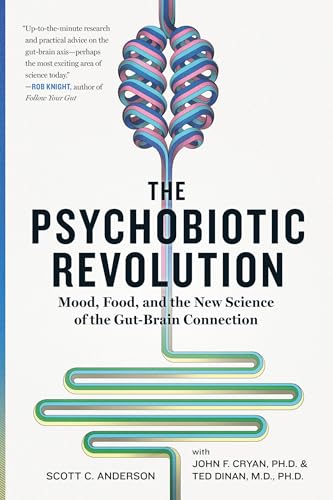
The Psychobiotic Revolution: Mood, Food, and the New Science of the Gut-Brain Connection: Anderson, Scott C.
Cryan and his colleague Ted Dinan call these mood-altering germs “psychobiotics”, and have <strong>co-written a book with the American science writer Scott C Anderson called The Psychobiotic Revolutio

Jarrow Formulas Ideal Bowel Support - 10 Billion CFU Per Serving - Bowel Support - Reduces Bloating, Gas & Intestinal Discomfort - Up to 30 Servings (Veggie Caps)
Jarrow Formulas Ideal Bowel Support ... L. plantarum 299v, that <strong>resists stomach acid and bile salts and demonstrates specific adherence properties for colonization of human intestinal mucosa</

BIMUNO Immunity Food Supplement | Prebiotic Multivitamin for Women, Men & Kids | Immune System Support with Vitamin D3, C & Zinc | Vegetarian, Gluten Free, Halal, Kosher | (.)
Bimuno® Powder (Galactooligosaccharides (GOS) <strong>derived from lactose (milk), galactose (milk));</strong> Bulking Agent (Maltodextrin); Vitamin C (as ascorbic acid); Zinc (as zinc gluconate); Vit
Evidence & Sources
Promising research with growing clinical support from multiple studies
- Nature Reviews Gastroenterology & Hepatology
- Gastroenterology
- Nature Reviews Microbiology
- Cell
- National Center for Complementary and Integrative Health (NCCIH)
- National Institute of Diabetes and Digestive and Kidney Diseases (NIDDK)
- World Journal of Gastroenterology
- The Lancet Gastroenterology & Hepatology
This content is for informational purposes only and does not constitute medical advice. Always consult a qualified healthcare provider before starting, stopping, or changing any supplement or medication regimen.