

Promising research with growing clinical support
Does Zinc Shorten the Common Cold? What the Evidence Really Says
A focused, evidence-based look at whether zinc shortens the common cold, why formulation matters, safety considerations, and how traditional diets approached zinc for immune resilience.
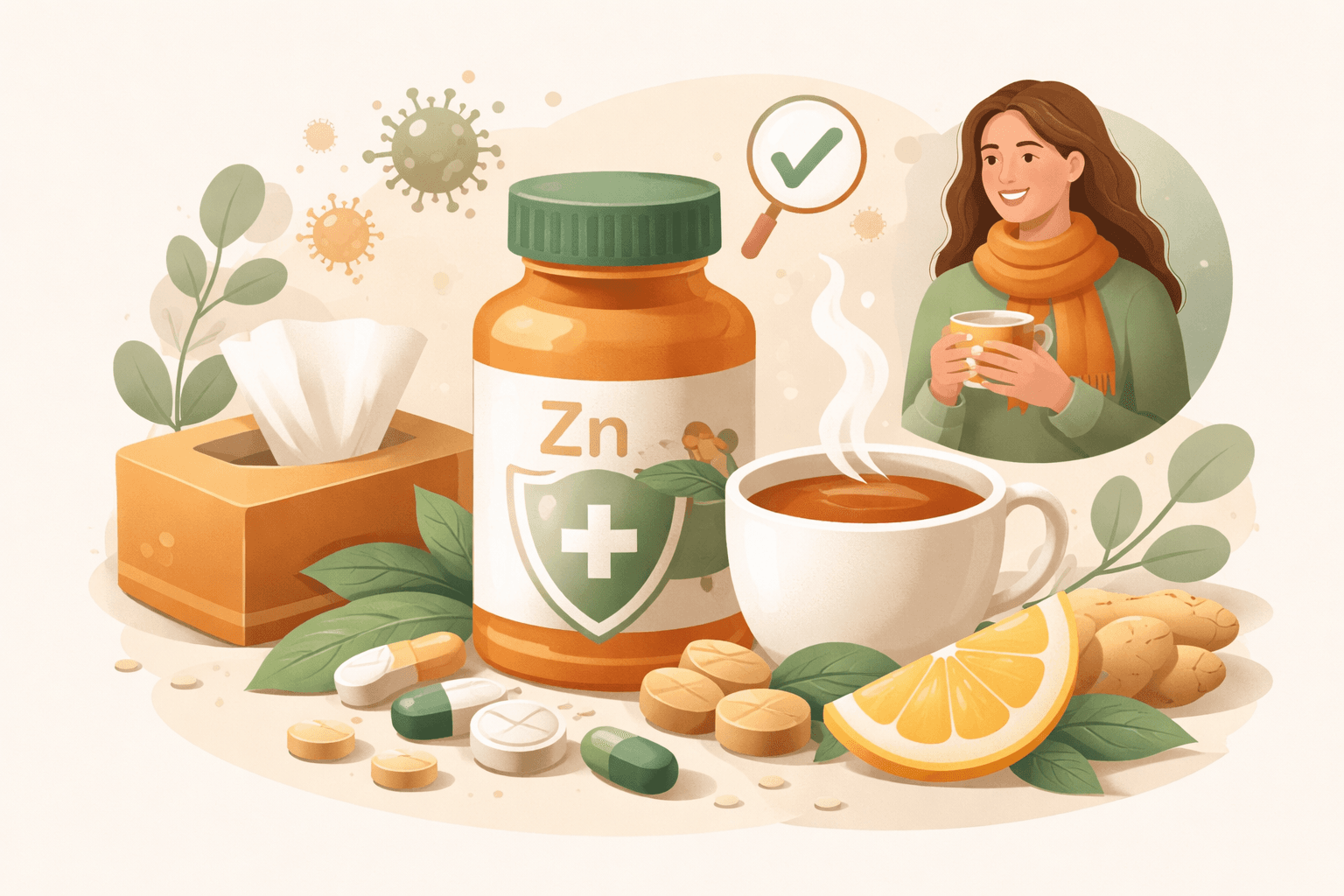
This content is for informational purposes only and does not constitute medical advice. Always consult a qualified healthcare provider before starting, stopping, or changing any supplement or medication regimen.
Introduction Many people reach for zinc at the first sneeze. Research suggests zinc may help the immune system respond to viruses that cause the common cold and may reduce symptom duration when started early. Here’s a focused look at what the science shows, how formulation matters, and how food traditions approached zinc long before supplements existed.
Why zinc matters for antiviral immunity
- Co-factor for 300+ enzymes and hundreds of zinc-finger transcription factors that regulate immune gene expression (Evidence: strong).
- Supports innate defenses: barrier integrity of the nasal and throat mucosa, function of neutrophils and natural killer cells, and antioxidant defenses that may temper excessive inflammation (Evidence: moderate).
- Facilitates adaptive responses: zinc is required for the thymic hormone thymulin, which helps T-cells mature and function, and influences B-cell antibody production (Evidence: moderate).
- In vitro, ionic zinc has been shown to inhibit steps in replication of some rhinoviruses and modulate interferon signaling, though translating these effects in humans depends on achieving adequate local ionic zinc at the mucosa (Evidence: emerging).
What clinical trials say about colds
- Systematic reviews and meta-analyses of randomized controlled trials (RCTs) find that zinc given within the first day or so of symptom onset may shorten cold duration.
- A Cochrane Review reported reduced duration and severity when zinc was initiated within 24 hours of symptom onset, with heterogeneity linked to formulation and study design (Singh & Das, 2013) (Evidence: strong).
- A rapid systematic review and meta-analysis of adults found zinc reduced the duration of viral upper respiratory tract infections by about two days and reduced symptom severity, without clear prevention of infection (Hunter et al., BMJ Open, 2021) (Evidence: strong).
- Meta-analyses focusing on zinc acetate lozenges reported clinically meaningful reductions in cold duration, though results varied by lozenge composition (Hemilä, 2017; Hemilä & Chalker, 2015) (Evidence: moderate to strong).
- Individual RCTs in adults have shown shorter duration and milder symptoms with zinc lozenges started early in the illness course compared with placebo (e.g., Prasad et al., Ann Intern Med, 2000) (Evidence: strong).
- Prevention is less consistent. Across reviews, zinc has not reliably reduced the number of colds acquired, though some studies suggest fewer days with symptoms among those who do become ill (Evidence: moderate).
Why some zinc trials fail: the formulation factor Zinc’s clinical signal depends on how much free ionic zinc is released at the site of infection (the upper airway). Formulation chemistry is pivotal:
- Lozenges that release more free ionic zinc (often acetate or certain gluconate preparations) appear more effective in trials than lozenges in which zinc is tightly bound by flavoring acids or chelators that reduce ionic availability (e.g., citric, tartaric, or certain amino acids) (Evidence: moderate).
- Zinc oxide is poorly soluble. While it can raise systemic zinc status in some contexts, it is generally considered unsuitable for lozenges intended to deliver ionic zinc to the throat and nasopharynx (Evidence: moderate).
- Timing matters. Many positive trials initiated lozenges early in the illness window; delays may reduce benefit (Evidence: moderate).
- Non-oral routes are not recommended. Intranasal zinc products have been linked with loss of smell (anosmia) and were withdrawn in some markets (FDA safety communications; case reports) (Evidence: strong).
Forms and bioavailability: beyond lozenges If the goal is to maintain healthy zinc status over time (which may support immune readiness), bioavailability varies with the compound and the meal matrix:
- Organic forms (such as zinc picolinate, citrate, or bisglycinate) often show equal or slightly better absorption than some inorganic forms in small RCTs, though head-to-head differences are not always consistent (Evidence: moderate).
- Zinc oxide is less soluble in water but can be absorbed when consumed with food in fortification settings; outcomes vary by meal composition (Evidence: moderate).
- Phytate, a compound in whole grains, legumes, nuts, and seeds, binds zinc and reduces absorption. Traditional food practices—soaking, sprouting, fermenting, and nixtamalization—can reduce phytate and may improve zinc bioavailability from plant foods (Gibson et al., 2010) (Evidence: strong).
Copper interaction and safety notes
- Zinc and copper share intestinal transport pathways. Sustained high zinc intake may reduce copper absorption, which can lead to anemia and low white blood cell counts in severe cases (Evidence: strong). When zinc is used for prolonged periods, clinicians often monitor copper status to maintain balance (Evidence: strong). This article does not provide medical advice or dosing guidance.
- Short-term use of zinc lozenges is commonly associated with taste changes and occasional nausea (Evidence: strong).
- Intranasal zinc has been associated with anosmia and is not advised (Evidence: strong).
Who is most likely to be low in zinc?
- Global estimates suggest around 17% of the world’s population is at risk of inadequate zinc intake, driven largely by dietary patterns high in phytate and low in animal-source foods (Wessells & Brown, 2012) (Evidence: strong).
- In industrialized countries, outright deficiency is less common, but marginal insufficiency may occur in older adults, individuals with gastrointestinal disorders affecting absorption, people with chronic diseases, and those following plant-predominant diets without attention to bioavailability (Evidence: moderate).
- Soil and crop factors play a role: modern agriculture on zinc-depleted soils can lower zinc in staple crops; agronomic biofortification (zinc fertilizers) is one strategy to address this “hidden hunger” (Alloway, 2009; Cakmak, 2008) (Evidence: moderate).
Traditional, zinc-rich foods across cultures Long before supplements, cultures turned to naturally zinc-rich foods—especially during colder months:
- East Asia and coastal Europe: oysters and other shellfish, among the richest natural sources of zinc; in Traditional Chinese Medicine, oyster shell (Mu Li) appears in formulas aimed at nourishing yin and calming—an illustration of historical value placed on shellfish, though not a direct clinical claim for colds (Evidence: traditional).
- Mediterranean and Middle East: lamb and beef, often paired with tahini (sesame) or chickpeas; combining animal protein with plant foods can enhance zinc absorption from the meal (Evidence: moderate; traditional).
- West Africa and Latin America: pumpkin seeds (pepitas/egusi), beans, and corn prepared with traditional methods like fermentation or nixtamalization, which can improve mineral bioavailability (Evidence: strong; traditional).
- South Asia: lentils, chickpeas, and dairy; Ayurvedic texts describe mineral preparations such as Yashada bhasma (zinc-based), used historically for vitality and resilience—reflecting a long-standing appreciation of zinc-related properties (Evidence: traditional).
What this means for colds
- Zinc lozenges started early in a cold may reduce how long you feel sick and how intense symptoms feel, though benefits vary by product and person (Evidence: strong for duration, moderate for symptom severity).
- Prevention of colds with zinc is less consistent (Evidence: moderate).
- Quality, formulation (ionic availability), and starting early appear to be the main differentiators in trial outcomes (Evidence: moderate).
- For longer-term immune readiness, maintaining overall zinc adequacy through diet—prioritizing bioavailable sources and traditional preparation methods—may support healthy immune function (Evidence: moderate).
Bottom line
- Research suggests zinc may shorten the duration of the common cold when started early, with the strongest signals seen in lozenges that deliver free ionic zinc to the upper airway.
- Not all products are equivalent. Formulation chemistry and timing likely explain why some studies are positive and others are null.
- Long-term high zinc intake can impair copper status; intranasal zinc has been linked to loss of smell. This article does not provide dosing recommendations; discuss personal use with a qualified clinician.
- Globally, inadequate zinc intake is common, and traditional diets addressed this with zinc-rich foods and preparation methods that enhance absorption.
- Prioritizing a zinc-aware diet may help keep the immune system ready, while zinc lozenges may be considered at the first signs of a cold based on the evidence.
Key references
- Singh M, Das RR. Cochrane Database Syst Rev. 2013: Zinc for the common cold.
- Hunter J et al. BMJ Open. 2021: Zinc for prevention or treatment of acute viral respiratory tract infections.
- Hemilä H. Open Forum Infect Dis. 2017: Zinc acetate lozenges may shorten colds.
- Hemilä H, Chalker E. BMC Fam Pract. 2015: Meta-analysis of zinc lozenges.
- Prasad AS et al. Ann Intern Med. 2000: RCT of zinc acetate lozenges in adults.
- Wessells KR, Brown KH. PLoS One. 2012: Global prevalence of inadequate zinc intake.
- Alloway BJ. Zinc in Soils and Crop Nutrition. 2009; Cakmak I. Plant Soil. 2008: Zinc deficiency in soils/crops and human health.
- Gibson RS et al. J Nutr. 2010: Phytate and strategies to improve zinc bioavailability.
Health Disclaimer
This content is for informational purposes only and does not constitute medical advice. Always consult a qualified healthcare provider before starting, stopping, or changing any supplement or medication regimen.