

Promising research with growing clinical support
Does Post‑Workout Cold Exposure Blunt Muscle Growth?
A focused look at whether post‑workout cold exposure blunts muscle growth, summarizing trials, mechanisms, and where cold may still fit for short‑term recovery.
This content is for informational purposes only and does not constitute medical advice. Always consult a qualified healthcare provider before starting, stopping, or changing any supplement or medication regimen.
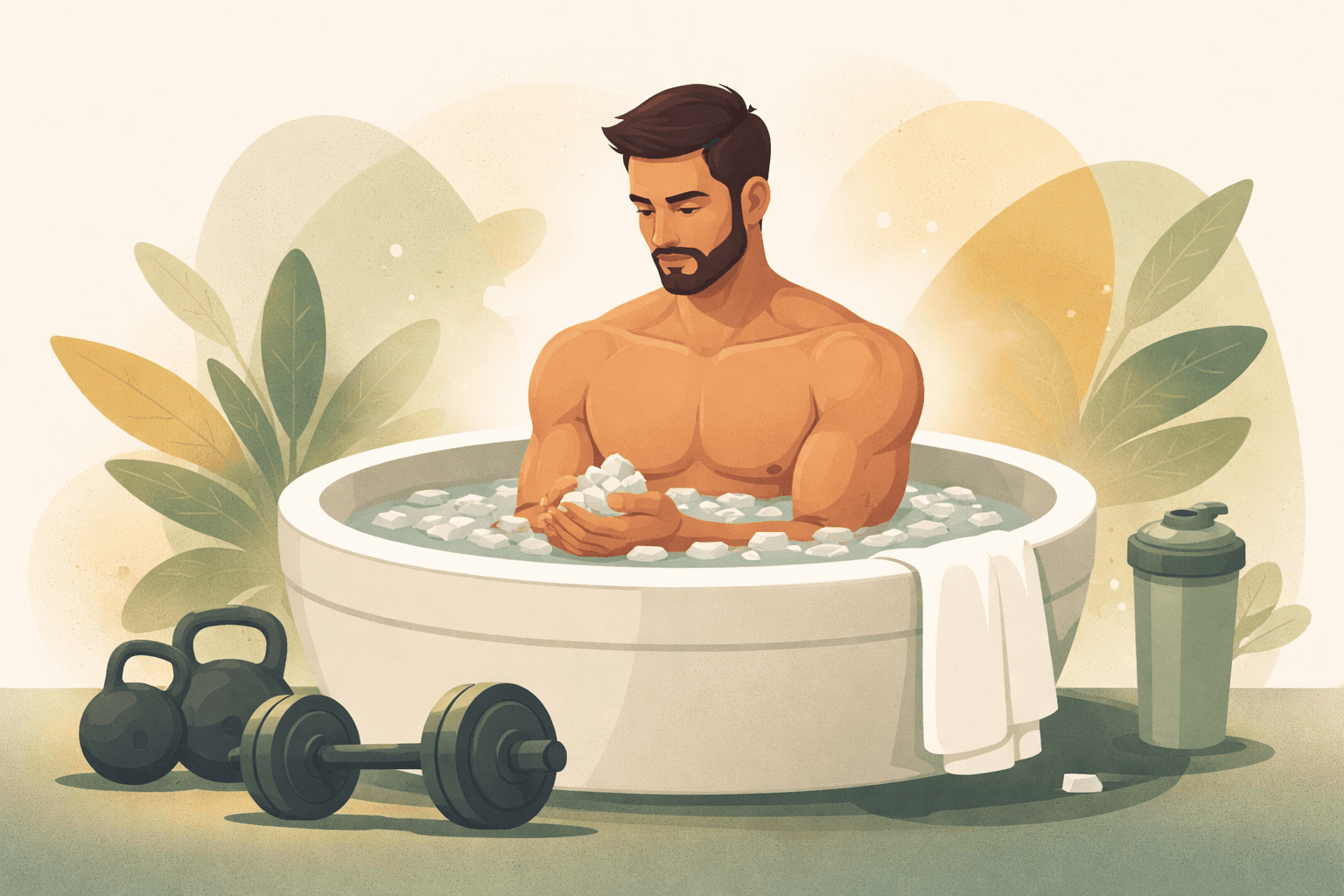
Introduction: A popular tool with a hidden trade‑off? Cold plunges, ice baths, and cryotherapy have surged in popularity, fueled in part by high‑profile discussions in the performance world (sometimes called the “Huberman effect”). Many athletes reach for cold exposure after lifting to feel less sore and ready for the next session. Research, however, suggests a potential downside: cold applied right after resistance training may blunt some of the cellular signals and long‑term gains in muscle size and strength. This article focuses on that narrow question—what the science says about post‑workout cold exposure and muscle growth—and where context and tradition fit.
Key takeaways up front
- Post‑lift cold exposure has been shown to attenuate hypertrophy and strength gains in some long‑term trials (Evidence: moderate to strong).
- The effect appears linked to reduced anabolic signaling, protein synthesis, and satellite cell activity when cold follows resistance exercise (Evidence: moderate).
- Benefits for soreness and short‑term recovery are small to modest and may be influenced by expectation effects (Evidence: moderate).
- Endurance‑oriented adaptations seem less consistently affected, and cold may help maintain output across closely spaced sessions (Evidence: emerging).
- Traditional Nordic hot–cold practices and breath‑focused methods emphasize resilience and recovery, not necessarily maximal hypertrophy (Evidence: traditional).
What randomized trials and reviews show
- Long‑term resistance training with post‑exercise cold water immersion (CWI) may reduce strength and size gains. In a 12‑week randomized trial, lifters who used CWI after sessions showed smaller increases in muscle mass and strength versus an active recovery control, alongside blunted activation of anabolic pathways (Roberts et al., Journal of Physiology, 2015). (Evidence: strong)
- Systematic reviews echo caution. Reviews in Sports Medicine and related journals conclude that while CWI can reduce perceived soreness and some inflammatory markers, repeated use immediately after lifting may dampen hypertrophy‑related signaling and adaptations (Hohenauer et al., Sports Medicine, 2015; Ihsan et al., Sports Medicine, 2016). (Evidence: moderate)
- Soreness relief versus performance: Meta‑analyses report small to moderate reductions in delayed‑onset muscle soreness (DOMS) after CWI, but translation to meaningful performance advantages is inconsistent (Hohenauer et al., 2015). One placebo‑controlled trial found that perceived recovery benefits from CWI were comparable to a sham condition, suggesting expectation effects contribute (Broatch et al., Journal of Physiology, 2014). (Evidence: moderate)
How might cold reduce training adaptations?
- Reduced anabolic signaling: Post‑exercise cold can decrease phosphorylation of mTOR pathway components (e.g., p70S6K), a key driver of muscle protein synthesis after resistance exercise (Roberts et al., 2015). (Evidence: moderate)
- Lower muscle protein synthesis and satellite cell activity: Trials report reduced rates of myofibrillar protein synthesis and markers of satellite cell activity when cold follows lifting, which could translate to smaller hypertrophy over time (Roberts et al., 2015). (Evidence: moderate)
- Dampened inflammatory signaling: Some inflammation is part of muscle remodeling. CWI reduces local blood flow and inflammatory mediators, which may blunt the remodeling signals that build muscle (Ihsan et al., 2016). (Evidence: moderate)
Context matters: goals, sport, and timing
- Hypertrophy and maximal strength phases: If the primary goal is muscle growth or peak strength from resistance training, frequent immediate post‑session cold exposure may be counterproductive based on current evidence (Roberts et al., 2015; Ihsan et al., 2016). (Evidence: moderate to strong)
- Tournament or congested schedules: When the priority is rapid turnaround between events or practices, the small reductions in soreness and perceived fatigue from cold may help maintain output in the short term, even if they slightly compromise long‑term hypertrophy (Ihsan et al., 2016). (Evidence: emerging)
- Endurance training: Evidence that cold blunts endurance‑specific adaptations is less consistent; some reviews suggest neutral or situationally helpful effects for repeated endurance efforts, especially in heat (Ihsan et al., 2016). (Evidence: emerging)
- Contrast water therapy: Alternating hot and cold is popular. While contrast therapy may ease soreness and perceived fatigue, there is limited long‑term data on its effects on hypertrophy compared with cold alone. It is not yet clear whether contrast approaches avoid the blunting observed with post‑lift CWI (Hohenauer et al., 2015; narrative reviews). (Evidence: emerging)
What about cold shock proteins, brown fat, and “hormetic” benefits?
- Cold shock proteins (e.g., RBM3, CIRP) and brown adipose tissue (BAT) activation are often cited benefits of cold exposure. These responses may relate to neuroprotection, metabolic regulation, and thermogenesis, largely shown in animal or acute human studies. Their relevance to maximizing muscle hypertrophy after lifting remains uncertain (Evidence: emerging).
- Hormesis and resilience: Brief cold stress may support psychological resilience and autonomic balance for some individuals. Those systemic benefits do not necessarily translate into better muscle growth when cold is applied immediately post‑strength training (Ihsan et al., 2016). (Evidence: emerging)
Eastern and traditional perspectives
- Nordic hot–cold culture: Finnish and other Nordic traditions emphasize cycling sauna heat with cold immersion or snow exposure for relaxation, social connection, and general health. Historically, the aim has not been targeted hypertrophy but overall well‑being and stress resilience. Contemporary observational data on sauna use show cardiometabolic associations, but research isolating combined hot–cold on muscle growth is limited (Evidence: traditional/emerging).
- Breathwork‑centered approaches (e.g., Wim Hof Method): These combine cold with controlled breathing and mindset training to cultivate stress tolerance. Early studies report changes in inflammatory markers and autonomic responses, but they do not address long‑term hypertrophy after resistance training (Evidence: emerging/traditional).
Who might be most sensitive?
- Novice lifters appear to gain muscle readily; whether cold blunts those large early gains to a meaningful degree is debated, but mechanistic signals suggest potential impact (Evidence: emerging).
- Advanced lifters chasing small, incremental improvements may be more affected by anything that dampens anabolic signaling post‑workout (Evidence: expert consensus/emerging).
- Individual variability is real: genetics, sex, diet, sleep, and total training load may influence responses to both lifting and cold. Current trials are relatively small and cannot fully account for this variability (Evidence: emerging).
Practical considerations without prescriptions
- The literature associating cold with reduced hypertrophy typically applies cold immediately after resistance sessions, repeatedly over weeks. That context appears important. Delaying cold, separating it from hypertrophy‑focused sessions, or prioritizing it during endurance or heavy competition phases are strategies often discussed by coaches; rigorous comparative trials on timing remain limited (Evidence: emerging).
- If DOMS relief and readiness for frequent training take priority, cold may be a tool—with the trade‑off that it could modestly blunt strength and size gains over time (Evidence: moderate).
- If maximizing muscle growth is the primary goal, research suggests caution with routine immediate post‑lift cold exposure (Evidence: moderate to strong).
Bottom line
- Research suggests that frequent cold exposure immediately after resistance training may blunt anabolic signaling and reduce long‑term gains in muscle size and strength compared with active recovery. Benefits for soreness are modest and may not consistently translate to better performance.
- Context is key: cold may be more defensible when rapid recovery between events is paramount, and less so when hypertrophy is the main objective.
- Traditional hot–cold practices and breath‑based methods emphasize resilience and well‑being; these aims can coexist with training, but they do not guarantee superior muscle growth when paired directly with lifting.
- As always, aligning tools with goals—and recognizing trade‑offs—matters. Future larger, well‑controlled trials on timing and modality will help refine guidance.
Selected references
- Roberts LA et al. Post-exercise cold water immersion attenuates acute anabolic signaling and long-term adaptations in muscle to strength training. Journal of Physiology. 2015.
- Hohenauer E et al. Evidence-based recommendations for cold water immersion in sports recovery: a systematic review and meta-analysis. Sports Medicine. 2015.
- Ihsan M, Watson G, Abbiss CR. What are the physiological mechanisms for post-exercise cold water immersion in the recovery from prolonged endurance and intermittent exercise? Sports Medicine. 2016.
- Broatch JR, Petersen A, Bishop DJ. Cold water immersion benefits are not greater than placebo after intense exercise. Journal of Physiology. 2014.
Health Disclaimer
This content is for informational purposes only and does not constitute medical advice. Always consult a qualified healthcare provider before starting, stopping, or changing any supplement or medication regimen.