

Gold Bamboo
"related" Treatment Briefs Health AI Practitioners List your practice Search
Moderate Evidence

Promising research with growing clinical support

Molecular Mimicry: How the Gut Can Trigger Autoimmunity

A focused look at molecular mimicry—how gut microbes and infections may trigger autoimmunity—and what current evidence shows across conditions like T1D, RA, and thyroid autoimmunity.

8 min read
Molecular Mimicry: How the Gut Can Trigger Autoimmunity

This content is for informational purposes only and does not constitute medical advice. Always consult a qualified healthcare provider before starting, stopping, or changing any supplement or medication regimen.

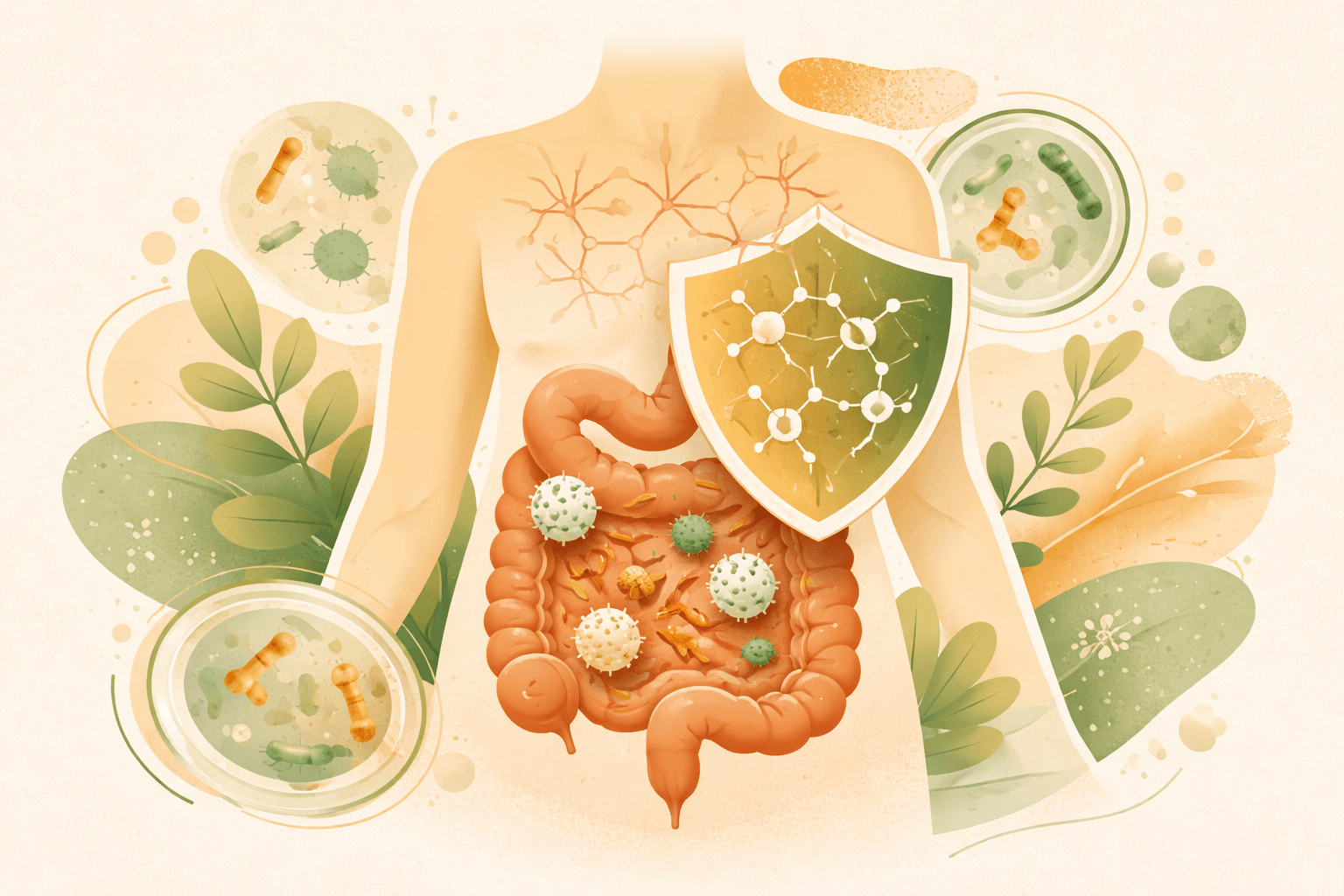
Introduction Molecular mimicry is a proposed mechanism where immune responses to microbes accidentally target similar-looking human proteins. When this misrecognition happens near the gut—home to the body’s densest microbial community—it may set the stage for autoimmune disease. Research suggests that gut-derived microbes, infections, and increased intestinal permeability can increase exposure to microbial antigens that resemble self, potentially activating cross-reactive T and B cells. While not the sole cause of autoimmunity, molecular mimicry is a plausible link that helps explain why the gut is increasingly viewed as a gateway to systemic immune dysregulation.

What is molecular mimicry?

  • The idea: Short protein segments (epitopes) from microbes resemble human proteins. The immune system develops antibodies or T cells against the microbe but those responders bind to self-proteins with similar shapes.
  • Why the gut matters: The intestinal barrier normally limits microbial antigen translocation. When barrier function decreases ("leaky gut") or when microbial composition shifts (dysbiosis), more antigens encounter the immune system in the gut-associated lymphoid tissue, potentially raising cross-reactivity risk.
  • Genetic backdrop: Certain HLA types present microbial and self-peptides in ways that favor cross-reactivity. Genetics and environment intersect at the level of antigen presentation and tolerance breakdown. (Evidence level: moderate; mechanistic and observational support)

Foundational evidence from post-infectious autoimmunity

  • Rheumatic fever after Group A Streptococcus: Antibodies to the streptococcal M protein cross-react with cardiac myosin and valve tissue, leading to rheumatic heart disease. This is a classic human example of molecular mimicry. (Evidence level: strong; reviews and mechanistic studies: Cunningham 2014, Autoimmunity Reviews; Carapetis et al., The Lancet 2005)
  • Guillain–Barré syndrome (GBS) after Campylobacter jejuni: Lipooligosaccharide structures on C. jejuni mimic peripheral nerve gangliosides (e.g., GM1), provoking anti-ganglioside antibodies and acute neuropathy. (Evidence level: strong; clinical and mechanistic evidence: Yuki & Hartung 2012, NEJM)

The gut connection in specific autoimmune conditions

  • Type 1 diabetes (T1D): A meta-analysis of observational molecular studies found an association between enterovirus infection and T1D/islet autoimmunity (Yeung et al., BMJ 2011). Mechanistic work suggests potential cross-reactivity between enteroviral proteins and islet antigens (e.g., GAD65), though causality remains debated. (Evidence level: moderate; meta-analysis support, mechanistic plausibility)
  • Multiple sclerosis (MS): While not primarily a gut disease, recent longitudinal data show Epstein–Barr virus infection strongly precedes MS onset (Bjornevik et al., Science 2022). Molecular mimicry candidates include EBNA1 cross-reactivity with CNS antigens (e.g., GlialCAM) (Lanz et al., Nature 2022). The gut–immune interface may still modulate risk via systemic immune tone. (Evidence level: moderate for mimicry mechanism; strong for EBV–MS association)
  • Celiac disease: Although more accurately a loss-of-tolerance disease to dietary gluten than classic mimicry, it exemplifies how gut antigen exposure can drive autoimmunity against tissue transglutaminase. Restoring barrier integrity and removing the trigger resolves autoimmunity in many cases. (Evidence level: strong; clinical and mechanistic consensus: Lebwohl et al., NEJM 2018)
  • Rheumatoid arthritis (RA): New-onset RA shows enrichment of Prevotella copri in the gut (Scher et al., eLife 2013), and experimental work suggests bacterial proteins may provoke cross-reactive responses that target joint structures in susceptible hosts. However, findings vary across cohorts and not all studies support a direct mimicry role. (Evidence level: emerging; associative human studies and early mechanistic leads)
  • Autoimmune thyroid disease (Hashimoto’s/Graves’): Meta-analyses report associations between Helicobacter pylori infection and autoimmune thyroid conditions, and some work suggests potential cross-reactivity to thyroid antigens; evidence is heterogeneous and confounded by geography and assay methods (e.g., PLOS One meta-analyses circa 2013–2014). (Evidence level: emerging; association stronger than mechanism)
  • Spondyloarthritis/HLA-B27: A long-standing hypothesis posits Klebsiella pneumoniae peptides mimic HLA-B27 or cartilage components. While intriguing, the mimicry link remains controversial and not uniformly replicated. (Evidence level: emerging; mixed data)

How might the gut set the stage for mimicry?

  • Barrier dysfunction and antigen load: Research suggests that increased intestinal permeability allows more microbial products to access the immune system. The zonulin pathway has been proposed as one regulator of tight-junction permeability (Fasano, Physiological Reviews 2011/2012). (Evidence level: moderate; human associative and mechanistic studies)
  • Dysbiosis and immune education: Certain microbes (e.g., segmented filamentous bacteria) drive Th17 responses in animal models and can tip toward autoimmunity in genetically susceptible hosts (Ivanov et al., Cell 2009; Markle et al., Science 2013). While mice are not humans, these models demonstrate plausibility that microbial composition shapes autoimmune risk. (Evidence level: moderate in animals; emerging in humans)
  • Superantigen and bystander pathways: Not all post-infectious autoimmunity is mimicry. Tissues inflamed by infection can expose self-antigens (bystander activation) or be activated by superantigens. Real-world cases may involve overlapping mechanisms, with mimicry only one contributor. (Evidence level: moderate; immunology consensus and reviews)

What this means for risk and prevention research

  • Microbiome diversity: Observational studies in RA, MS, and T1D frequently report altered gut microbiome profiles compared with healthy controls. Reduced diversity and expansion of specific taxa (e.g., Prevotella in RA) have been noted, though not consistently across all populations. Diversity, by itself, is a proxy measure and not a definitive target. (Evidence level: emerging; systematic reviews in Frontiers in Immunology and others)
  • Infections and timing: Early-life microbial exposures shape immune tolerance. Some epidemiologic data support the “Old Friends” update to the hygiene hypothesis—exposure to benign microbes may help calibrate immune responses away from autoimmunity. Distinguishing helpful exposures from pathogenic infections remains key. (Evidence level: moderate; population studies and immunology reviews)
  • Diet and barrier health: Anti-inflammatory dietary patterns may modulate gut permeability and microbial composition, potentially reducing antigenic pressure. The Autoimmune Protocol (AIP) has small, uncontrolled or pilot trials suggesting symptom and inflammation improvements in some autoimmune conditions, but robust RCTs are limited and mechanisms (including mimicry reduction) are speculative. (Evidence level: emerging; pilot trials and observational reports)

Traditional medicine perspectives

  • Traditional Chinese Medicine (TCM): Autoimmunity is often framed as internal disharmony with imbalances in heat, dampness, and defensive qi. From a modern lens, this maps loosely onto chronic inflammation and barrier dysfunction. TCM approaches that seek to “harmonize the middle burner” and resolve dampness may, in concept, align with strategies that support gut barrier integrity and immune balance. (Evidence level: traditional)
  • Ayurveda: The concept of ama (toxic, undigested residues) accumulating when agni (digestive fire) is weak parallels contemporary ideas of impaired digestion and dysbiosis. Cleansing and rekindling agni are intended to restore systemic balance. While not equivalent to molecular mimicry, these frameworks similarly prioritize the gut as a root of systemic disturbance. (Evidence level: traditional)

What to discuss with your clinician

  • Personal and family history of autoimmunity coupled with recent gastrointestinal infection or persistent dyspepsia may be relevant context when evaluating symptoms.
  • For conditions with established gut triggers (e.g., celiac disease), appropriate diagnostic evaluation may change management.
  • If you are participating in diet or lifestyle changes aimed at gut health, consider discussing outcomes to track (e.g., symptom scores, quality of life) rather than focusing narrowly on single microbes.

Key research citations (selected)

  • Rheumatic fever and mimicry: Cunningham MW. Autoimmun Rev. 2014; Carapetis JR et al. Lancet. 2005.
  • GBS and Campylobacter: Yuki N, Hartung HP. N Engl J Med. 2012.
  • Enteroviruses and T1D: Yeung WC et al. BMJ. 2011 (systematic review/meta-analysis).
  • EBV and MS: Bjornevik K et al. Science. 2022; Lanz TV et al. Nature. 2022.
  • Gut permeability: Fasano A. Physiol Rev. 2011/2012.
  • RA and gut microbiome: Scher JU et al. eLife. 2013; reviews in Front Immunol. 2021.
  • Microbiome–autoimmunity in animal models: Ivanov II et al. Cell. 2009; Markle JGM et al. Science. 2013.

Evidence grades used

  • Strong: Supported by consistent human mechanistic and clinical evidence, including well-established disease models.
  • Moderate: Supported by systematic reviews/observational human data with plausible mechanisms; some uncertainties remain.
  • Emerging: Early human data with mixed findings and/or primarily animal/mechanistic evidence.
  • Traditional: Derived from historical medical systems; not directly validated by modern clinical trials.

Bottom line

  • Molecular mimicry offers a compelling explanation for how gut microbes and infections may trigger immune attacks on self-tissues in predisposed people.
  • Strong human evidence exists in post-infectious conditions like rheumatic fever and GBS; for many chronic autoimmune diseases (e.g., T1D, RA, thyroid autoimmunity), evidence is moderate to emerging and continues to evolve.
  • The gut’s barrier function and microbial composition likely influence exposure to cross-reactive antigens, making the intestinal environment a key research target for prevention and management strategies.
  • Traditional frameworks from TCM and Ayurveda also place the gut at the center of systemic balance, conceptually aligning with modern research on the gut–immune axis.
  • While research suggests gut-focused strategies may help regulate immune balance, rigorous trials are still needed to confirm whether modifying the microbiome or barrier function reduces autoimmune risk via molecular mimicry pathways.

Health Disclaimer

This content is for informational purposes only and does not constitute medical advice. Always consult a qualified healthcare provider before starting, stopping, or changing any supplement or medication regimen.