

Promising research with growing clinical support
Meditation and the Amygdala: What Brain Scans Reveal About Stress Circuits
A focused, evidence-based look at how meditation may reshape the brain’s stress hub—the amygdala—covering structural and functional changes, practice types, dose–response signals, and links to anxiety and depression outcomes.
This content is for informational purposes only and does not constitute medical advice. Always consult a qualified healthcare provider before starting, stopping, or changing any supplement or medication regimen.
Meditation and the Amygdala: What Brain Scans Reveal About Stress Circuits
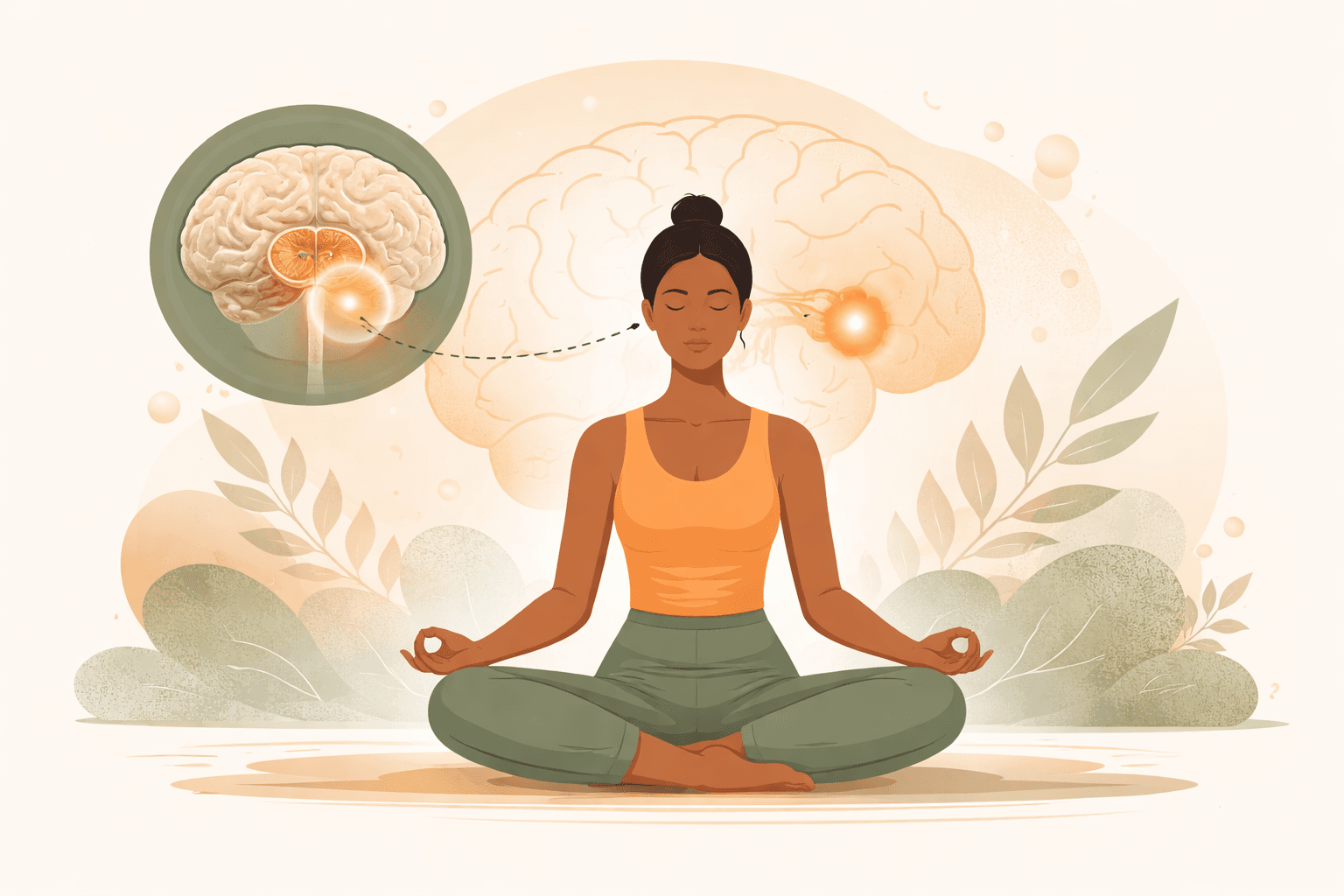
Research on meditation has moved from monastery to MRI scanner. Among the most consistent findings: meditation may reshape the brain’s stress hub—the amygdala. This small almond-shaped structure helps detect threat, orchestrate fear learning, and trigger downstream stress responses. When chronically overactive, the amygdala is linked with anxiety, mood dysregulation, and heightened physiological arousal.
This focused review examines what neuroimaging studies suggest about how meditation alters the amygdala’s structure and function, how these brain changes align with anxiety and depression outcomes, what kinds of meditation have the strongest evidence, and how these insights echo contemplative traditions refined over 2,500+ years.
Key takeaways at a glance
- Mindfulness training may reduce amygdala gray matter and reactivity in as little as eight weeks in some studies (Evidence: moderate).
- Changes in amygdala activity and connectivity may partially explain observed reductions in anxiety and depressive symptoms after meditation programs (Evidence: moderate).
- Greater practice exposure is associated with larger brain and symptom changes in some, but not all, studies (Evidence: emerging).
- Compassion/loving-kindness, mindfulness, and transcendental-style practices may influence the amygdala differently, with the most robust amygdala evidence for mindfulness-based approaches (Evidence: moderate).
Structural changes: a smaller, quieter stress center?
Early longitudinal neuroimaging provided a compelling clue that mindfulness training may reshape the amygdala. In a pre–post study of adults completing an eight-week mindfulness-based stress reduction (MBSR) program, researchers observed decreased gray matter density in the right amygdala, and the magnitude of this decrease correlated with reductions in perceived stress (Hölzel et al., 2010). While sample sizes were modest, the structural change emerged over weeks rather than years, suggesting relatively rapid plasticity in stress circuits (Evidence: moderate).
Cross-sectional work comparing long-term meditators with non-meditators has reported structural differences in multiple regions, including the hippocampus, anterior cingulate, and insula; findings for the amygdala are more variable across studies (Fox et al., 2014; Fox et al., 2016). Meta-analytic syntheses underscore that meditation is consistently associated with structural differences in networks involved in attention, interoception, and emotion regulation, though amygdala effects are less uniform than hippocampal or insular changes (Evidence: moderate).
Bottom line on structure: mindfulness training may reduce amygdala gray matter in some contexts, with converging but heterogeneous evidence across the broader literature (Evidence: moderate).
Functional changes: lower reactivity and altered connectivity
Functionally, meditation training may dampen amygdala responses to emotional stimuli and reshape how the amygdala communicates with regulatory networks.
Reduced reactivity: In a longitudinal fMRI study, participants who completed mindful attention training showed decreased amygdala activation to emotional images, even when they were not actively meditating in the scanner (Desbordes et al., 2012). This suggests that training may generalize to daily life rather than requiring an “on-the-spot” practice state (Evidence: moderate).
Resting-state connectivity: A randomized controlled trial found that mindfulness meditation training altered amygdala resting-state functional connectivity in patterns linked to lower stress reactivity and reduced inflammatory signaling (Taren et al., 2015). Such connectivity shifts may reflect improved top-down regulation of the stress response (Evidence: moderate).
Anticipatory stress: Other task-based studies report reduced amygdala response during stress anticipation following mindfulness training, aligning with subjective stress reductions (various small RCTs and cohort studies; convergent but not uniform results) (Evidence: moderate).
Collectively, these findings suggest that meditation may help quiet the brain’s alarm system and strengthen regulatory pathways involved in emotional balance (Evidence: moderate).
Which practices show amygdala effects?
Different contemplative styles—mindfulness, loving-kindness/compassion, and mantra-based practices—engage overlapping but distinct mechanisms. The amygdala data are most robust for mindfulness-based interventions.
Mindfulness (e.g., MBSR/MBCT): Repeated findings indicate decreased amygdala gray matter in some cohorts (Hölzel et al., 2010), reduced amygdala reactivity to emotional stimuli (Desbordes et al., 2012), and altered stress-related connectivity (Taren et al., 2015) (Evidence: moderate).
Loving-kindness and compassion: Training in compassion may shift affective responding and prosocial motivation. Some experiments report nuanced amygdala patterns—such as increased responsiveness to others’ suffering during early empathy training versus more balanced activation with compassion training—paired with improved positive affect and helping behavior (Klimecki et al., 2013/2014). The net effect appears to trend toward healthier emotional engagement rather than blunt suppression (Evidence: emerging to moderate).
Mantra-based/transcendental approaches: Clinical studies frequently show reduced trait anxiety and stress, but direct amygdala imaging evidence is more limited relative to mindfulness (Evidence: emerging).
Do more minutes or years matter? The dose–response question
The field is actively investigating how practice exposure relates to brain change.
Within structured programs, greater engagement and home practice are sometimes associated with larger symptom improvements and stronger changes in brain markers, including amygdala-related measures (correlational findings across several cohorts) (Evidence: emerging).
Meta-analytic work on mindfulness-based programs suggests small-to-moderate associations between practice amount and outcomes, but effects vary and are not uniformly dose-dependent (Parsons et al., 2017; Strohmaier, 2021) (Evidence: emerging).
Long-term practitioners often show distinct neural profiles, yet cross-sectional designs cannot prove causality and may reflect selection factors (Evidence: emerging).
Interpretation: More practice may help, but the relationship likely depends on practice quality, type, and individual differences. The field does not yet support a one-size-fits-all “dose” (Evidence: emerging).
Why this matters: linking brain changes to mood and anxiety outcomes
If meditation modulates the amygdala and its regulatory networks, clinical benefits would be expected—especially for stress-related conditions. Meta-analyses and systematic reviews provide context:
Anxiety and depression symptoms: Mindfulness-based programs may produce moderate improvements in anxiety and depressive symptoms compared with active controls (Goyal et al., 2014; Hofmann et al., 2010), and mindfulness-based cognitive therapy may reduce relapse risk in recurrent depression (Kuyken et al., 2016) (Evidence: strong for symptom reduction; moderate for mechanisms involving the amygdala specifically).
Stress-related biomarkers: Some trials report changes in stress hormones and inflammatory markers alongside amygdala connectivity shifts (e.g., Taren et al., 2015), hinting at brain–body pathways (Evidence: emerging to moderate).
Mechanistic inference is cautious: while reductions in amygdala reactivity and restructuring of connectivity align with improved mood and lower anxiety, mediation analyses directly linking these brain changes to clinical outcomes remain an active research area (Evidence: emerging to moderate).
A modern lens on an ancient claim
Classical Buddhist sources emphasize cultivating non-reactivity (equanimity) and wise attention to feelings and thoughts. In that frame, the mind learns to “notice and release” rather than reflexively grasp or resist. Neuroimaging evidence that meditation may reduce amygdala reactivity and strengthen prefrontal–limbic regulation echoes this long-standing aim: transforming rapid threat appraisal into spacious, skillful response (Evidence: traditional for the claim; moderate for neuroimaging convergence).
This bridge between contemplative wisdom and contemporary neuroscience does not reduce meditation to a single brain region—practice engages distributed networks for attention, interoception, and self-referential processing—but it does provide a concrete biomarker for stress resilience.
What to watch next in the research
- Larger, preregistered RCTs with multimodal imaging to test amygdala-driven mechanisms (Evidence trajectory: strengthening).
- Individual differences predicting who shows the largest amygdala changes (e.g., baseline stress load, trauma history) (Evidence trajectory: emerging).
- Head-to-head comparisons of mindfulness versus compassion or mantra practices on amygdala outcomes (Evidence trajectory: emerging).
Bottom line
- The amygdala is central to the brain’s stress response. Multiple longitudinal studies suggest mindfulness meditation may reduce amygdala gray matter, dampen reactivity to emotional cues, and alter stress-related connectivity (Evidence: moderate).
- These brain changes are consistent with meta-analytic evidence that mindfulness-based programs may reduce anxiety and depression symptoms (Evidence: strong for clinical outcomes; moderate for mechanistic linkage).
- Different contemplative styles likely shape amygdala activity in distinct ways, with mindfulness having the most direct evidence to date (Evidence: moderate).
- Traditional teachings that emphasize non-reactivity find a modern parallel in amygdala findings: training attention and compassion may help recalibrate the brain’s alarm system without avoiding life’s challenges (Evidence: traditional + moderate scientific support).
As always, findings are promising but evolving. Meditation is best viewed as one evidence-informed tool that may support stress resilience and emotional well-being, alongside other therapeutic approaches as appropriate.
Health Disclaimer
This content is for informational purposes only and does not constitute medical advice. Always consult a qualified healthcare provider before starting, stopping, or changing any supplement or medication regimen.