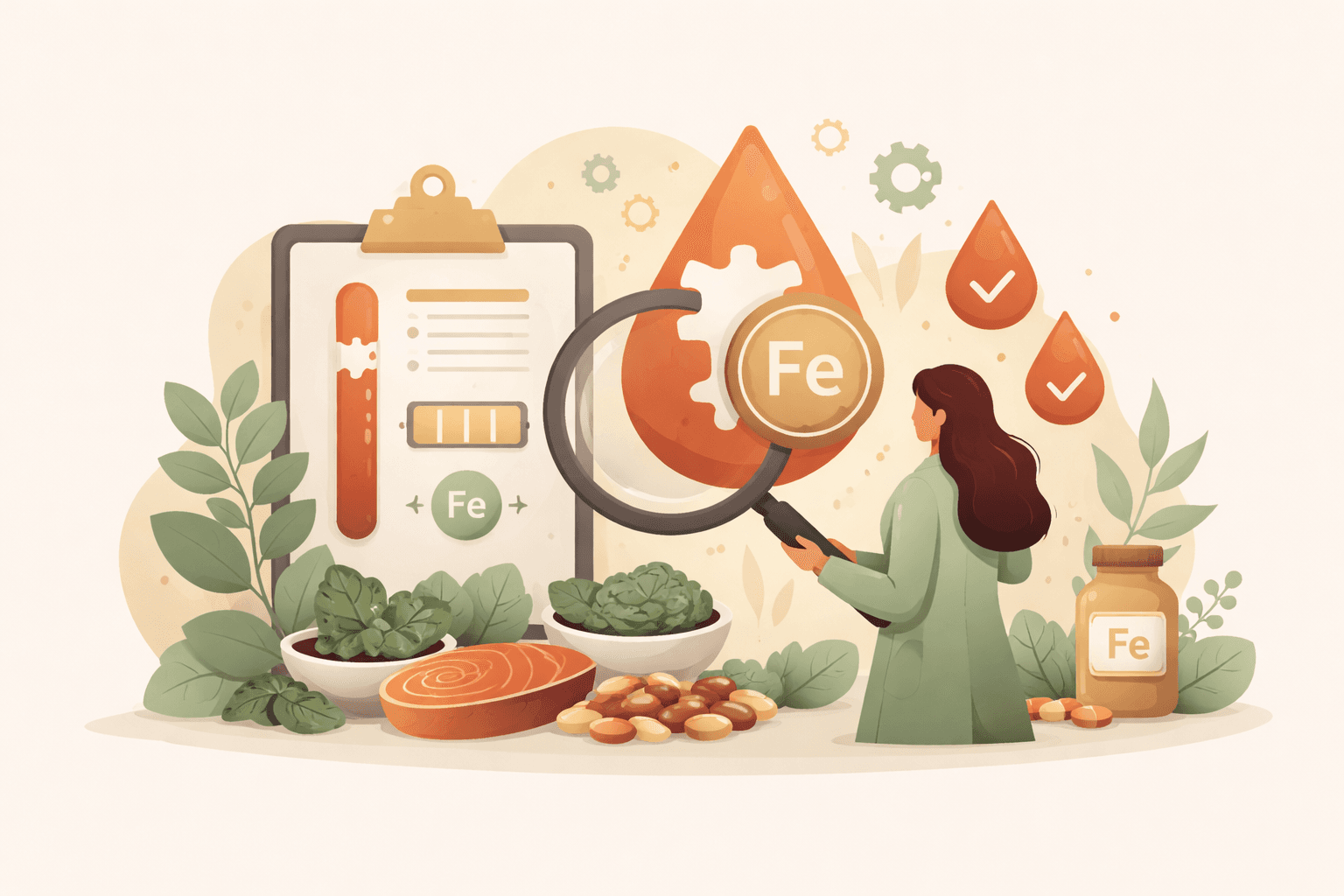
Iron deficiency is often equated with anemia, but research suggests you can be iron-deficient long before hemoglobin drops. This state—low iron stores with normal hemoglobin—is called non‑anemic iron deficiency (NAID). It may contribute to fatigue, brain fog, impaired exercise performance, hair shedding, and restless legs for some people, even when a standard blood count looks “normal.”
What ferritin measures—and why hemoglobin can miss early deficiency
- Ferritin is the body’s iron storage protein. A low ferritin result generally indicates depleted iron reserves, even when hemoglobin remains within range. Many clinical guidelines recommend ferritin as the first‑line laboratory marker for iron deficiency because hemoglobin typically falls later, after storage depletion and other compensatory changes have been exhausted (Evidence: strong; BC Guidelines, 2023; Camaschella, 2015).
- In inflammatory states, ferritin can be falsely elevated because it is an acute‑phase reactant. In these cases, pairing ferritin with markers like transferrin saturation and C‑reactive protein may improve interpretation (Evidence: strong; British Society of Gastroenterology, 2021; Camaschella, 2015).
How NAID may feel: symptoms linked to low ferritin
Research suggests that reduced iron stores—even without anemia—may be associated with several day‑to‑day complaints:
- Persistent fatigue and reduced vitality. In a randomized controlled trial of non‑anemic menstruating women with low ferritin, iron therapy reduced fatigue scores versus placebo at 12 weeks (Evidence: strong; Vaucher et al., 2012).
- Cognitive fog and lower mental efficiency. Trials in adolescent girls and young women with iron deficiency but no anemia reported improvements in attention, memory, and learning performance after iron repletion (Evidence: moderate; Bruner et al., 1996; Murray‑Kolb & Beard, 2007).
- Restless legs syndrome (RLS). A Cochrane review concluded iron therapy may improve RLS symptoms compared with placebo, especially in people with low ferritin (Evidence: strong for symptom improvement; Cochrane Review, 2019).
- Hair shedding (telogen effluvium) and brittle nails. Observational studies have found associations between low ferritin and diffuse hair shedding, though causality is not fully established (Evidence: emerging; e.g., Rasheed et al., 2013).
Who may consider asking about ferritin testing
NAID can occur when intake, absorption, or losses are out of balance. Groups frequently discussed in the literature include:
- Menstruating individuals and those with heavy menstrual bleeding (Evidence: strong; BC Guidelines, 2023).
- Endurance athletes and physically active people, where increased demands, foot‑strike hemolysis, and sweat/gastrointestinal losses may contribute (Evidence: moderate; Sim et al., 2019).
- Frequent blood donors (Evidence: strong; guideline consensus as above).
- People with gastrointestinal conditions or surgeries affecting absorption (celiac disease, IBD in remission, bariatric surgery) (Evidence: strong; Camaschella, 2015).
- Those with symptoms suggestive of RLS or persistent fatigue without explanation (Evidence: moderate to strong based on trials and reviews cited above).
Interpreting ferritin—context matters
- Typical cut‑offs: Healthy adults often exhibit depleted iron stores at very low ferritin concentrations, though several guidelines now use higher thresholds to flag possible deficiency, especially if symptoms or risk factors are present (Evidence: strong; BSG, 2021; BC Guidelines, 2023).
- Inflammation or chronic disease: Because ferritin rises with inflammation, iron deficiency can exist even with “normal” ferritin. In chronic inflammatory conditions, some guidelines consider a higher ferritin threshold, using transferrin saturation to confirm limited iron availability (Evidence: strong; BSG, 2021).
- The full picture: Clinicians commonly integrate ferritin with complete blood count, transferrin saturation, and clinical history to distinguish early iron deficiency from other causes of fatigue (Evidence: strong; guideline consensus).
Why iron stores dip despite a “good” diet
Iron biology is nuanced. The body absorbs heme iron (from animal sources like meat and seafood) more efficiently than non‑heme iron (from plants, eggs, and fortified foods). Vitamin C can enhance non‑heme iron absorption, while phytates, polyphenols, and calcium can inhibit it. Cooking in cast‑iron cookware and pairing plant sources with vitamin C‑rich foods may modestly improve non‑heme iron uptake (Evidence: moderate; Hurrell & Egli, 2010).
Safety: iron overload exists, too
Iron is essential but not universally safe to supplement without laboratory evidence. Genetic hemochromatosis leads to excess iron absorption and may present with high ferritin and transferrin saturation; unnecessary iron can worsen organ injury in this setting (Evidence: strong; GeneReviews—HFE Hemochromatosis). Persistent, unexplained high ferritin also occurs in inflammation or liver disease and warrants medical evaluation rather than empiric iron.
Traditional perspectives that echo NAID themes
- Ayurveda describes states such as pandu/“blood deficiency” and rasayana (rejuvenative) nourishment when energy is low and pallor, breathlessness, or hair dryness appear. Classical formulations like Loha Bhasma (processed iron) are referenced historically for building “rasa” and “rakta dhatu.” Modern analytical studies suggest these preparations may contain iron oxides in very fine particles, but robust randomized clinical evidence remains limited, and product quality varies widely (Evidence: traditional for indications; emerging for modern characterization).
- Important safety note: Independent testing has found heavy‑metal contamination in some Ayurvedic products purchased online; any traditional iron preparation should be sourced carefully, and clinician oversight and lab monitoring are prudent (Evidence: strong for contamination risk; Saper et al., 2004).
When to look beyond hemoglobin
If you or your clinician suspect iron issues—fatigue that outpaces training, new restless legs, hair shedding, or reduced focus—research suggests ferritin may provide earlier insight than hemoglobin alone. In individuals at risk or with compatible symptoms, discussing ferritin and transferrin saturation testing may help clarify whether low iron stores could be contributing. Because iron markers respond over weeks to months and are influenced by inflammation, repeat testing and context are important.
What improving ferritin may change
- Energy and daily functioning: Trials in non‑anemic women with low ferritin reported reduced fatigue after iron repletion (Evidence: strong; Vaucher et al., 2012).
- Cognitive efficiency: Studies in iron‑deficient adolescents and young women found improvements in attention and memory after restoring iron status (Evidence: moderate; Bruner et al., 1996; Murray‑Kolb & Beard, 2007).
- Restless legs: Symptom relief is more likely when ferritin is low to begin with (Evidence: strong; Cochrane Review, 2019).
A balanced path forward
- Testing before treating: Because both deficiency and overload exist, objective testing helps chart a safe path. For many, addressing diet quality, iron bioavailability (e.g., heme vs. non‑heme sources), and contributors to losses is foundational (Evidence: strong for testing; moderate for dietary strategies; sources above).
- Whole‑diet strategies: Traditional food pairings—such as legumes or leafy greens with citrus, tomatoes, or peppers—may enhance non‑heme iron uptake. Cooking acidic dishes in cast‑iron pans can increase iron content modestly (Evidence: moderate; Hurrell & Egli, 2010).
- Collaboration: When symptoms persist or labs are inconclusive, clinicians may evaluate for hidden blood loss, absorption issues, or inflammatory conditions that alter iron handling (Evidence: strong; BSG, 2021; Camaschella, 2015).
Bottom line
- Low ferritin with normal hemoglobin is common and may contribute to fatigue, cognitive fog, decreased exercise performance, hair shedding, and restless legs in some people.
- Ferritin is generally a more sensitive early marker of iron deficiency than hemoglobin, but it must be interpreted in context—especially in inflammation.
- Research suggests that restoring iron stores in non‑anemic, iron‑deficient individuals may reduce fatigue and RLS symptoms and support cognitive performance.
- Because iron overload and contamination risks exist, testing and clinician guidance are important before using iron-containing supplements or traditional preparations.
- Dietary patterns that emphasize bioavailable iron and vitamin C–rich pairings, alongside investigation of underlying causes of losses, may help rebuild iron stores over time.