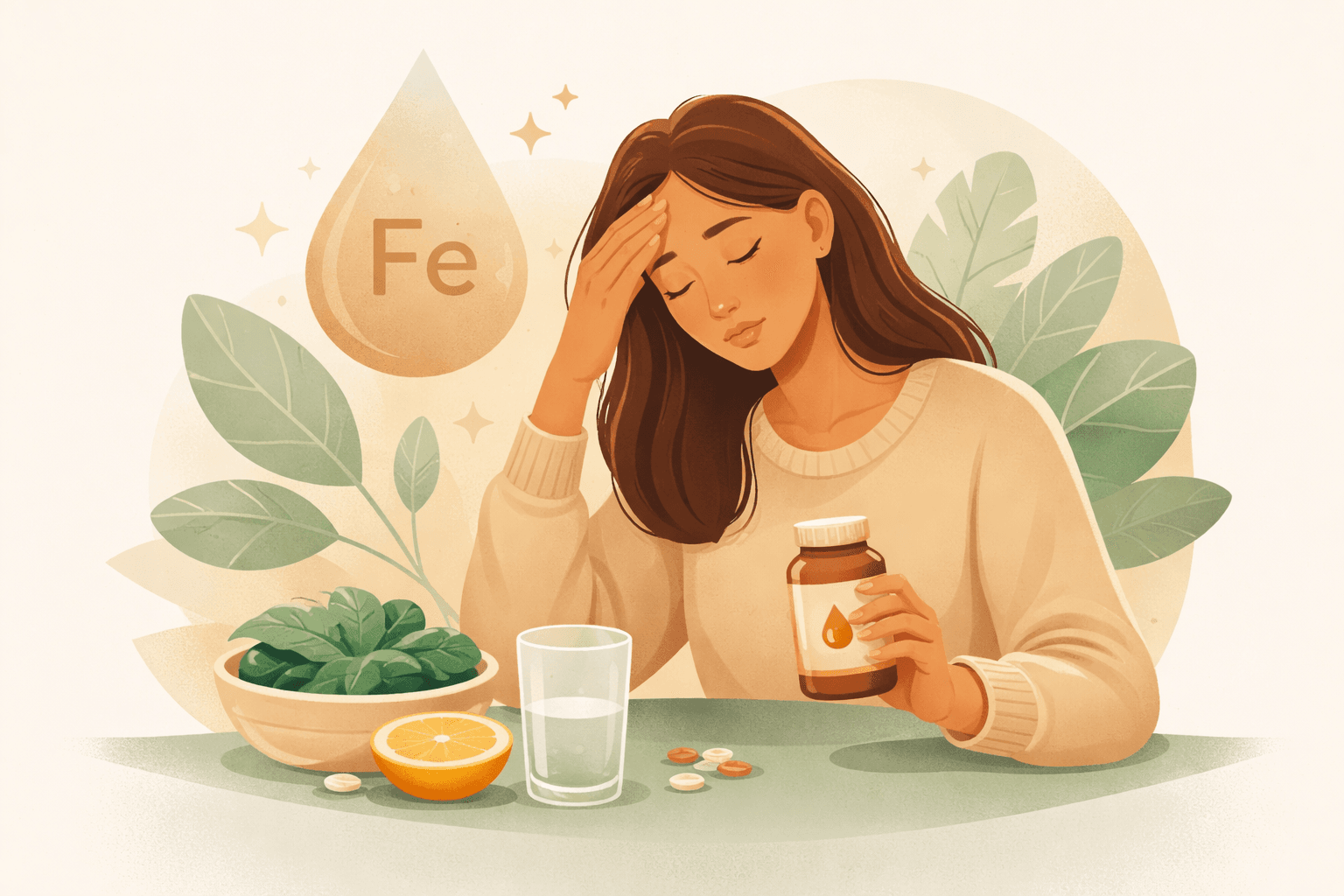
Iron deficiency is often equated with anemia, but research suggests many people experience symptoms from low iron stores long before hemoglobin drops. One of the most common and overlooked patterns is low ferritin with normal hemoglobin—sometimes called non‑anemic iron deficiency (NAID). This article focuses on how low ferritin may drive fatigue, brain fog, and restless legs despite a “normal” blood count, why ferritin is often a better early marker than hemoglobin, and what food and traditional practices may help support healthy iron status.
What ferritin tells you—and why hemoglobin can miss early deficiency (Evidence: strong)
- Ferritin is the body’s main iron storage protein. Low ferritin is a specific indicator of depleted iron reserves, even when hemoglobin remains within range (Systematic reviews and clinical guidelines, 2015–2021).
- Hemoglobin typically declines later, after iron stores have been exhausted; relying on hemoglobin alone may miss early deficiency (Guidelines and narrative reviews, 2015–2021).
- Inflammation can raise ferritin independent of iron status; in those situations, additional markers such as transferrin saturation and inflammatory markers are often considered by clinicians to clarify iron status (Guidelines, 2020–2021).
Key evidence:
- International guidelines recognize ferritin as the preferred initial test for iron deficiency, noting that very low ferritin is highly specific for deficiency (World Health Organization guideline on ferritin, 2020; British Society for Haematology guideline, 2021). (Evidence: strong)
- Reviews in major journals emphasize that iron deficiency is a spectrum, and symptoms and functional impairments may appear well before hemoglobin falls (Narrative reviews, 2015–2021). (Evidence: strong)
How low ferritin may feel: fatigue, brain fog, and restless legs (Evidence: moderate to strong)
- Fatigue and reduced energy: RCTs in non‑anemic individuals with low ferritin report improvements in fatigue compared with placebo, suggesting that iron repletion may support energy in this population (BMJ randomized trial, 2003; Systematic review and meta‑analysis of RCTs, 2018). (Evidence: moderate)
- Cognitive and mood effects: Observational studies and small trials link low iron stores with reduced attention, concentration, and mood symptoms in non‑anemic adults, with improvement in some measures after repletion (Systematic reviews, 2012–2017). (Evidence: emerging to moderate)
- Restless legs syndrome (RLS): Systematic reviews, including Cochrane analyses, report that iron therapy may improve RLS symptoms, particularly in those with low ferritin (Cochrane review, 2019). (Evidence: strong)
- Exercise intolerance: Trials in physically active women with low ferritin but normal hemoglobin show improvements in endurance metrics after iron repletion, suggesting iron’s role in muscular oxidative capacity (Randomized trials, 2007–2011; Systematic review, 2018). (Evidence: moderate)
Who may be more likely to have low ferritin without anemia (Evidence: moderate)
- Menstruating individuals, especially with heavy periods (Observational studies; Guidelines, 2021). (Evidence: strong)
- Endurance athletes and high‑volume exercisers due to increased iron turnover and losses (Systematic reviews, 2018). (Evidence: moderate)
- Vegetarians and vegans who rely primarily on non‑heme iron sources with lower bioavailability (Reviews, 2007–2010). (Evidence: moderate)
- Frequent blood donors (Guidelines and cohort studies). (Evidence: strong)
- People with gastrointestinal conditions affecting absorption (e.g., celiac disease, inflammatory bowel disease) (Guidelines, 2015–2021). (Evidence: strong)
- Pregnancy and the postpartum period, when iron demands increase substantially (Guidelines, 2020–2021). (Evidence: strong)
Testing to discuss with a clinician (Evidence: strong)
- Ferritin: Research and guidelines suggest ferritin is the most informative single test to screen for iron deficiency in many settings, acknowledging that inflammation can mask low stores (WHO guideline, 2020; BSH guideline, 2021). (Evidence: strong)
- If inflammation is suspected, clinicians may also consider transferrin saturation, serum iron, total iron‑binding capacity, and inflammatory markers to interpret ferritin accurately (Guidelines, 2020–2021). (Evidence: strong)
- Because both iron deficiency and iron overload can be harmful, research suggests testing and interpretation with a qualified clinician before starting iron is prudent. (Evidence: strong)
Food first: bioavailability matters (heme vs non‑heme) (Evidence: strong)
- Heme iron (from animal sources such as meat and seafood) is more readily absorbed than non‑heme iron (from plants and fortified foods) (Lancet review, 2007; Nutrition research review, 2010). (Evidence: strong)
- Non‑heme iron absorption is influenced by meal composition: vitamin C–rich foods (e.g., citrus, peppers) may enhance absorption, while phytates (whole grains/legumes), polyphenols (tea/coffee), and calcium can inhibit it when consumed with iron‑rich meals (Reviews, 2007–2010). (Evidence: strong)
- Cooking in cast‑iron cookware can increase the iron content of acidic or high‑moisture foods. Community trials suggest that regular use of iron cookware may improve iron status in some populations (Randomized community trials, 1998–2015). Effects vary by diet, acidity, and cooking frequency. (Evidence: moderate)
Traditional perspectives and practices (Evidence: emerging/traditional)
- Ayurveda describes classical iron preparations such as Loha Bhasma for “Rakta dhatu” (blood) support and vitality. While these remedies have a long history of traditional use, modern clinical evidence is limited, and analyses have raised concerns about product quality and potential heavy‑metal contamination in some preparations (Pharmacognosy and safety reviews, 2010–2020). If considered, traditional sources emphasize practitioner‑guided use and rigorous quality controls. (Evidence: traditional/emerging)
- Traditional kitchen strategies—pairing iron‑rich foods with souring agents (e.g., lemon, tamarind) and slow cooking in iron vessels—mirror modern findings on bioavailability and may help improve dietary iron intake (Ethnographic and nutrition reviews, 2007–2015). (Evidence: emerging)
Don’t overlook iron overload (hemochromatosis) (Evidence: strong)
- Hereditary hemochromatosis, most common in people of Northern European ancestry, leads to excessive iron absorption and tissue iron accumulation. Untreated overload is linked with liver disease, diabetes, heart problems, and fatigue (International guidelines, 2019–2022). (Evidence: strong)
- Research and clinical guidelines suggest that individuals with a family history of iron overload, persistently elevated ferritin with high transferrin saturation, or unexplained liver enzyme elevations discuss targeted testing with a clinician before using iron‑containing products (EASL guideline, 2022). (Evidence: strong)
How to put this into practice—without medical advice
- Consider symptoms plus context. Persistent fatigue, brain fog, reduced exercise tolerance, hair shedding, or RLS—especially in the presence of risk factors—may warrant a conversation about checking ferritin rather than relying on hemoglobin alone. (Evidence: moderate to strong)
- Emphasize food quality and pairing. Research suggests that emphasizing iron‑rich foods appropriate to your dietary pattern, pairing with vitamin C–rich produce, separating tea/coffee from iron‑rich meals, and using cast‑iron cookware where practical may support healthy iron status over time. (Evidence: strong for absorption principles; moderate for cookware impact)
- Avoid self‑supplementation. Because iron overload carries real risks and iron markers can be complex in the setting of inflammation, research and guidelines emphasize working with a clinician for testing and individualized guidance. (Evidence: strong)
Bottom line
- Low ferritin with normal hemoglobin—non‑anemic iron deficiency—may contribute to fatigue, brain fog, exercise intolerance, and restless legs in otherwise “normal” lab profiles. Ferritin is a more sensitive early marker of iron deficiency than hemoglobin alone, although inflammation can complicate interpretation. Evidence from randomized trials and meta‑analyses suggests that addressing low ferritin may improve fatigue and RLS symptoms in selected individuals.
- Food‑based strategies that enhance iron bioavailability—especially vitamin C pairing and attention to heme vs non‑heme sources—are well supported. Traditional practices such as cooking in iron vessels may provide incremental benefits; classical Ayurvedic iron preparations reflect long‑standing use but have limited modern clinical evidence and safety considerations.
- Because both deficiency and overload carry risks, research‑informed testing and clinician guidance are essential before making changes aimed at raising iron levels.