L‑Glutamine and the Athlete’s Gut Barrier: What the Evidence Says
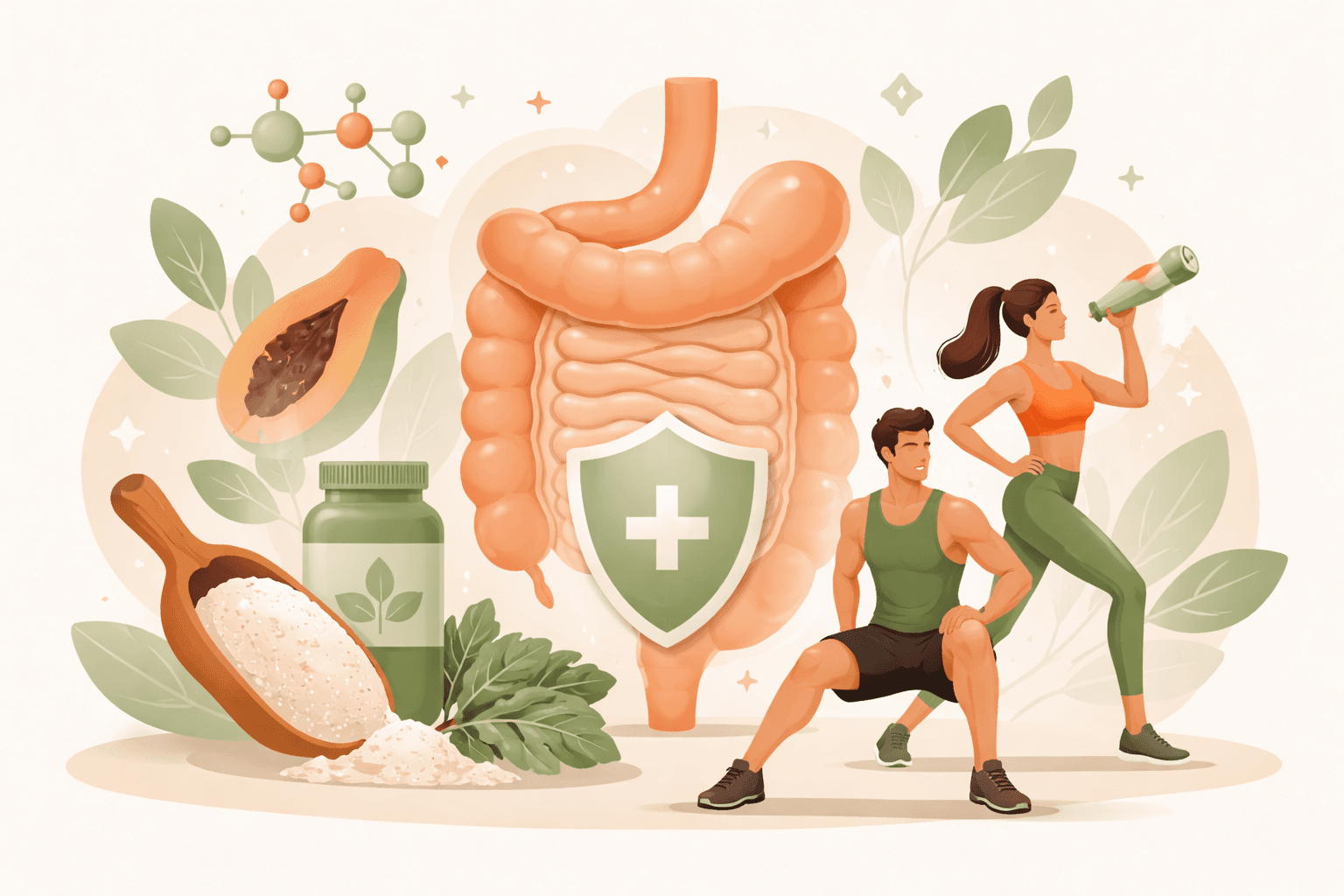
Intense training challenges not only muscles but also the gastrointestinal (GI) tract. Heat, dehydration, and reduced blood flow to the gut during hard efforts can increase intestinal permeability (“leaky gut”), GI symptoms, and susceptibility to infections—issues that can derail performance and recovery. L‑glutamine, the most abundant free amino acid in blood and muscle, has attracted attention because gut and immune cells use it as a preferred fuel and as a building block for barrier integrity. This focused review looks at what research suggests about L‑glutamine’s role in exercise‑induced gut permeability in athletes, with brief links to immune function and recovery.
Why the athlete’s gut is vulnerable
- During prolonged or high‑intensity exercise—especially in the heat—blood is diverted away from the intestines, raising gut temperature and oxidative stress. This can disrupt tight junction proteins that maintain the gut barrier, allowing luminal contents (for example, endotoxin/LPS) to translocate into circulation (Evidence: strong; systematic reviews of exercise‑induced GI syndrome) (Costa et al., 2017, Sports Medicine; Pires et al., 2016, Sports Medicine; Lambert, 2008, Int J Sport Nutr Exerc Metab).
- Athletes commonly report GI distress (nausea, cramping, diarrhea) during endurance events, and post‑race upper‑respiratory symptoms are more frequent when gut barrier markers and endotoxemia rise (Evidence: moderate; cohort and challenge studies) (Nieman, 1997, Int J Sports Med; Costa et al., 2017, Sports Medicine).
What glutamine does for the gut barrier
- Fuel for enterocytes and immune cells: Enterocytes (gut lining cells) and lymphocytes preferentially oxidize glutamine for energy, supporting cell turnover and function (Evidence: strong; foundational biochemistry and human/animal studies) (Newsholme, 2001, Nutrition; Curi et al., 2017, Nutrients).
- Tight junction and mucus support: Glutamine helps regulate tight junction proteins (occludin, claudins) and may bolster mucosal defenses against heat and oxidative stress (Evidence: moderate; cell and animal data with supportive small human trials) (Kim & Kim, 2017, J Clin Biochem Nutr; Rao & Samak, 2012, J Nutr Biochem).
- Antioxidant link: As a precursor for glutathione synthesis, glutamine availability may assist redox balance in the gut during exertional heat stress (Evidence: moderate; mechanistic and small human studies) (Wernerman, 2008, Crit Care; Curi et al., 2017, Nutrients).
Athletic evidence: can glutamine blunt exercise‑induced permeability?
Human trials—many small and often in heat‑stress models—suggest glutamine may attenuate gut leak and symptoms, but findings are not uniform.
- Randomized/crossover heat‑exercise trials have reported reduced rises in intestinal permeability markers (for example, lactulose:rhamnose ratio, I‑FABP) and lower endotoxemia when glutamine is provided around exercise (Evidence: moderate; small RCTs) (van Wijck et al., 2011–2012, Am J Physiol Gastrointest Liver Physiol; Zuhl et al., 2014, Int J Sport Nutr Exerc Metab).
- Some studies also noted fewer GI symptoms during prolonged running or cycling in the heat with glutamine compared with control, though effect sizes are modest and protocols vary (Evidence: moderate; small RCTs) (Zuhl et al., 2014, Int J Sport Nutr Exerc Metab; Snipe & Costa, 2018, Sports Medicine review).
- Systematic reviews of nutrition strategies for exercise‑induced GI syndrome list glutamine as a promising but not definitive option; heterogeneity in study designs, populations, and biomarkers limits firm conclusions (Evidence: moderate) (Costa et al., 2017, Sports Medicine; Snipe & Costa, 2018, Sports Medicine).
In short, for scenarios where heat and duration push the gut, research suggests glutamine may help maintain barrier integrity and reduce symptom burden, but larger, standardized trials are needed to clarify who benefits most and when (Evidence: moderate).
The gut–muscle–immune link in athletes
- Post‑exertion dip in plasma glutamine: After very prolonged efforts, circulating glutamine can fall, leading to the “glutamine hypothesis” of transient immune vulnerability in athletes (Evidence: moderate; observational and mechanistic) (Newsholme, 2001, Nutrition; Castell & Newsholme, 1997, Clin Sci).
- Immune outcomes: Early RCTs reported fewer self‑reported upper‑respiratory symptoms after marathons with glutamine vs. placebo, but later trials and reviews show mixed or null effects on actual infection incidence and immune markers (Evidence: mixed overall; from emerging to moderate depending on outcome) (Castell et al., 1996, Eur J Appl Physiol; Walsh, 2018, Nat Rev Immunol overview; Legault et al., 2015, systematic review).
Takeaway: Maintaining gut barrier integrity may indirectly support immune resilience during heavy training blocks, and glutamine is mechanistically positioned to help, but clinical immune benefits remain uncertain (Evidence: moderate).
Insights from clinical stress: burns and trauma
Glutamine is often described as “conditionally essential” during severe physiological stress because demand outpaces endogenous supply.
- In burn and trauma populations, several RCTs and meta‑analyses have reported reductions in infectious complications and improved gut barrier/function with glutamine, particularly when the GI tract is engaged (Evidence: moderate to strong in select subgroups) (Wischmeyer, 2011, Ann Nutr Metab; Chen et al., 2014, JPEN meta‑analysis).
- However, very high‑dose parenteral regimens in critically ill patients with multi‑organ failure have not shown benefit and, in one large trial (REDOXS), were associated with harm (Evidence: strong for lack of benefit in this context) (Heyland et al., 2013, N Engl J Med).
Implication for sport: Severe‑stress data reinforce glutamine’s roles in gut barrier and immune cell metabolism, but dosing, route, and patient condition matter greatly—so findings cannot be directly extrapolated to healthy athletes (Evidence: moderate for mechanistic relevance; not prescriptive).
IBS, permeability, and athletes
Exercise can unmask GI sensitivity, and some athletes also have baseline IBS‑like symptoms. Where increased intestinal permeability is present, glutamine may be relevant.
- In adults with diarrhea‑predominant IBS and elevated permeability, a randomized, placebo‑controlled trial reported improvements in symptom severity, stool form, and quality of life with glutamine (Evidence: moderate; one well‑designed RCT) (Zhou et al., 2019, Aliment Pharmacol Ther).
While IBS differs from exercise‑induced GI syndrome, the shared barrier component may explain overlapping benefits in some individuals (Evidence: emerging for athlete translation).
Traditional perspective: bone broth and gut soothing
Across traditional medical systems—ranging from East Asian to Mediterranean cuisines—slow‑simmered bone broths have been used to “nourish” or “soothe” the gut, especially during recovery from illness or exertion. These broths contain amino acids, including glutamine, glycine, and proline, though amounts vary widely by preparation (Evidence: traditional; limited modern quantification) (Traditional Chinese Medicine dietary therapy texts; modern compositional analyses are limited).
This traditional view aligns with modern mechanisms: amino acids serving as fuel for gut cells and substrates for connective tissue repair (Evidence: bridging traditional with emerging mechanistic support).
What this means for athletes
- For endurance and heat‑exposed athletes, glutamine may help maintain gut barrier integrity during heavy sessions and reduce GI symptoms (Evidence: moderate; small RCTs and reviews).
- Potential secondary benefits could include steadier recovery and fewer post‑event malaise days linked to GI leak and immune activation, though hard infection outcomes remain inconclusive (Evidence: emerging to moderate).
- In individuals with IBS‑like symptoms and documented increased permeability, glutamine has shown benefits in controlled trials that may translate to select athletes (Evidence: moderate for IBS populations; emerging for athletes).
Important: Research protocols vary and are not equivalent to everyday use. Individuals with serious medical conditions—particularly severe liver or kidney disease, or those who are critically ill—should seek medical guidance before considering amino acid supplementation (Evidence: strong caution based on critical‑care trials).
Bottom line
- Intense and hot‑environment exercise can compromise the gut barrier; this is a recognized contributor to GI distress and post‑exertional malaise in athletes (Evidence: strong).
- Because enterocytes and immune cells preferentially use it for fuel, L‑glutamine is mechanistically well‑positioned to support barrier integrity under stress (Evidence: strong mechanistic; moderate human data).
- Small randomized trials suggest glutamine may blunt exercise‑induced increases in gut permeability and reduce GI symptoms, particularly in heat‑stress models, but larger, standardized studies are needed (Evidence: moderate).
- Immune benefits for athletes are plausible via the gut–immune axis, yet clinical outcomes like infection rates show mixed findings (Evidence: mixed).
- Clinical stress and IBS research add supportive context but cannot be directly extrapolated to all athletes (Evidence: moderate context; emerging translation).
- Traditional bone broth practices echo modern mechanisms, though specific amino acid content and clinical effects vary (Evidence: traditional with emerging support).
Overall, research suggests L‑glutamine may help protect the athlete’s gut barrier during demanding training, with possible downstream benefits for comfort and recovery. Its promise is real but not definitive; individualized experimentation and clinical oversight are prudent, especially for those with medical conditions.