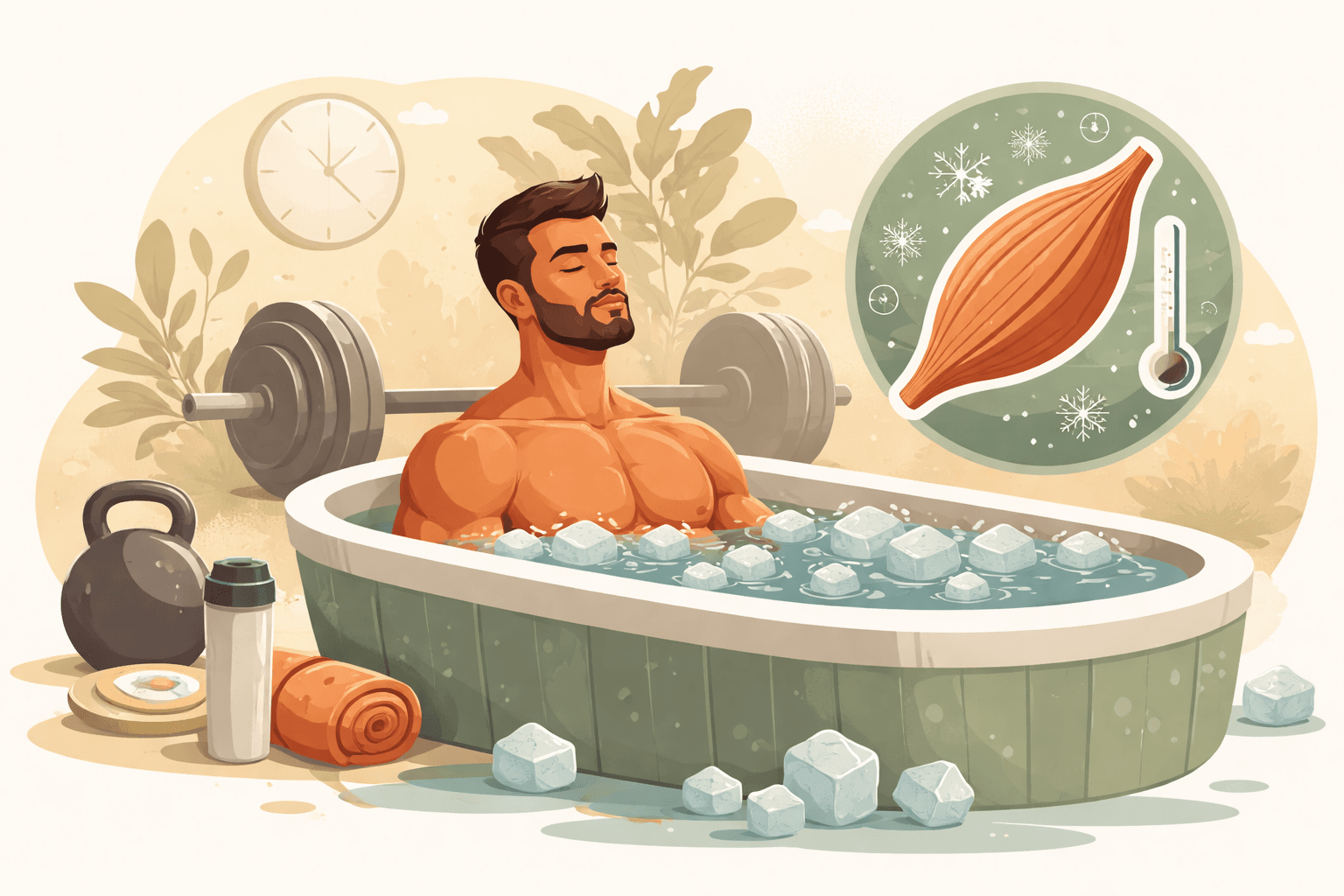
Cold exposure is having a moment. From pro athletes to weekend lifters, many are adopting ice baths and cold plunges—helped along by podcast-fueled buzz and claims of faster recovery. But if your primary goal is building muscle and strength, the key question is narrower: do ice baths right after lifting blunt hypertrophy and strength adaptations?
This supporting article distills what research suggests about post-resistance training cold water immersion (CWI), how it compares to other recovery tools like contrast water therapy, and where traditional practices fit in.
What we mean by “blunting adaptations” (and why it matters)
- After lifting, muscle tissue initiates signaling cascades (for example, mTOR-related pathways) that support protein synthesis, satellite cell activity, and ultimately hypertrophy and strength gains (Evidence: strong, based on decades of mechanistic and human training research).
- The concern is that intense cold exposure immediately after training may dampen some of these signals, potentially resulting in smaller gains over time (Evidence: moderate; supported by randomized trials and systematic reviews, though not universal across all contexts).
Key trials: ice baths after lifting and long-term gains
- A 12-week randomized controlled trial in The Journal of Physiology (2015, Roberts and colleagues) compared post-exercise CWI to active recovery after resistance training. The CWI group showed smaller increases in muscle mass and strength and attenuated anabolic signaling and satellite cell activity (Evidence: moderate-to-strong for trained-state interference in that protocol; single high-quality RCT with mechanistic measures).
- Mechanistic studies have reported that CWI after resistance exercise can reduce phosphorylation of anabolic signaling proteins and may depress myofibrillar protein synthesis acutely, aligning with the observed reduction in long-term hypertrophy in some trials (Evidence: moderate; multiple controlled studies show consistent biological direction, though exact magnitudes vary).
- Systematic reviews up to the early 2020s note that repeated, immediate post-lift cold exposure can attenuate hypertrophy and strength development compared with non-cold recoveries, especially when used chronically across a training block (Evidence: moderate; conclusions are cautious due to heterogeneity in protocols and training status).
What about soreness and inflammation?
- Meta-analyses and systematic reviews (e.g., Sports Medicine and British Journal of Sports Medicine, 2012–2016) suggest CWI reduces delayed-onset muscle soreness (DOMS) and perceived fatigue in the first 24–72 hours after exercise compared with passive rest (Evidence: strong for short-term soreness relief; effect sizes are small-to-moderate and tend to be transient).
- Markers of inflammation may also be reduced acutely following CWI, which likely contributes to less soreness (Evidence: moderate; consistent short-term biomarker changes, but limited linkage to performance over longer timeframes).
The trade-off: feeling better now vs. adapting more later
- If your near-term goal is to reduce soreness so you can participate in back-to-back events or feel more comfortable, CWI may help you feel better faster (Evidence: strong for DOMS reduction; performance carryover is context-dependent).
- If your primary goal is maximizing hypertrophy and strength over weeks to months, research suggests that routine, immediate post-lift CWI may blunt some of those gains (Evidence: moderate; supported by RCTs and reviews, though not all studies agree and individual responses vary).
Timing appears to matter
- The proximity of cold exposure to resistance exercise seems important. Immediate immersion after lifting is where attenuation of anabolic signaling has been most evident (Evidence: moderate; supported by trials using immediate post-exercise CWI).
- Using cold exposure away from hypertrophy-focused sessions (for example, on separate days or outside the acute recovery window) has not been studied as extensively, but some coaches and practitioners speculate it may mitigate interference with adaptations. This remains an open research question (Evidence: emerging; limited controlled data on delayed timing strategies).
Does endurance training change the picture?
- Some studies of cold exposure after endurance exercise report neutral or even favorable recovery outcomes on performance without the same concerns for hypertrophy-specific signaling (Evidence: moderate; endurance adaptations rely on somewhat different molecular pathways, and the interference risk appears lower, though details depend on training and cold protocols).
- For athletes mixing endurance and strength (concurrent training), reviews have proposed that cold may differentially affect pathways, so the risk/benefit may hinge on which adaptation (aerobic vs. hypertrophy) is prioritized (Evidence: emerging-to-moderate; conceptual models are supported, but high-quality trials are still developing).
Contrast water therapy vs. ice baths
- Contrast water therapy (alternating warm and cold) is a traditional hydrotherapy approach used widely in Nordic and athletic settings. Cochrane and other systematic reviews suggest it can reduce DOMS more than passive recovery, with effects broadly similar to CWI for soreness (Evidence: moderate; consistent DOMS benefits, with variability in protocols).
- Whether contrast therapy carries the same risk of blunting hypertrophy as immediate post-lift CWI is not well established. Because it alternates temperatures and includes heat, it might differ in vascular and signaling effects, but direct long-term comparisons on muscle growth are sparse (Evidence: emerging; few head-to-head hypertrophy trials).
Cold-shock proteins and brown fat: interesting, but not the main story for lifting gains
- Cold exposure can increase norepinephrine and is linked to cold-shock proteins (like RBM3 in preclinical models) and brown adipose tissue activation, which are often discussed for metabolic and neuroprotective angles (Evidence: emerging in humans; stronger preclinical support).
- These mechanisms are intriguing for resilience and energy expenditure, but they do not currently override the documented concern about attenuated anabolic signaling when cold is used immediately post-resistance training (Evidence: moderate; mechanistic plausibility does not negate observed training outcomes in RCTs).
Traditional perspectives: Nordic cycles and breath-cold practices
- Nordic cultures have long alternated hot and cold as a ritual for resilience and wellbeing. Similarly, the Wim Hof Method pairs cold exposure with breathwork and mental training to cultivate stress tolerance. Many people report better mood and perceived recovery using these approaches (Evidence: traditional for cultural practices; emerging for specific physiological endpoints beyond mood and stress perception).
- Bridging to modern sports science, these practices may help with perceived recovery, stress regulation, and adherence. The key nuance is aligning them with the specific training goal. For hypertrophy emphasis, minimizing immediate post-lift cold likely preserves adaptive signaling, while cultural or mindfulness benefits of cold can be pursued at other times (Evidence: moderate for the attenuation risk; traditional/emerging for mood and resilience effects).
Practical implications for lifters and coaches
- If the training block’s priority is maximal muscle size and strength, routine immediate post-lift ice baths may be counterproductive (Evidence: moderate).
- If the near-term priority is managing soreness for dense competition schedules or work demands, CWI can be considered for comfort and perceived readiness, understanding the potential trade-off with long-term hypertrophy (Evidence: strong for DOMS relief; moderate for adaptation trade-off).
- Contrast therapy may offer DOMS reduction similar to CWI, but its effects on long-term strength and size remain under-studied (Evidence: emerging-to-moderate for DOMS; emerging for hypertrophy outcomes).
Bottom line
- Research suggests that immediate cold water immersion after resistance training can blunt anabolic signaling and, over time, reduce gains in muscle size and strength compared with non-cold recovery strategies (Evidence: moderate, anchored by RCTs and systematic reviews).
- Cold exposure reliably reduces soreness and perceived fatigue in the short term (Evidence: strong), which may be helpful when comfort or quick turnaround is the priority.
- Timing likely matters: the closer cold exposure is to lifting, the more likely it is to interfere with hypertrophy signals (Evidence: moderate). Using cold at other times is less studied and remains an open question.
- Contrast water therapy also appears to ease DOMS (Evidence: moderate), but its long-term impact on hypertrophy is unclear.
- Traditional Nordic hot-cold cycles and contemporary breath-cold practices may support resilience and perceived recovery (Evidence: traditional/emerging). Align them with your goals, recognizing the adaptation trade-offs when muscle growth is the main target.
References (selected, not exhaustive)
- Roberts LA et al. The Journal of Physiology, 2015: Post-exercise cold water immersion attenuated anabolic signaling, satellite cell activity, and gains in muscle mass/strength vs. active recovery.
- Hohenauer E et al. Sports Medicine, 2015: Systematic review/meta-analysis—CWI reduces DOMS and perceived fatigue vs. passive recovery.
- Machado AF et al. British Journal of Sports Medicine, 2016: Meta-analysis—CWI provides small-to-moderate reductions in DOMS.
- Ihsan M, Watson G, Abbiss CR. Sports Medicine, 2016: Review—Cold water immersion mechanisms and considerations for recovery.
- Cochrane Review on contrast water therapy (Higgins et al., 2010/2013): CWT may reduce DOMS vs. passive rest, with protocol variability.