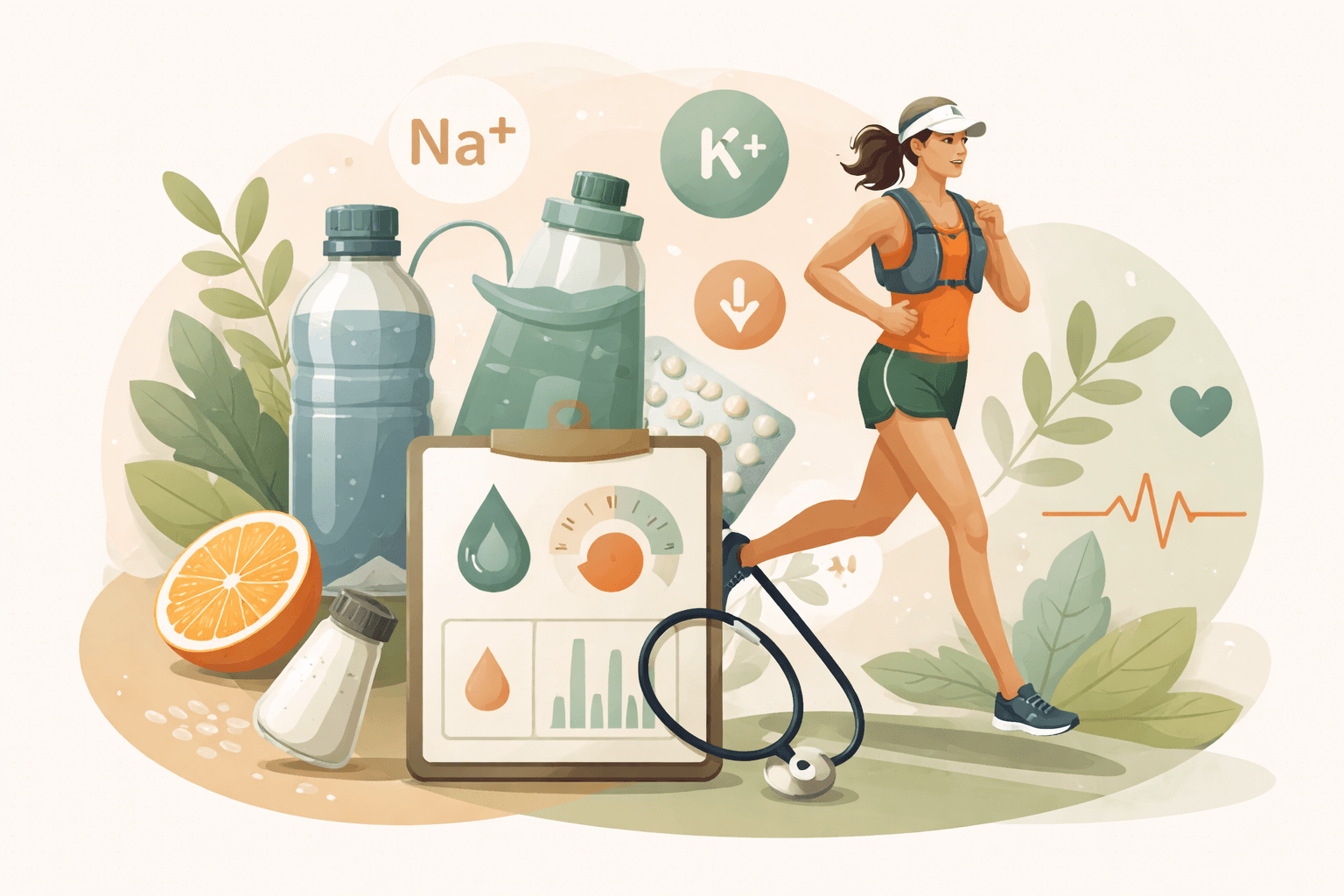
Electrolytes matter for performance, but more isn’t always better. One of the most consequential hydration pitfalls for endurance athletes is exercise-associated hyponatremia (EAH) — a drop in blood sodium during or after prolonged activity. This focused guide unpacks what EAH is, why it happens, who is most at risk, and how the science of oral rehydration and traditional hydration practices fit into the picture.
What is Exercise-Associated Hyponatremia?
EAH occurs when blood sodium becomes diluted, often due to consuming large volumes of low-sodium fluid during long-duration exercise. Symptoms range from mild (headache, bloating, nausea) to severe (confusion, seizures), and — in rare cases — can be life-threatening. (Evidence level: strong; consensus statements and systematic reviews)
Research suggests EAH has been documented in marathons, ultramarathons, triathlons, hiking, and military training. Reported prevalence varies widely by event and conditions, but it has been observed in a meaningful minority of finishers in some hot, long-duration events. (Evidence level: moderate; field studies and event cohorts)
Why EAH Happens: The Dilution Problem
- Overdrinking hypotonic fluids: Consuming more fluid than is lost in sweat dilutes plasma sodium. Water and many standard sports drinks are hypotonic relative to blood. (Evidence level: strong; consensus and physiological research)
- Impaired water excretion: Non-osmotic release of antidiuretic hormone (ADH) during prolonged exertion can reduce urine output, increasing the risk that excess fluid stays in the body. (Evidence level: strong; exercise physiology studies)
- Sodium loss in sweat: Sodium is lost in sweat, but most cases of EAH are linked more to fluid excess than to sodium deficit alone. (Evidence level: strong; consensus and systematic reviews)
Who Is Most at Risk?
Research has identified patterns associated with higher EAH risk:
- Long duration and slower paces (more hours on course), especially in hot/humid conditions. (Evidence level: strong; meta-analyses and large event cohorts)
- High fluid intake, especially when driven by rigid drinking schedules rather than thirst. (Evidence level: strong; consensus statements)
- Smaller body size, low body mass, or low sweat rate coupled with high intake. (Evidence level: moderate; observational data)
- Use of nonsteroidal anti-inflammatory drugs (NSAIDs), which may interact with kidney water handling. (Evidence level: moderate; observational and mechanistic data)
- Limited access to sodium-containing foods/fluids across very long events, particularly for individuals with high sweat sodium losses. (Evidence level: moderate; field data)
Sweat Sodium Is Highly Individual
Not all sweat is the same. Studies show more than a tenfold range in sweat sodium concentration across individuals, influenced by genetics, acclimation, diet, and training status. Some athletes notice salt crusts on clothing or stinging sweat in the eyes — informal hints of higher sodium loss. (Evidence level: strong; laboratory assessments and reviews)
What does that mean for performance? Research suggests replacing some sodium during very long, hot efforts may help maintain plasma volume and reduce the chance of dilutional drops in blood sodium in susceptible athletes, though consistent performance boosts (like faster times) are not reliably seen. (Evidence level: moderate; randomized and crossover trials, systematic reviews)
Muscle cramps are often blamed on “low salt,” but the link is complex. Neuromuscular fatigue, temperature, and pacing also contribute. Sodium intake may help some cramp-prone athletes, but evidence is mixed. (Evidence level: emerging; small trials and field reports)
Sports Drinks, Water, and Oral Rehydration Solutions: What’s the Difference?
Water: Effective for thirst quenching and rehydration in shorter or cooler sessions, but large volumes without sodium during long efforts can dilute plasma sodium. (Evidence level: strong; consensus and physiological studies)
Standard sports drinks: Designed to be palatable and provide carbohydrate plus small-to-moderate amounts of sodium. They replace fluid and energy but typically contain less sodium than is lost in salty sweat, and are still hypotonic relative to blood. (Evidence level: strong; product analyses and trials)
Oral rehydration solutions (ORS): Formulated based on glucose–sodium co-transport in the small intestine (SGLT1). The presence of glucose drives sodium and water absorption more efficiently than water alone. Systematic reviews in clinical settings show ORS effectively restores hydration and reduces the need for intravenous fluids compared with water or low-sodium drinks; exercise studies report greater fluid retention and faster plasma volume recovery with ORS-like formulas versus water. (Evidence level: strong for clinical rehydration; moderate for sports-specific outcomes)
What this means for athletes: ORS may be useful in specific scenarios — long, hot events with heavy sweating, recovery from gastrointestinal illness, or when rapid rehydration is needed — but it is not automatically superior for every workout. (Evidence level: moderate; crossover trials and translational physiology)
Traditional Hydration Wisdom in Context
Traditional practices often pair fluids with sodium and minerals:
- Coconut water: Naturally high in potassium with modest carbohydrate and lower sodium. Small randomized trials report coconut water rehydrates comparably to some sports drinks after moderate dehydration, though some participants note bloating. For heavy sodium losses, coconut water alone may fall short. (Evidence level: moderate; small RCTs)
- Bone broth and salted soups: Long used after illness or exertion in many cultures. They provide sodium and fluid, and may support post-exercise appetite. Scientific data on performance outcomes are limited, but the sodium-and-fluid pairing aligns with rehydration principles. (Evidence level: traditional for use; emerging for sports-specific evidence)
- Salted rice porridge or congee: Common in East and Southeast Asia for rehydration and recovery. Combining starch, salt, and fluid mirrors the glucose–sodium co-transport concept that underpins ORS science. (Evidence level: traditional; moderate mechanistic plausibility)
Sodium Supplements and Performance: Marketing vs. Science
Despite strong marketing, sodium supplementation does not consistently improve endurance performance outcomes like time-trial results in temperate conditions. Systematic reviews and controlled trials report mixed or null effects on speed or power. (Evidence level: moderate; systematic reviews and RCTs)
However, research suggests sodium intake during prolonged, hot events may help maintain fluid balance and reduce the likelihood of excessive falls in plasma sodium in athletes who sweat heavily or have high sweat sodium. The protective effect appears context-dependent and is less about “boosting speed” than about supporting safe hydration status. (Evidence level: moderate; trials and field studies)
Practical, Non-Prescriptive Considerations
These non-dosage principles reflect current evidence without offering medical advice:
- Avoid forced overdrinking: Modern consensus encourages letting thirst help guide intake rather than rigid “as much as possible” strategies. (Evidence level: strong; consensus statements)
- Pay attention to duration, heat, and access to sodium-containing foods/fluids when planning long efforts. (Evidence level: strong; event data and consensus)
- Notice individual sweat patterns: Visible salt residue, frequent muscle cramping, or large body mass changes across long efforts may signal higher sweat and sodium losses; personal experimentation in training may help identify what sits well. (Evidence level: moderate; field observations and applied physiology)
- Be cautious with NSAIDs around long events due to potential kidney and fluid balance effects. (Evidence level: moderate; observational and mechanistic studies)
- If signs like headache, nausea, swelling of hands or feet, confusion, or sudden weight gain occur during an event, consider that overconsumption of fluid may be involved and seek appropriate medical evaluation. (Evidence level: strong for symptom relevance; consensus guidance)
Bottom Line
- EAH is mostly a dilution issue from overconsumption of low-sodium fluids during long, hot efforts, sometimes compounded by hormonal water retention. (Evidence level: strong)
- Risk is higher with long duration, slow pace, high fluid intake, smaller body size, hot conditions, and NSAID use. (Evidence level: strong to moderate)
- Sweat sodium varies widely; targeted sodium intake may help some athletes maintain fluid balance in prolonged heat, but consistent performance boosts are not guaranteed. (Evidence level: moderate)
- ORS leverages glucose–sodium co-transport for efficient absorption and can be useful in specific endurance or recovery scenarios; for everyday training, water or standard sports drinks may suffice. (Evidence level: strong for clinical efficacy; moderate for sports contexts)
- Traditional options — coconut water, bone broth, and salted porridges — align with core rehydration principles when matched to the sodium demands of the situation. (Evidence level: moderate to traditional)
As always, individualized strategies developed in training — not on race day — and attention to body signals may help athletes balance performance with safety. This article is informational and not medical advice.