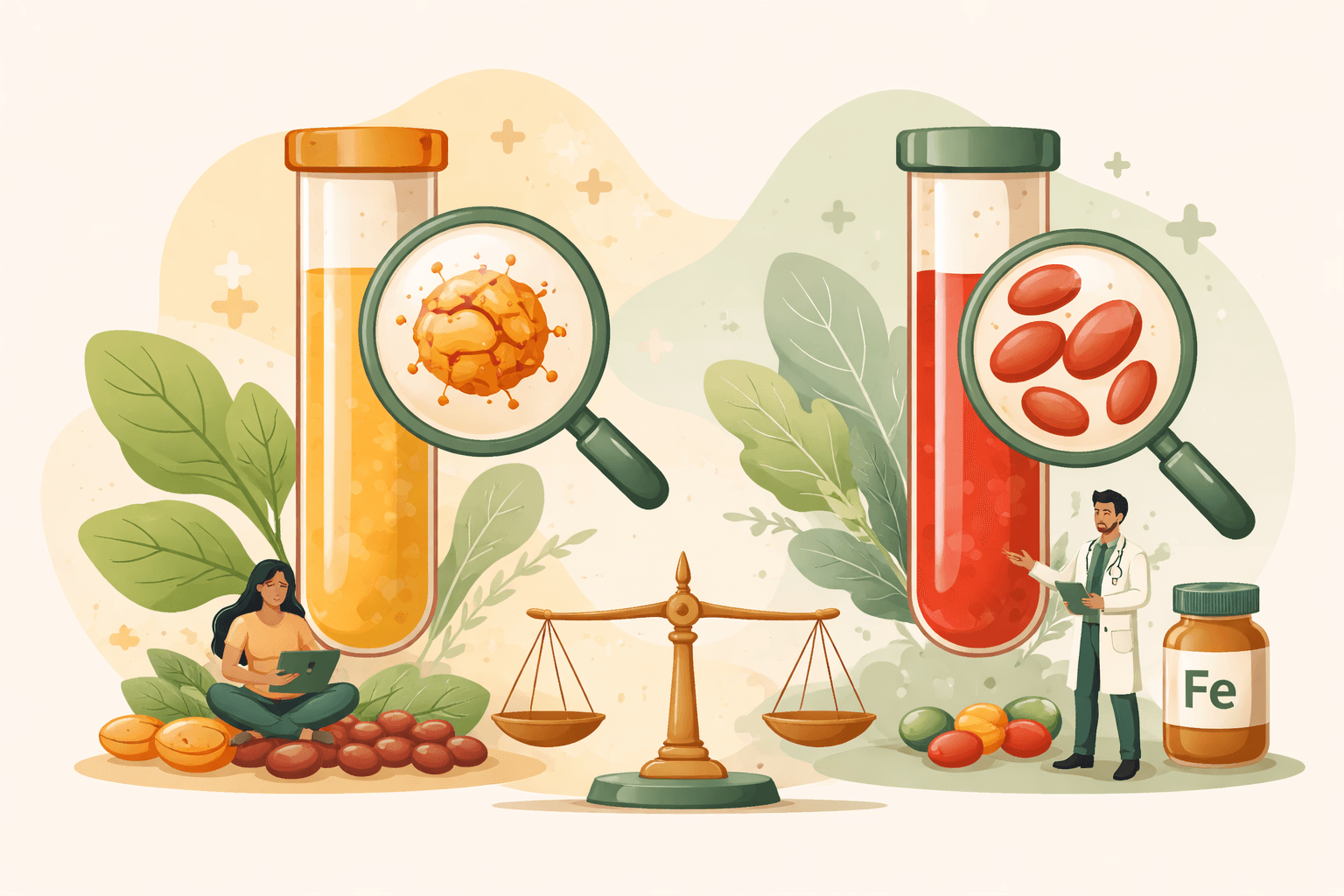
Iron deficiency is often equated with anemia, yet many people experience iron-related symptoms long before hemoglobin drops. Research suggests serum ferritin—the body’s primary iron-storage protein—is a more sensitive early marker than hemoglobin for detecting non-anemic iron deficiency. Understanding the difference can help explain persistent fatigue, brain fog, and even restless legs when a “normal” blood count says everything is fine.
What ferritin shows—and hemoglobin can miss
- Ferritin reflects iron stores. When iron intake or absorption lags, ferritin declines before red blood cell changes appear, making it an earlier signal than hemoglobin. Evidence: strong (WHO guideline on ferritin as the best single marker of iron stores; British Society for Haematology guidance).
- Hemoglobin measures oxygen-carrying capacity of red cells. It often remains normal until iron deficit is more advanced. Evidence: strong (hematology guidelines consistently note anemia is a late manifestation of deficiency).
- Inflammation can elevate ferritin regardless of iron status. Interpreting ferritin alongside markers like C-reactive protein (CRP) or transferrin saturation may improve accuracy in inflammatory states. Evidence: strong (WHO recommends accounting for inflammation when using ferritin; clinical guidelines concur).
Why this matters: symptoms beyond anemia
Non-anemic iron deficiency (NAID) may contribute to symptoms that affect energy, mood, and performance:
- Fatigue and reduced cognitive efficiency. Research suggests low ferritin is associated with fatigue and attention problems, even when hemoglobin is normal. Randomized trials in menstruating women with low ferritin found that iron supplementation improved fatigue compared with placebo. Evidence: moderate-to-strong (e.g., randomized controlled trials in primary care populations; systematic reviews of NAID and symptoms).
- Restless legs syndrome (RLS). Low brain iron and lower ferritin are linked with RLS symptoms. Systematic reviews, including Cochrane analyses, report that iron therapy can improve RLS severity in appropriately selected individuals. Evidence: moderate (benefit observed particularly when iron stores are low; not all studies positive).
- Physical performance. Endurance athletes with low ferritin but normal hemoglobin may experience reduced aerobic capacity and perceived exertion. Sports medicine reviews note improved performance metrics after iron repletion in iron-deficient athletes. Evidence: moderate (heterogeneous studies; improvements more consistent when stores are clearly low).
Who may benefit from ferritin testing
Research suggests targeted testing may be useful for people with persistent, unexplained symptoms or higher iron demands:
- Menstruating individuals with heavy or prolonged cycles
- Endurance athletes and those engaging in high training volumes
- Frequent blood donors
- People with diets low in bioavailable iron (e.g., vegan/vegetarian patterns without careful planning)
- Those with symptoms suggestive of NAID (fatigue, brain fog, hair shedding, brittle nails, RLS), despite “normal” hemoglobin
- Individuals with malabsorption conditions or a history of gastrointestinal surgery
Evidence: moderate (epidemiology and clinical guidelines identify these risk groups; RCTs show symptomatic benefit in some subgroups after iron repletion).
Heme vs. non-heme iron—and how food pairing matters
- Heme iron (from animal sources like red meat and shellfish) is more readily absorbed than non-heme iron (from beans, lentils, tofu, spinach). Evidence: strong (decades of absorption studies and nutrition guidelines).
- Non-heme iron absorption is influenced by the meal matrix. Vitamin C–rich foods (citrus, berries, peppers), organic acids, and certain fermentation processes may enhance absorption, while phytates (in whole grains/legumes), calcium, and some polyphenols (tea/coffee) can inhibit it when consumed together. Evidence: strong (controlled feeding studies and systematic reviews of enhancers/inhibitors of iron absorption).
- Cooking in cast iron can increase the iron content of acidic, wet foods (like tomato sauce). Community trials in low-iron settings show improvements in iron status with iron cooking pots, though results vary by food type and baseline status. Evidence: moderate (randomized and quasi-experimental trials, primarily in anemic populations; applicability to NAID is plausible but less studied).
Traditional perspectives: food and preparations
- Traditional cuisines often emphasize “blood-building” foods: organ meats, shellfish, legumes with vitamin C–rich vegetables, and long-soaked or fermented grains/legumes to reduce phytates. Evidence: traditional with mechanistic support (modern bioavailability research aligns with many of these practices).
- Ayurveda describes iron preparations like Loha Bhasma used historically for “pandu” (a condition resembling pallor and weakness). Contemporary evidence for efficacy and safety is limited and product quality varies. Evidence: traditional/emerging (preclinical and small clinical reports exist; modern safety oversight is critical). This is not a recommendation; decisions should be made with a qualified practitioner and appropriate laboratory monitoring.
Iron overload: why “test, then act” matters
- Hereditary hemochromatosis can lead to excess iron accumulation, particularly in individuals of Northern European ancestry. Elevated transferrin saturation and ferritin, along with genetic testing, are used for diagnosis. Evidence: strong (hepatology guidelines and consensus statements).
- Unnecessary supplementation or high iron intake may elevate ferritin and, in susceptible individuals, contribute to organ injury over time. Observational research associates high ferritin with metabolic syndrome, liver disease, and cardiovascular risk, though inflammation can confound these links. Evidence: moderate (associations consistent; causality varies by context).
The practical testing conversation
If symptoms suggest NAID despite a normal complete blood count, research-informed panels often include:
- Serum ferritin (store marker)
- Transferrin saturation or serum iron with total iron-binding capacity (circulating availability)
- C-reactive protein or other inflammation markers (to contextualize ferritin)
- Hemoglobin/hematocrit and red cell indices (to identify overt anemia or microcytosis)
Interpreting these together may clarify whether low iron stores are contributing to symptoms. Evidence: strong (standard hematology practice).
Bringing it together: food-first strategies while you sort things out
- Center meals around iron sources you enjoy and tolerate. Pair plant sources with vitamin C–rich foods, and consider traditional prep methods (soaking, sprouting, fermenting) to reduce inhibitors. Evidence: strong (food matrix research; traditional practices aligned with bioavailability science).
- Be mindful of tea/coffee with meals; spacing them away from high-iron meals may support absorption. Evidence: strong (polyphenol–iron interactions).
- Small, pragmatic steps—like occasional cooking in cast iron for acidic dishes—may help at the margins. Evidence: moderate.
Bottom line
- Ferritin often falls before hemoglobin, making it a better early signal of iron deficiency when fatigue, brain fog, hair changes, or restless legs persist despite a “normal” blood count. Evidence: strong.
- Non-anemic iron deficiency is common in menstruating individuals, endurance athletes, frequent blood donors, and those with low bioavailable iron intake. Evidence: moderate.
- Food-based strategies—emphasizing heme sources when appropriate, pairing plant iron with vitamin C, and using traditional preparation methods—may help improve iron status without excess. Evidence: strong to moderate.
- Because inflammation, genetics, and individual variability complicate iron status, testing and interpretation with a clinician is prudent before making changes aimed at iron. Evidence: strong.
Key sources and research anchors
- WHO guidance on ferritin for assessing iron status in individuals and populations (strong)
- British Society for Haematology and similar guidelines identifying ferritin as the most useful single test for iron deficiency, with caution in inflammation (strong)
- Randomized controlled trials showing improvement in fatigue among non-anemic women with low ferritin after iron repletion (moderate-to-strong)
- Cochrane and other systematic reviews reporting benefits of iron therapy in selected patients with restless legs syndrome (moderate)
- Nutrition and sports medicine reviews on iron bioavailability, enhancers/inhibitors, and athlete iron physiology (strong to moderate)
- Hepatology guidelines on diagnosis and management of hereditary hemochromatosis (strong)