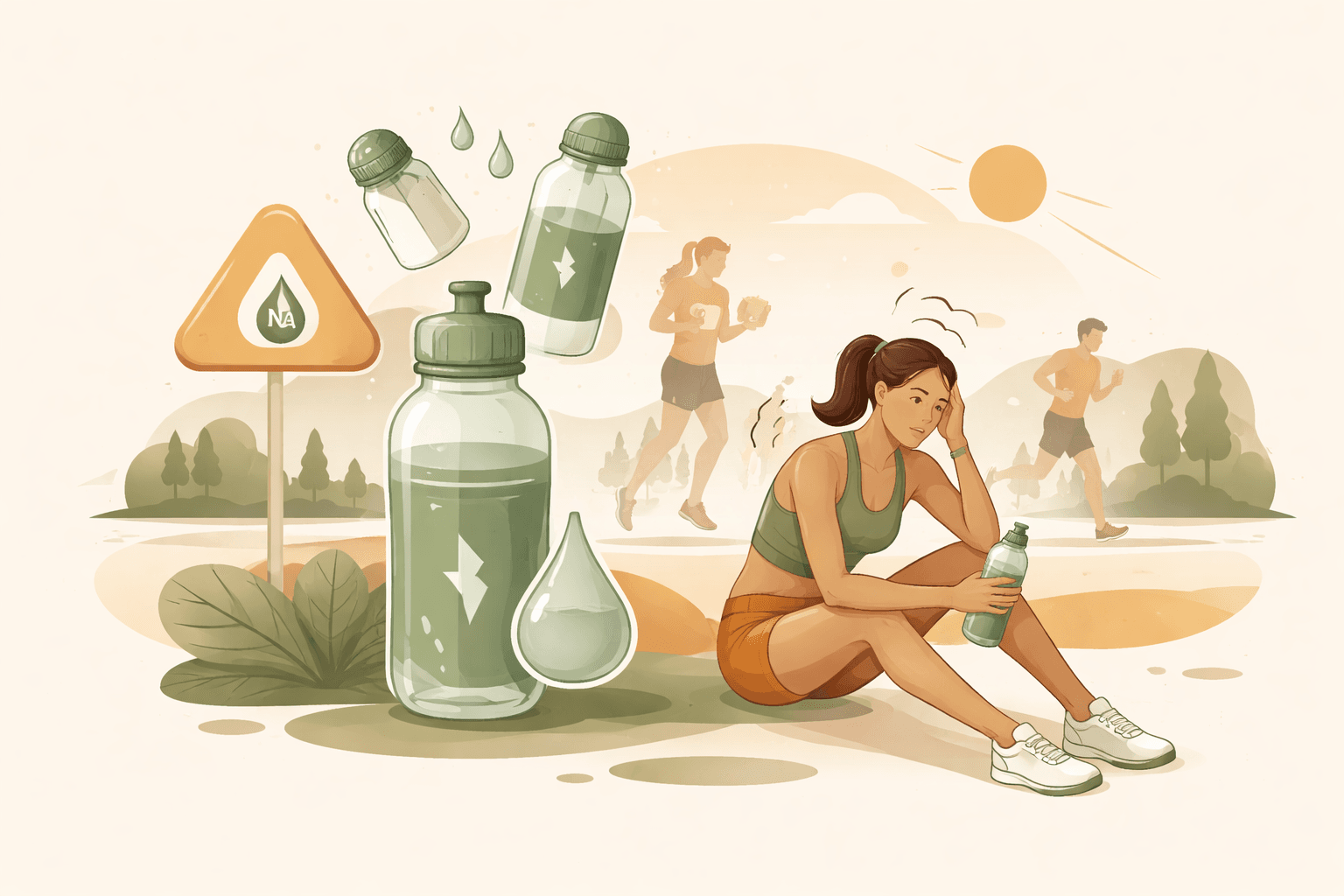
Electrolytes Beyond Sports Drinks: A Focused Look at Exercise-Associated Hyponatremia
Athletes are told to hydrate, but overdoing it—especially with low-sodium fluids—can backfire. Exercise-associated hyponatremia (EAH) occurs when blood sodium drops abnormally during or after exercise. Research suggests it is most common in long-duration events and hot conditions, and it can be serious. This article focuses on what EAH is, why it happens, and how sodium, potassium, and magnesium fit into the picture—separating science from marketing hype and drawing on both modern research and traditional hydration wisdom.
What Is Exercise-Associated Hyponatremia (EAH)?
Definition: EAH is a low blood sodium concentration that develops during or up to 24 hours after physical activity. Symptoms range from headache, nausea, and bloating to confusion, seizures, and—in rare cases—life-threatening brain swelling. (Evidence: strong; supported by consensus statements and clinical case series)
Why it matters: Large marathons and ultra-endurance events consistently report measurable rates of EAH. A New England Journal of Medicine study of Boston Marathon finishers found that overdrinking was a key factor in developing hyponatremia. (Evidence: strong; prospective field study)
Why EAH Happens: The Physiology in Brief
Overconsumption of hypotonic fluids: Drinking more fluid than you lose dilutes sodium in the bloodstream. This risk rises when athletes aim to “stay ahead” of thirst over many hours. (Evidence: strong; multiple observational studies and consensus statements)
Non-osmotic antidiuretic hormone (ADH) release: Prolonged exercise, stress, nausea, or pain can increase ADH, reducing water excretion and compounding dilution. (Evidence: strong; physiologic research and clinical observations)
Sodium loss in sweat: Sweat contains sodium, and some athletes lose more than others. While sodium loss alone rarely causes dangerous hyponatremia, it can interact with high fluid intake to lower plasma sodium. (Evidence: strong for wide variability in sweat [Na+]; moderate for direct causality)
Who Appears Most at Risk?
Long duration, slower pacing: Multi-hour efforts and slower finishing times are associated with greater opportunity to overdrink relative to losses. (Evidence: strong; marathon/ultra cohort data)
Smaller body size and high fluid availability: Lower body mass means a given volume of fluid has a larger dilutional effect. Ready access to fluids at frequent aid stations is a known contextual risk. (Evidence: moderate; cohort analyses, confounded by pace and environment)
Hot or humid conditions: Higher sweat rates increase both fluid and sodium turnover, raising the stakes for mismanaging intake. (Evidence: strong; environmental stress data)
The Science of Sweat: Not Everyone Loses the Same Sodium
Sweat sodium varies widely: Research synthesizing lab and field data reports large inter-individual differences in sweat sodium concentration. Training status, heat acclimation, genetics, and diet all influence this. (Evidence: strong; systematic reviews of sweat composition)
Adaptation matters: Heat acclimation tends to reduce sweat sodium concentration over time, though total sodium loss may still be high if sweat rate increases. (Evidence: moderate; longitudinal and mechanistic studies)
Sodium, Potassium, Magnesium: What Really Matters for EAH?
Sodium is central: Sodium is the primary extracellular electrolyte governing plasma osmolality and fluid balance. EAH, by definition, reflects low plasma sodium concentration. (Evidence: strong; physiology and clinical data)
Potassium is important but different: Potassium largely resides inside cells. While whole-body potassium balance supports muscle and nerve function, potassium-focused drinks alone are unlikely to prevent EAH because the core issue is dilution of plasma sodium. (Evidence: strong for physiology; moderate for exercise outcomes)
Magnesium and cramps: Marketing often links magnesium to cramp prevention, but studies show inconsistent relationships between cramps and serum electrolytes or hydration status. Neuromuscular fatigue appears to be a major driver of exercise-associated muscle cramps. (Evidence: moderate; mixed RCTs and observational studies)
Sports Drinks vs. ORS vs. Water: What Research Suggests
Water-only strategies: In long events, water-only intake in volumes that exceed sweat losses increases dilution risk. (Evidence: strong; marathon and ultra-endurance data)
Standard sports drinks: Typical sports drinks are designed for palatability and carbohydrate delivery. They contain sodium, but often at lower levels than medical oral rehydration solutions (ORS). Research suggests they may help maintain hydration and performance compared with water in many contexts, but they do not eliminate EAH risk if consumed in excess. (Evidence: moderate; RCTs and field studies)
Oral rehydration solutions (ORS): ORS formulas—developed for clinical rehydration—use glucose-sodium co-transport to enhance fluid absorption and retention. Controlled trials indicate that higher-sodium beverages improve post-exercise fluid retention versus water, and beverage-hydration index studies show that sodium content contributes to greater net fluid balance. For athletes with large sweat sodium losses during prolonged efforts, ORS-style beverages may more effectively maintain plasma volume compared with lower-sodium options. (Evidence: strong for rehydration science; moderate for direct endurance performance outcomes)
Salt tablets and sodium supplements: Field studies in ultramarathons report mixed effects of sodium supplements on serum sodium. Research suggests they may help maintain plasma sodium when paired with appropriate fluid intake but do not prevent EAH if overdrinking continues. (Evidence: moderate; observational studies and small RCTs)
Traditional Hydration Wisdom: Useful Clues, Not Cure-Alls
Coconut water: Traditionally valued in tropical regions, coconut water provides fluid and potassium but relatively little sodium. Small trials suggest similar rehydration to some sports drinks for short bouts, but limited sodium may be a drawback for salty sweaters or very long events. (Evidence: emerging for athletic rehydration; traditional use)
Bone broth and salted foods: Many cultures pair endurance work with salty broths or foods—practical ways to replace sodium lost in sweat. While controlled endurance trials are limited, the approach aligns with known physiology. (Evidence: traditional with mechanistic support)
Herbal teas and diluted fruit drinks: Common in Eastern and Mediterranean traditions, these provide fluids and small amounts of sugars and minerals. Without sufficient sodium, they function more like water for plasma sodium balance. (Evidence: traditional; limited direct sport-specific trials)
When Supplementation Actually Helps vs. Hype
Individual variability is key: Research underscores wide differences in sweat rate and sweat electrolyte content. In multi-hour events, especially in the heat, athletes with high sweat sodium losses may benefit from higher-sodium beverages or foods to help maintain plasma sodium, provided total fluid intake does not exceed loss. (Evidence: strong for variability; moderate for individualized efficacy)
Performance vs. safety: Carbohydrate and fluid strategies influence performance, while sodium strategies primarily support safety and fluid balance during prolonged efforts. Studies show mixed direct performance benefits from sodium supplementation but clearer effects on fluid retention and perceived thirst. (Evidence: moderate)
The marketing gap: “Electrolyte” labels often emphasize potassium or magnesium, yet EAH centers on sodium dilution. Products with minimal sodium may not address the primary risk in long, sweaty events. (Evidence: strong for pathophysiology; moderate for product comparisons)
Recognizing Early Red Flags
Bloating, hand swelling, and sudden weight gain during an event can indicate fluid intake in excess of losses. Nausea, headache, and confusion warrant attention post-event when EAH risk persists. (Evidence: strong; consensus statements and field observations)
Distinguishing from dehydration: Both dehydration and EAH can cause fatigue and nausea, but EAH often presents despite frequent drinking. Body mass changes and clinical assessment are used in research and medical settings to differentiate. (Evidence: strong; race-medical protocols)
How Oral Rehydration Science Informs Athletic Hydration
Sodium-glucose co-transport: ORS leverages a well-characterized intestinal mechanism to move sodium and fluid together into the bloodstream. This principle explains why beverages with adequate sodium and modest carbohydrate concentrations often enhance rehydration compared with plain water. (Evidence: strong; decades of clinical and sports physiology research)
Practical implication: In long-duration, high-sweat scenarios, beverages or foods that pair sodium with carbohydrate may aid fluid absorption and retention better than low-sodium options, helping stabilize plasma sodium when total intake matches losses. (Evidence: strong for mechanism; moderate for athletic outcomes)
Bottom Line
EAH is primarily a dilution problem: Overconsuming low-sodium fluids during long efforts increases risk. (Evidence: strong)
Sodium matters most for preventing plasma sodium dilution; potassium and magnesium support overall physiology but are not central to EAH. (Evidence: strong)
Sweat sodium loss varies widely across individuals; strategies that work for one athlete may not fit another. (Evidence: strong)
ORS principles—adequate sodium with carbohydrate—may improve fluid absorption and retention compared with water and many standard sports drinks, particularly in long, hot events. (Evidence: strong for rehydration; moderate for performance)
Traditional options like broths and salted foods align with the sodium needs of prolonged sweating, while coconut water’s low sodium may limit its usefulness for EAH risk. (Evidence: traditional/emerging)
Research-informed hydration focuses on matching intake to losses rather than exceeding them; individualized plans, event conditions, and personal sweat characteristics all matter. (Evidence: strong)
References
- Hew-Butler T et al. Statement of the 3rd International Exercise-Associated Hyponatremia Consensus Development Conference. Clinical Journal of Sport Medicine. 2015; and subsequent updates. (Consensus; strong)
- Almond CSD et al. Hyponatremia among runners in the Boston Marathon. New England Journal of Medicine. 2005. (Prospective study; strong)
- Baker LB. Sweating rate and sweat sodium concentration in athletes: a review of methodology and intra/interindividual variability. Sports Medicine. 2017–2019 reviews. (Systematic/umbrella; strong)
- Hoffman MD, Stuempfle KJ. Sodium supplementation and exercise-associated hyponatremia during ultramarathon running. Medicine & Science in Sports & Exercise. 2014–2015 field studies. (Observational/field; moderate)
- Maughan RJ et al. A randomized trial assessing the beverage hydration index: higher-sodium beverages improve fluid retention vs. water. American Journal of Clinical Nutrition. 2016. (RCT; strong)
- Shirreffs SM, Maughan RJ. Restoration of fluid balance after exercise is influenced by beverage sodium content. Journal of Applied Physiology. 1998. (Controlled trials; strong)
- Schwellnus MP. Cause of exercise associated muscle cramps (EAMC)—altered neuromuscular control rather than dehydration/electrolyte depletion. British Journal of Sports Medicine. 2009 and later reviews. (Narrative reviews; moderate)