

Supported by multiple clinical trials and meta-analyses
Exercise-Associated Hyponatremia: How Overhydration Undermines Performance
A focused, evidence-based guide to exercise-associated hyponatremia—why it happens, who’s at risk, how ORS science and traditional options fit in, and what research suggests actually helps.
This content is for informational purposes only and does not constitute medical advice. Always consult a qualified healthcare provider before starting, stopping, or changing any supplement or medication regimen.
Why hyponatremia matters for active people
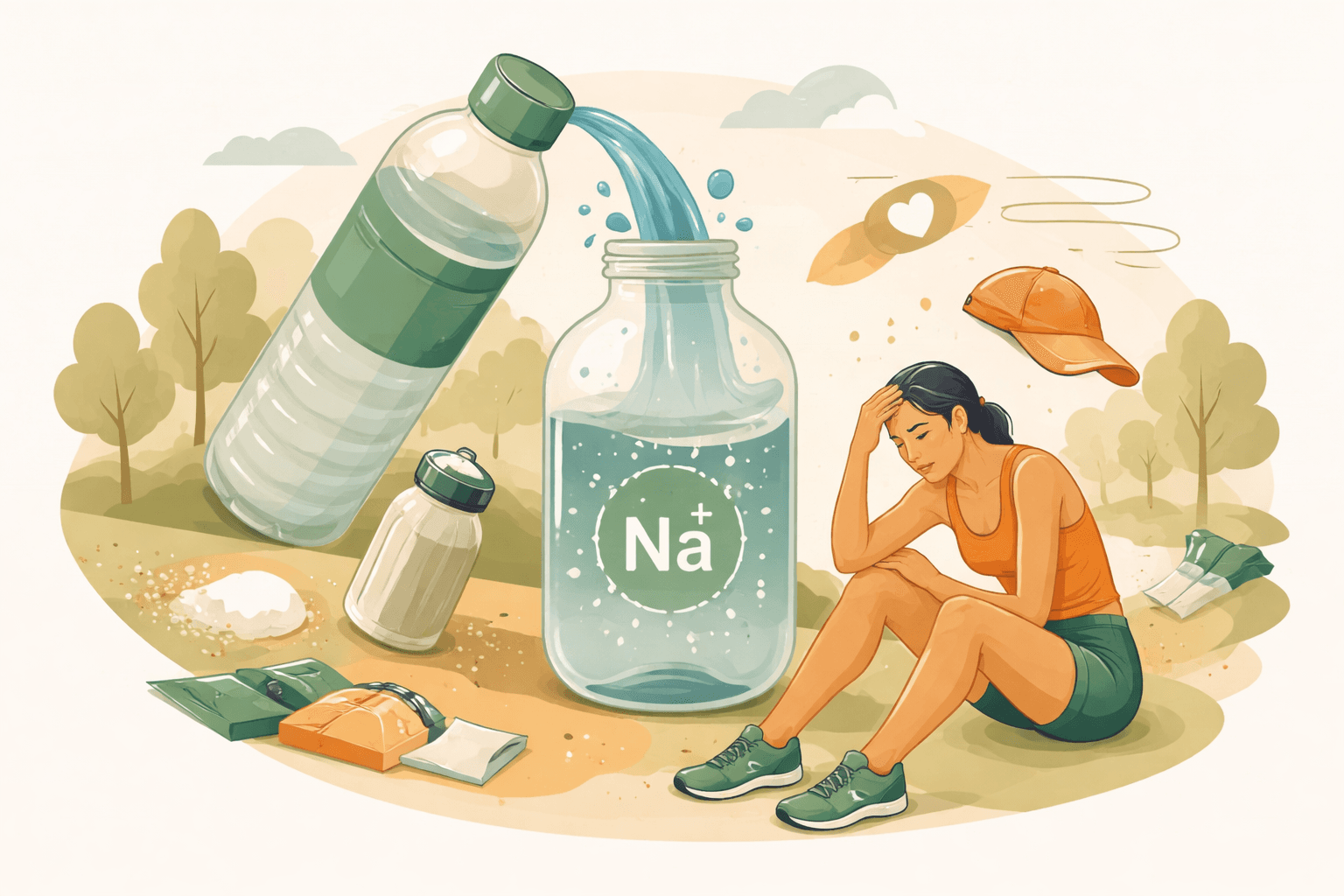
Electrolyte talk often centers on marketing claims about sports drinks. But one of the most important—and overlooked—hydration issues in endurance sport is the risk of exercise-associated hyponatremia (EAH): an abnormally low blood sodium concentration that develops during or after prolonged activity. Research links EAH primarily to excessive intake of low-sodium fluids relative to losses, compounded by hormonal water retention and, to a lesser extent, sodium lost in sweat (Evidence: strong; Hew-Butler et al., British Journal of Sports Medicine consensus 2015; updated guidance 2020; Almond et al., New England Journal of Medicine 2005).
This focused guide explains what EAH is, who is most at risk, what the science says about sodium intake and oral rehydration solutions, and how traditional hydration practices fit into the picture.
What is exercise-associated hyponatremia?
EAH refers to serum sodium falling below the normal range during or up to 24 hours after exercise. When sodium becomes too diluted, water shifts into cells; in the brain, that swelling can trigger headache, confusion, nausea, and in severe cases seizures and coma. EAH has been documented in marathons, triathlons, ultrarunning, hiking, military training, and team sports (Evidence: strong; Almond et al., NEJM 2005; Rosner & Kirven, CJASN 2007; WMS practice guidelines 2019).
Two mechanisms dominate:
- Overconsumption of hypotonic fluids (plain water or very low-sodium beverages) relative to losses, often driven by aggressive “drink as much as possible” strategies (Evidence: strong; NEJM 2005; consensus statements 2015/2020).
- Non-osmotic release of antidiuretic hormone (ADH/AVP) during prolonged exertion, heat stress, pain, or nausea, which reduces free-water excretion and amplifies dilution (Evidence: strong; consensus statements; CJASN review 2007).
Sodium losses in sweat can contribute to a fall in plasma sodium, but the best predictor of EAH in field studies is fluid intake in excess of need, not sodium loss alone (Evidence: strong; NEJM 2005; Hew-Butler et al. 2015/2020 consensus).
Who is most at risk?
Research identifies several context and participant factors associated with higher EAH risk:
- Long duration events (often >4 hours) with frequent access to fluids (Evidence: strong; NEJM 2005; consensus statements).
- Slower finishing times and weight gain during the event, both markers of overdrinking (Evidence: strong; NEJM 2005; systematic reviews summarized in consensus guidance).
- Hot/humid environments, high sweat rates, and high variability in sweat sodium (Evidence: moderate; Sports Medicine reviews 2016–2017; Maughan & Shirreffs reviews).
- Smaller body size and female sex have been associated in observational cohorts, likely reflecting differences in intake relative to body water, not inherent susceptibility (Evidence: moderate; NEJM 2005; pooled observational data in consensus statements).
- Use of nonsteroidal anti-inflammatory drugs (NSAIDs), which may reduce renal free-water clearance (Evidence: emerging to moderate; observational reports; mechanistic rationale in nephrology reviews).
Does sodium intake during exercise prevent EAH?
Sodium is essential for nerve and muscle function, and marketing often implies that sodium capsules or high-sodium drinks “prevent hyponatremia.” The evidence is more nuanced:
- Research suggests sodium intake during prolonged exercise may help attenuate the fall in plasma sodium concentration in some contexts, likely by supporting extracellular fluid volume and maintaining thirst-driven drinking behavior (Evidence: moderate; field trials in ultramarathons and triathlons; Sports Medicine reviews 2015–2021).
- However, trials and race cohort analyses consistently show that the dominant risk factor for EAH is overconsumption of low-sodium fluid, not insufficient sodium per se. Sodium supplements have not reliably eliminated EAH when drinking substantially exceeds losses (Evidence: strong; Hew-Butler et al. consensus 2015/2020; multiple endurance race cohorts; randomized and nonrandomized comparisons).
- Performance effects of acute sodium supplementation appear mixed, with some studies reporting small benefits in heat tolerance or perceived exertion and others finding no meaningful difference (Evidence: moderate; systematic and narrative reviews in Sports Medicine and International Journal of Sport Nutrition and Exercise Metabolism, 2015–2021).
In short, research suggests sodium can be part of a broader hydration plan in long, hot, or very sweaty conditions, but it is not a fail-safe against EAH if fluid intake is excessive (Evidence: strong).
Sweat sodium variability and personalization
People lose different amounts of sweat and sodium under the same conditions. Studies report wide inter-individual variability in sweat rate and sweat sodium concentration, influenced by genetics, heat acclimation, diet, and training status (Evidence: strong; Baker, Sports Medicine 2017; Maughan & Shirreffs reviews). This variability is one reason some athletes are “salty sweaters.”
Sweat testing can characterize an individual’s sweat profile, but methods vary and field tests have limitations. Research suggests tailoring fluid and electrolyte strategies to personal experience, event demands, and environmental conditions may be more meaningful than one-size-fits-all targets (Evidence: moderate; Sports Medicine reviews 2016–2019). Direct evidence that sweat-test–guided plans reduce EAH incidence is limited (Evidence: emerging).
Oral rehydration solutions (ORS) vs. typical sports drinks
The physiology of oral rehydration provides useful context beyond brand marketing:
- ORS formulas pair sodium with glucose in specific proportions to leverage sodium–glucose co-transport (SGLT1) in the small intestine, enhancing absorption of both water and sodium compared with plain water (Evidence: strong in medical settings; WHO guidelines; Cochrane reviews on reduced-osmolarity ORS for dehydration).
- In athletic settings, hypotonic, sodium-containing beverages may improve fluid retention and gastrointestinal comfort compared with very concentrated drinks, and can rehydrate more effectively than water alone when sodium losses are substantial (Evidence: moderate; sports hydration trials and narrative/systematic reviews 2010–2021).
- Whether ORS-type formulas improve performance versus conventional sports drinks is less clear and likely context-dependent (duration, heat, sweat rate) (Evidence: emerging to moderate; mixed results across small RCTs).
Bottom line: research supports the physiology of ORS for fluid and sodium absorption; in sport, these principles may help in long, hot, or high-sweat scenarios, but they do not replace the need to align intake with actual losses (Evidence: strong for absorption mechanisms; moderate for sport outcomes).
Traditional hydration wisdom: coconut water, broth, and salt-rich foods
Traditional practices can complement modern science:
- Coconut water: Small randomized trials report similar rehydration to carbohydrate–electrolyte drinks after dehydration, with higher potassium and generally lower sodium. Some participants find it more palatable; others report more fullness (Evidence: moderate; Kalman et al., Journal of the International Society of Sports Nutrition 2012; additional small RCTs).
- Broths and salted soups: Endurance communities have long used broths during ultra events. These provide fluid and sodium, and may be easier to tolerate late in events when sweet flavors become unappealing (Evidence: traditional with emerging supportive data; field studies and practice guidelines mention).
- Salt traditions: Pickled vegetables, salted rice balls, and other savory foods seen in East Asian endurance events reflect a cultural recognition that salt can be valuable in long, sweaty efforts. Formal trials are limited, but the rationale aligns with ORS physiology (Evidence: traditional; mechanistic support moderate).
These options may help some athletes maintain variety and gastrointestinal comfort, which can indirectly support better fluid and sodium balance over long durations (Evidence: moderate).
Recognizing EAH in the field
Early features can overlap with heat illness or dehydration, which complicates on-course recognition. Research-linked warning signs include:
- Headache, nausea/vomiting, bloating, and a sense of “water sloshing” despite frequent urination (Evidence: strong; consensus statements; WMS guidelines).
- Confusion, agitation, or unusual fatigue out of proportion to effort; in severe cases, seizures (Evidence: strong).
Because symptoms overlap and severe EAH is a medical emergency, research-informed guidelines emphasize on-site assessment by trained personnel when available (Evidence: strong; WMS/consensus guidance). This article does not provide medical advice.
When supplementation helps vs. hype
- Events of shorter duration in temperate conditions: Research suggests many active people can maintain performance with access to fluids and normal dietary patterns without targeted electrolyte products (Evidence: moderate; sports hydration reviews).
- Longer, hotter, or sweatier conditions: Incorporating sodium-containing foods or beverages may help preserve plasma volume and reduce the risk of dilution from low-sodium fluid alone—provided overall fluid intake is aligned with need (Evidence: moderate to strong; consensus statements; ORS physiology).
- Overdrinking remains the clearest, most modifiable risk factor for EAH across studies, regardless of supplement use (Evidence: strong; NEJM 2005; consensus 2015/2020).
Bottom line
- EAH is a dilutional problem most strongly linked to excessive intake of low-sodium fluids during prolonged activity; sodium loss in sweat contributes but is not the primary driver (Evidence: strong).
- Sodium intake during exercise may help in long, hot, or high-sweat scenarios, but it does not reliably prevent EAH if fluid intake is excessive (Evidence: strong for risk factor; moderate for sodium effects).
- ORS science supports pairing sodium with glucose in hypotonic solutions to improve water and sodium absorption; sport-specific performance benefits are context-dependent (Evidence: strong for mechanism; moderate for outcomes).
- Sweat and sodium losses vary widely between individuals, so personalization based on experience, environment, and event demands may be more useful than universal targets (Evidence: moderate).
- Traditional options like coconut water and broths offer palatable, functional alternatives that may support better overall intake and comfort during long efforts (Evidence: moderate/traditional).
As always, decisions about hydration and electrolytes are individualized. Research suggests aligning fluid intake with actual needs, being cautious about overdrinking, and considering sodium-containing options for longer, hotter, or sweatier efforts can support both performance and safety.
Health Disclaimer
This content is for informational purposes only and does not constitute medical advice. Always consult a qualified healthcare provider before starting, stopping, or changing any supplement or medication regimen.