

Promising research with growing clinical support
Cortisol Awakening Response and Burnout: What the Evidence Shows (and Why “Adrenal Fatigue” Isn’t the Same)
A focused, evidence-based review of the cortisol awakening response (CAR) in burnout, why “adrenal fatigue” isn’t an endocrine diagnosis, and what trials suggest about adaptogens and traditional perspectives.
This content is for informational purposes only and does not constitute medical advice. Always consult a qualified healthcare provider before starting, stopping, or changing any supplement or medication regimen.
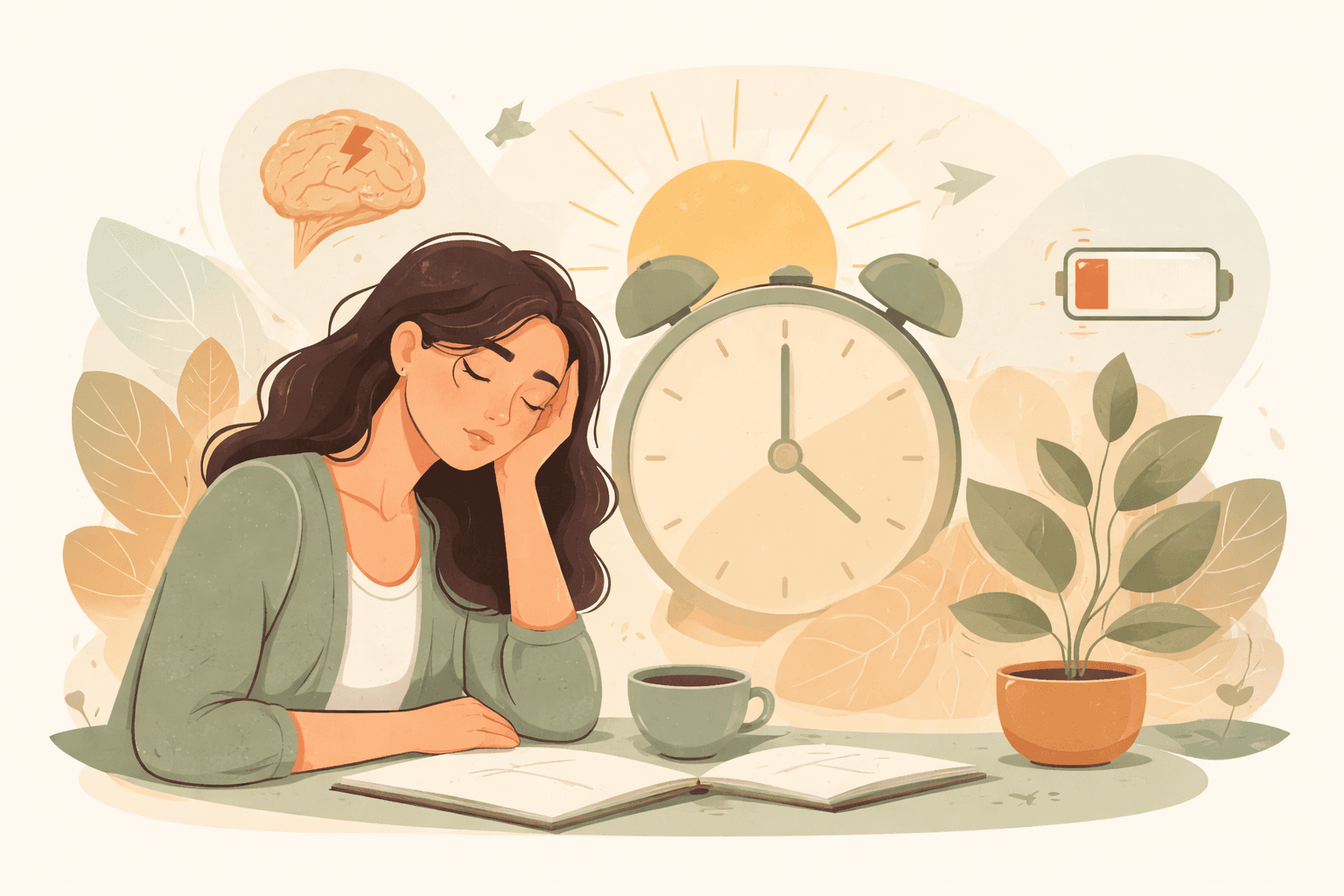
Overview The first 30–60 minutes after you wake up are a powerful window into stress physiology. Researchers call the surge in cortisol during this period the cortisol awakening response (CAR). Studies link alterations in the CAR to chronic stress states, including burnout, while also clarifying why the popular notion of “adrenal fatigue” does not match endocrine science. This article reviews what the CAR is, how it appears to shift in burnout, why “adrenal fatigue” is not a recognized diagnosis, and how adaptogens and traditional medical systems frame similar symptom patterns.
Key points in this article use cautious language (may, suggests) and are labeled with evidence levels: strong (robust meta-analyses/systematic reviews), moderate (multiple RCTs or consistent observational data), emerging (early or mixed evidence), traditional (longstanding use in traditional systems).
What is the Cortisol Awakening Response (CAR)?
- The CAR is a rapid increase in cortisol within about 30–45 minutes after waking, superimposed on the broader diurnal rhythm (high in the morning, lower by evening). [Evidence: strong]
- Foundational reviews describe the CAR as a distinct, reproducible feature linked to anticipation of the upcoming day and HPA axis reactivity (Fries, Dettenborn & Kirschbaum, 2009, Psychoneuroendocrinology). [Evidence: strong]
- The CAR is typically measured via repeated salivary samples across the first hour after waking; standardized protocols are crucial for valid interpretation (Pruessner et al., 1997; Fries et al., 2009). [Evidence: strong]
Why the CAR matters
- Altered CAR patterns have been associated with chronic stress, mood symptoms, and some health outcomes, although findings vary across populations. [Evidence: moderate]
- A meta-analysis linked larger or smaller CARs with different psychosocial factors and health endpoints, underscoring that the direction of change can depend on context (Chida & Steptoe, 2009, Biological Psychology). [Evidence: strong]
Burnout and HPA Axis Dysregulation: What Studies Suggest
- Burnout is a work-related syndrome characterized by emotional exhaustion, depersonalization/cynicism, and reduced professional efficacy. It is associated with chronic stress exposure and may involve HPA axis dysregulation. [Evidence: strong for definition; moderate for physiology]
- Research in occupational stress and burnout cohorts frequently reports a blunted CAR and/or a flattened diurnal cortisol slope (lower morning, relatively higher evening), patterns that may reflect HPA axis adaptation to prolonged stress. Not all studies agree, but trends are consistent across several reviews. [Evidence: moderate]
- Reviews of chronic stress physiology show that prolonged stress can shift from hyper- to hypo-activation of the HPA axis over time—a possible explanation for the blunted CAR seen in some individuals with burnout (Fries et al., 2009). [Evidence: strong]
“Adrenal Fatigue” vs. HPA Axis Dysregulation
- “Adrenal fatigue” is a popular term used to explain burnout-like symptoms (fatigue, brain fog, low mood). However, endocrinology societies do not recognize it as a medical diagnosis. [Evidence: strong]
- A comprehensive systematic review (Cadegiani & Kater, 2016, BMC Endocrine Disorders) evaluated studies using salivary and serum cortisol and ACTH testing in fatigued individuals and concluded there was no consistent evidence supporting “adrenal fatigue” as a distinct endocrine disorder. [Evidence: strong]
- By contrast, HPA axis dysregulation is a research framework describing functional changes in central stress circuitry and feedback, not failure of the adrenal glands themselves. This can include altered cortisol rhythms (e.g., blunted CAR) without adrenal insufficiency. [Evidence: strong]
- True adrenal insufficiency (e.g., Addison’s disease) is rare and diagnosed with specific endocrine tests; it is distinct from burnout or stress-related fatigue. [Evidence: strong]
How Researchers Measure Cortisol Patterns (and the Caveats)
- Most studies assessing CAR and diurnal slope use serial salivary sampling at home following strict timing and behavioral controls (e.g., no eating, exact wake-time logging). [Evidence: strong]
- Single, spot cortisol measurements are not reliable proxies for CAR or diurnal rhythm; day-to-day variability and adherence to protocols influence results. [Evidence: strong]
- Because of these methodological factors, research findings emphasize group-level patterns rather than individual diagnostic use. [Evidence: strong]
Adaptogens and Cortisol Patterns: What Trials Report
- Adaptogens are botanicals studied for effects on stress resilience. Two of the most researched in clinical trials are ashwagandha (Withania somnifera) and rhodiola (Rhodiola rosea). While they are not treatments for burnout, randomized trials suggest potential benefits on perceived stress, fatigue, and in some cases cortisol measures. [Evidence: moderate]
- Ashwagandha: Multiple randomized, placebo-controlled trials in adults with chronic stress report reduced perceived stress and lower morning or serum cortisol relative to placebo (Chandrasekhar et al., 2012, Indian Journal of Psychological Medicine; Lopresti et al., 2019, Medicine (Baltimore)). Systematic reviews echo these findings for stress and anxiety outcomes (Pratte et al., 2014, Journal of Alternative and Complementary Medicine; more recent narrative reviews also support potential cortisol-lowering effects). [Evidence: moderate]
- Rhodiola: RCTs in stress-related fatigue and occupational stress show improvements in fatigue, mood, and work-related performance versus placebo (Darbinyan et al., 2000, Phytomedicine; Olsson et al., 2009, Planta Medica). A systematic review concluded there is supportive but heterogeneous evidence for mental fatigue and stress-related symptoms (Ishaque et al., 2012, BMC Complementary and Alternative Medicine). Cortisol changes are less consistently reported than for ashwagandha. [Evidence: moderate]
- Safety and suitability can vary by individual and context; research has limitations related to study size, duration, and product standardization. [Evidence: moderate]
Traditional Lenses on “Depleted” Energy States
- Traditional Chinese Medicine (TCM) and Ayurveda describe syndromes that resemble the lived experience of burnout (fatigue, low motivation, poor concentration, sleep changes), though framed differently. [Evidence: traditional]
- TCM often conceptualizes prolonged stress with signs of “qi deficiency” or “kidney qi/essence” depletion—patterns associated with low vitality and stress reactivity. These are pattern diagnoses guiding individualized care rather than single-disease entities. [Evidence: traditional]
- Ayurveda may interpret chronic stress and irregular routines as contributing to “vata” imbalance (variability, restlessness, insomnia) or “ojas” depletion (resilience/vital essence), aligning with symptoms like mental fatigue and reduced recovery. [Evidence: traditional]
- While these constructs differ from Western HPA axis models, both perspectives converge on the idea that prolonged stress can erode adaptive capacity and that gradual, holistic support may help restore balance. [Evidence: traditional]
What Helps Regulate the CAR? Research-Informed Themes
- Regular sleep–wake timing and sufficient sleep are associated with more stable diurnal cortisol rhythms in population studies. [Evidence: moderate]
- Light exposure upon waking and consistent morning routines may influence CAR magnitude in experimental and observational research. [Evidence: emerging]
- Psychological interventions that lower perceived stress—such as mindfulness-based stress reduction or cognitive-behavioral approaches—have shown favorable effects on stress biomarkers in some trials, though CAR-specific results are mixed. [Evidence: moderate]
Bottom Line
- The cortisol awakening response (CAR) is a well-characterized surge in cortisol after waking that reflects HPA axis reactivity. In burnout and chronic stress, research often finds a blunted CAR and/or flattened diurnal cortisol rhythm, suggesting altered central stress regulation rather than adrenal gland failure. [Evidence: strong to moderate]
- “Adrenal fatigue” is not recognized by endocrinology; a systematic review found no consistent biomarker pattern to support it as a discrete disorder. The science instead points to HPA axis dysregulation with context-dependent cortisol changes. [Evidence: strong]
- Adaptogens such as ashwagandha and rhodiola may help with perceived stress and fatigue, and ashwagandha has shown cortisol-lowering effects in several RCTs; however, studies vary and do not constitute medical treatment for burnout. [Evidence: moderate]
- Traditional systems like TCM and Ayurveda conceptualize similar symptom constellations as qi or ojas depletion or vata imbalance. These frameworks can complement Western models by emphasizing gradual recovery and resilience-building. [Evidence: traditional]
- Together, the literature suggests that stabilizing daily rhythms, addressing psychosocial stressors, and considering supportive, evidence-informed strategies may help normalize cortisol patterns over time—without invoking the unsupported concept of “adrenal fatigue.”
Selected References
- Cadegiani FA, Kater CE. Adrenal fatigue does not exist: a systematic review. BMC Endocrine Disorders. 2016.
- Fries E, Dettenborn L, Kirschbaum C. The cortisol awakening response (CAR): facts and future directions. Psychoneuroendocrinology. 2009.
- Chida Y, Steptoe A. Cortisol awakening response and psychosocial factors: a systematic review and meta-analysis. Biological Psychology. 2009.
- Pruessner JC et al. Two formulas for computation of the area under the curve represent measures of total hormone concentration versus time-dependent change. Psychoneuroendocrinology. 2003. (Methodological reference relevant to CAR quantification)
- Chandrasekhar K et al. A prospective, randomized double-blind, placebo-controlled study of ashwagandha in reducing stress and anxiety. Indian Journal of Psychological Medicine. 2012.
- Lopresti AL et al. Effects of ashwagandha extract on stress and anxiety. Medicine (Baltimore). 2019.
- Darbinyan V et al. Rhodiola rosea in stress-induced fatigue—a randomized trial. Phytomedicine. 2000.
- Olsson EM et al. A randomized, double-blind, placebo-controlled study of Rhodiola rosea in stress-related fatigue. Planta Medica. 2009.
- Ishaque S et al. Rhodiola rosea for physical and mental fatigue: a systematic review. BMC Complementary and Alternative Medicine. 2012.
Health Disclaimer
This content is for informational purposes only and does not constitute medical advice. Always consult a qualified healthcare provider before starting, stopping, or changing any supplement or medication regimen.