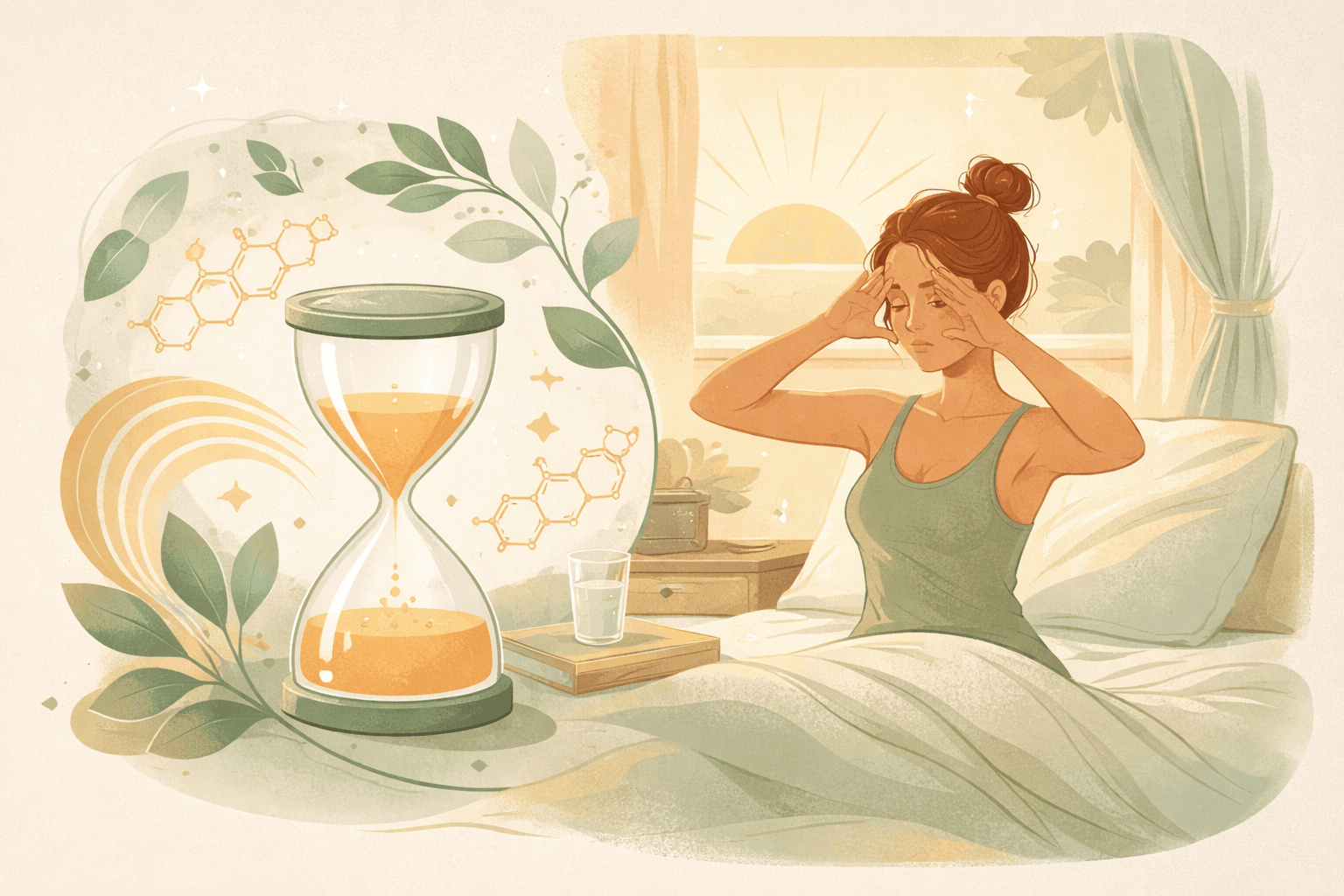
Why look at morning cortisol in burnout?
Many people describe burnout as feeling “wired and tired,” flat in the morning and overwhelmed later in the day. One physiological lens for this pattern is the cortisol awakening response (CAR)—a predictable bump in cortisol that occurs within the first 30–45 minutes after waking. Research suggests that alterations in this curve may be one signature of stress-related exhaustion. Understanding CAR does not diagnose burnout, but it may help explain why energy, focus, and resilience change under chronic stress. [Evidence: strong for the existence of CAR; moderate for links to burnout]
What is the cortisol awakening response (CAR)?
Cortisol follows a circadian rhythm regulated by the hypothalamic–pituitary–adrenal (HPA) axis, peaking in the early morning and declining across the day. The CAR is a superimposed surge—typically a 50–60% rise from wake-up to ~30–45 minutes post-waking—thought to prepare the brain and body for the demands of the day. It is measured with salivary samples collected immediately upon waking and at several time points thereafter. [Evidence: strong]
Meta-analytic work shows that the CAR is sensitive to psychosocial factors such as chronic stress, sleep quality, and anticipated demands (Chida & Steptoe, 2009; Clow et al., 2010 review). [Evidence: strong]
Burnout and HPA-axis dysregulation
Burnout—typically characterized by emotional exhaustion, depersonalization, and reduced efficacy—has been examined alongside diurnal cortisol patterns for two decades. Systematic reviews and meta-analyses suggest that individuals with significant burnout symptoms are more likely to show a blunted morning cortisol output and, in some studies, a flattened daily slope (Danhof-Pont et al., 2011; Penz et al., 2018, Psychoneuroendocrinology). [Evidence: moderate]
The broader concept is HPA-axis dysregulation: under chronic, inescapable stress, cortisol dynamics may shift from high output to a “hypocortisolism” profile—lower morning levels, reduced CAR, and a dampened response to new stressors (Fries et al., 2005; Miller et al., 2007). This pattern has been observed across stress-related conditions, including chronic fatigue, PTSD, and some cases of burnout, though results vary by population, timing, and measurement methods. [Evidence: moderate]
The “adrenal fatigue” controversy
Despite popular usage, “adrenal fatigue” is not a recognized medical diagnosis. A systematic review of 58 studies concluded that the term lacks scientific substantiation and that adrenal insufficiency should not be inferred from nonspecific symptoms (Cadegiani & Kater, 2016, BMC Endocrine Disorders). Symptoms are real, but research points to regulatory changes along the HPA axis and circadian system rather than “worn-out” adrenal glands. [Evidence: strong]
What do altered CAR patterns mean in practice?
A lower CAR may correlate with greater emotional exhaustion, impaired working memory under stress, and lower perceived vigor in some studies (Kudielka et al., 2009 review). Yet findings are heterogeneous: some cohorts with high demands show a heightened CAR, perhaps reflecting anticipatory arousal, while prolonged stress and exhaustion often trend toward blunting. Context matters—recent stress, sleep, medication, shift work, and sampling accuracy all influence results. [Evidence: moderate]
Importantly, CAR is a research tool rather than a standalone diagnostic test. It may complement, but not replace, clinical assessment of burnout, mood, sleep, and functional status. [Evidence: strong]
Measuring CAR: considerations that matter
- Timing precision: Samples must be taken immediately on waking and at fixed intervals thereafter; even small delays skew results (Kudielka et al., 2003). [Evidence: strong]
- Sleep and wake time: Short sleep, irregular schedules, and awakenings before the alarm can alter CAR magnitude (Kudielka et al., 2009 review). [Evidence: strong]
- Light and posture: Bright light exposure and getting out of bed quickly may influence CAR, though effects vary across studies (Thorn et al., 2011; Clow et al., 2010). [Evidence: moderate]
- Medications and health status: Oral contraceptives, glucocorticoids, some antidepressants, and inflammatory conditions can modify cortisol dynamics (Stalder et al., 2016 consensus guidelines). [Evidence: strong]
Can we shift cortisol patterns in burnout?
No single strategy “fixes” the CAR, but research suggests that targeting upstream rhythms and stress responses may help normalize diurnal cortisol over time. [Evidence: moderate]
- Sleep regularity and circadian alignment: Consistent bed/wake times and improved sleep continuity are linked with healthier diurnal cortisol slopes and more robust morning peaks (Leproult et al., 1997; Wright et al., 2015). [Evidence: strong]
- Stress-management interventions: Some randomized trials of cognitive-behavioral stress management, mindfulness-based programs, and workplace interventions report modest normalization of cortisol patterns, though effects are small and inconsistent (Heckenberg et al., 2018; Visted et al., 2015 review). [Evidence: moderate]
- Morning light and activity: Early-day light exposure and gentle activity may support circadian entrainment, which in turn relates to cortisol timing; direct CAR effects remain mixed (Thorn et al., 2011; Wright et al., 2013). [Evidence: emerging]
Adaptogens and stress resilience
Herbal adaptogens are traditionally used to enhance stress tolerance. While they do not “repair adrenals,” some have been studied for effects on perceived stress and cortisol.
Ashwagandha (Withania somnifera): Multiple randomized, controlled trials report reductions in perceived stress and lower morning or serum cortisol in stressed adults (Chandrasekhar et al., 2012; Salve et al., 2019; Lopresti et al., 2019). A meta-analysis found moderate improvements in stress and anxiety outcomes versus placebo (Ng et al., 2020). Direct effects on CAR specifically are less well established. [Evidence: moderate]
Rhodiola (Rhodiola rosea): Trials in fatigue and stress-related exhaustion show improvements in fatigue, mood, and work performance markers (Darbinyan et al., 2000; Olsson et al., 2009). Systematic reviews suggest benefit for stress-related fatigue, though study quality and heterogeneity limit certainty (Hung et al., 2011; Panossian & Wikman, 2010 review). Effects on cortisol are variable across studies. [Evidence: moderate]
As always, adaptogens can interact with medications and health conditions; consultation with a qualified clinician is prudent. [Evidence: strong for potential interactions]
Bridging traditional frameworks: Qi deficiency and Vata/ojas
Traditional Chinese Medicine (TCM) often frames chronic overwork, poor sleep, and emotional strain as “qi deficiency,” with symptoms such as fatigue, poor concentration, spontaneous sweating, and susceptibility to stressors. Ayurveda similarly describes “Vata aggravation” and depletion of “ojas” (vital essence) with sustained stress, irregular routines, and insufficient restoration (Maciocia, 2015; Lad, 1984). These constructs overlap conceptually with modern notions of allostatic load and HPA-axis dysregulation—systems taxed by chronic demand without adequate recovery. [Evidence: traditional]
From an integrative perspective, practices that cultivate regularity, recovery, and groundedness—consistent routines, breath practices, mindful movement, and community support—map to both traditional and modern models of restoring resilience. Evidence for effects on cortisol is promising but mixed, while benefits for subjective stress and sleep are more consistently observed. [Evidence: moderate]
The bottom line
- Burnout is linked with HPA-axis dysregulation, often showing a blunted cortisol awakening response and flatter diurnal pattern, though results vary by context and measurement. [Evidence: moderate]
- “Adrenal fatigue” is not recognized by endocrinology; symptoms are better framed as regulatory changes across the stress and circadian systems rather than gland failure (Cadegiani & Kater, 2016). [Evidence: strong]
- CAR is a useful research marker but not a diagnostic test; sleep, light, medications, and sampling accuracy strongly influence results. [Evidence: strong]
- Research suggests that supporting circadian regularity, stress management, and restorative practices may help normalize cortisol rhythms over time. [Evidence: moderate]
- Adaptogens such as ashwagandha and rhodiola may help with perceived stress and fatigue and, in some studies, with cortisol levels, though direct effects on CAR are less certain. [Evidence: moderate]
- Traditional systems (TCM, Ayurveda) conceptualize burnout-like states as depleted vital energy; their emphasis on balance and routine aligns with modern stress-physiology insights. [Evidence: traditional]
This physiological lens does not replace clinical evaluation, but it can illuminate why burnout feels the way it does—and why steady, rhythm-restoring approaches may help rebuild resilience.