Overview
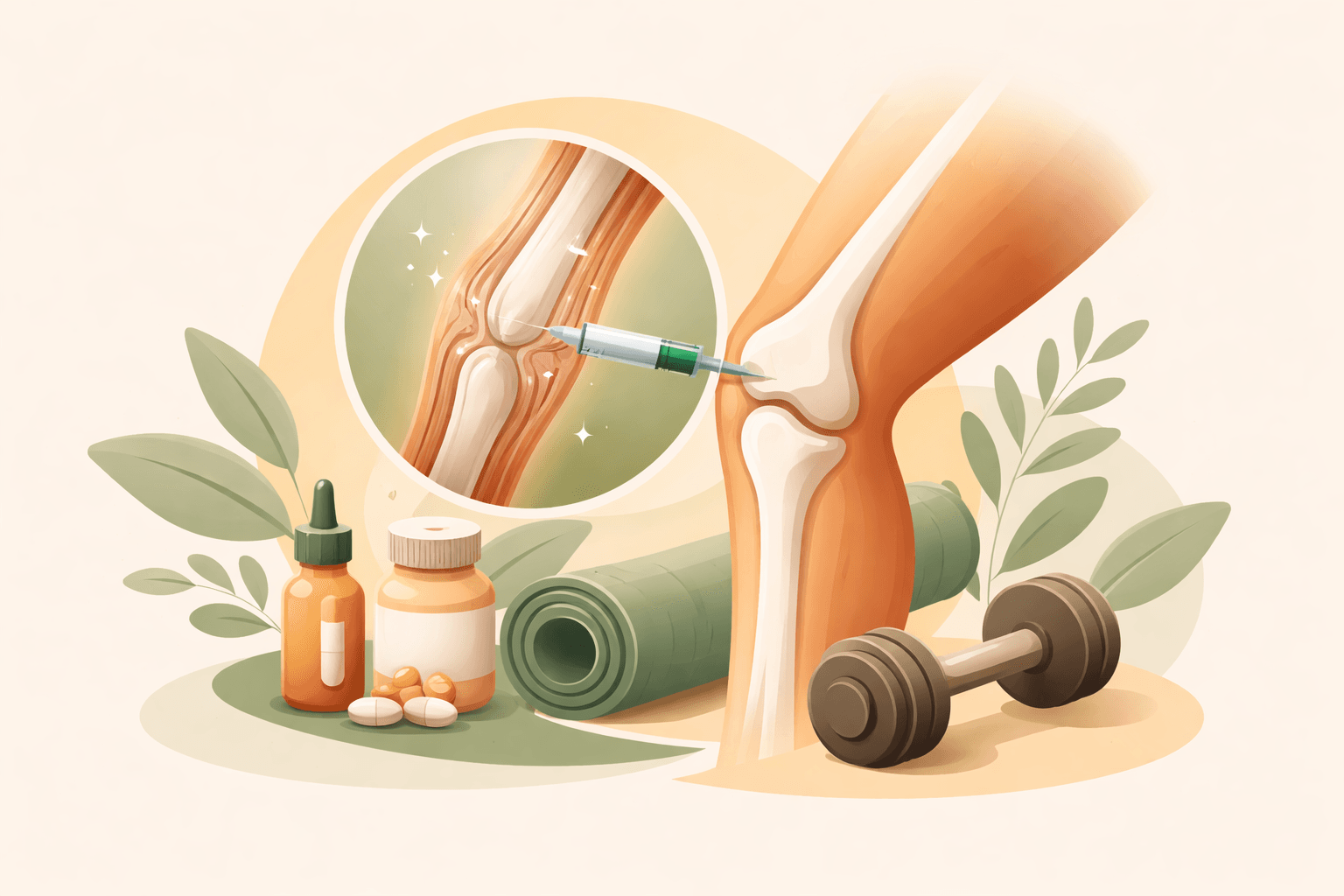
BPC‑157 (Body Protection Compound‑157) is a synthetic fragment of a protein originally isolated from gastric juice. Early work explored it for gastrointestinal cytoprotection, but over the past two decades, preclinical researchers have investigated its potential to support tissue repair—especially in tendons and ligaments. This focused review looks at what animal and cell studies suggest about BPC‑157 and connective‑tissue healing, how it might work, why athletes are interested, the current clinical trial landscape, and key safety and regulatory considerations.
Key takeaways are that research suggests BPC‑157 may influence angiogenesis and fibroblast activity relevant to tendon/ligament repair in animal models, but there is a substantial evidence gap in humans. It is not an approved medicine, and it appears on the World Anti‑Doping Agency (WADA) Prohibited List under S0 (Non‑Approved Substances).
What is BPC‑157 and where did it come from?
- Origin story: BPC‑157 is a pentadecapeptide (15 amino acids) derived from a larger protein identified in human gastric juice during research into mucosal protection and ulcer healing. [Evidence: emerging]
- Broader interest: Because gastrointestinal peptides can signal tissue growth and repair, researchers extended investigations to musculoskeletal injury models. [Evidence: emerging]
How might BPC‑157 support tendon/ligament repair?
While precise mechanisms remain to be confirmed in humans, several preclinical pathways have been proposed:
- Angiogenesis support: BPC‑157 may modulate angiogenic signaling (for example, interactions with VEGF pathways), which is relevant because early tendon healing requires controlled blood vessel ingrowth. [Evidence: emerging]
- Fibroblast/tenocyte activity: In vitro and animal data suggest enhanced fibroblast migration and collagen organization, potentially aiding extracellular matrix (ECM) remodeling. [Evidence: emerging]
- Nitric oxide (NO) system interaction: Some rodent studies indicate BPC‑157 may interact with NO signaling, which can influence vasodilation, inflammation, and tissue repair dynamics. [Evidence: emerging]
- Inflammation modulation: Limited preclinical data suggest shifts in inflammatory mediators during healing, potentially creating a pro‑repair milieu. [Evidence: emerging]
What animal studies report about tendons and ligaments
Across multiple rodent models—from Achilles tendon transections to medial collateral ligament (MCL) injuries—researchers have observed signals consistent with accelerated or improved healing. Representative findings include:
- Faster gross healing and earlier functional use in transected tendon models compared with control animals. [Evidence: emerging]
- Improved biomechanical properties (e.g., tensile strength) during early to mid‑healing windows. [Evidence: emerging]
- Denser, more organized collagen fibers and more mature ECM architecture on histology. [Evidence: emerging]
- Increased early neovascularization at the repair site that appears to normalize as remodeling progresses. [Evidence: emerging]
- Protective effects in models where tendon or ligament injury is compounded by systemic insults (for example, NSAID‑related impairment of healing), though replication is limited. [Evidence: emerging]
It is important to emphasize that most published preclinical papers originate from a small number of research groups and are performed in rodents. Independent replication, species translation, and dose‑response relationships remain active questions. No high‑quality human trials have confirmed these effects in tendon or ligament injury to date. [Evidence: strong for “no human RCTs published”; emerging for “animal benefits”]
Why athletes are interested
- Performance‑recovery narrative: Athletes and physically active individuals follow preclinical literature suggesting faster restoration of tissue integrity could shorten time away from training or reduce reinjury risk. [Evidence: traditional/anecdotal]
- Orthobiologics landscape: Interest in peptides sits alongside other biologics (e.g., platelet‑rich plasma) that aim to influence healing cascades. BPC‑157 is frequently discussed in this context. [Evidence: emerging]
- Doping status: BPC‑157 is listed by WADA under S0 (Non‑Approved Substances). Its possession/use by athletes subject to anti‑doping rules may constitute a violation. [Evidence: strong]
Clinical trial status in humans
- As of this writing, there are no peer‑reviewed, randomized controlled trials demonstrating efficacy of BPC‑157 for tendon or ligament healing in humans. [Evidence: strong]
- Some early‑phase or exploratory registrations have been discussed publicly, but completed, peer‑reviewed outcomes for musculoskeletal indications are lacking. [Evidence: strong]
- Because it is not approved as a drug, preparations marketed online often fall outside standard pharmaceutical quality controls, which complicates any attempt to compare outcomes or safety. [Evidence: strong]
Safety and regulatory considerations
- Approval status: BPC‑157 is not approved by major regulators (e.g., FDA) for any indication. Compounding of unapproved peptides has been the subject of FDA enforcement actions and advisories. [Evidence: strong]
- Preclinical safety: Rodent studies often report a wide therapeutic window without overt toxicity at tested ranges. Translation of those tolerability findings to humans is uncertain. [Evidence: emerging]
- Product quality: Laboratory analyses of various peptide products sold online have, in other contexts, revealed impurities or mislabeling; similar concerns likely apply to BPC‑157 obtained outside regulated channels. [Evidence: moderate]
- Anti‑doping: WADA prohibits BPC‑157; national anti‑doping bodies have issued advisories warning of legal and health risks for athletes. [Evidence: strong]
Bridging Western research and traditional perspectives
Traditional medical systems have long emphasized supporting the body’s intrinsic healing capacity. For example:
- Traditional Chinese Medicine (TCM) associates the Spleen/Stomach system with nourishing the muscles and connective tissues, and many classical formulas focus on “moving blood” to support recovery after injury. [Evidence: traditional]
- Ayurveda emphasizes restoring tissue (dhatu) balance after trauma with diet, rest, and botanicals. [Evidence: traditional]
While these frameworks differ fundamentally from molecular pharmacology, the shared emphasis on optimizing the local healing environment parallels modern interest in biologicals that may influence angiogenesis, inflammation, and ECM remodeling. BPC‑157 should not be conflated with traditional therapies, but the conceptual bridge—enhancing the body’s repair milieu—helps contextualize why such compounds draw attention.
Where the evidence is strong versus where it is speculative
- Strong
- WADA prohibits BPC‑157 under S0 (Non‑Approved Substances).
- No peer‑reviewed RCTs demonstrate efficacy for tendon/ligament healing in humans.
- BPC‑157 is not an FDA‑approved drug; quality and legality concerns apply to products marketed online.
- Moderate
- Product quality issues are a known risk with non‑approved peptide products.
- Emerging
- Animal studies suggest enhanced angiogenesis, collagen organization, and biomechanical properties in tendon/ligament models.
- Proposed mechanisms include modulation of VEGF/angiogenesis, fibroblast migration, and NO signaling.
- Traditional
- Historical healing frameworks emphasize nourishing and mobilizing tissues after injury, conceptually aligning with the goal (but not the modality) of peptide‑based approaches.
Practical implications for athletes and clinicians
- Research suggests BPC‑157 may influence healing pathways relevant to tendons and ligaments in animal models, but without human clinical trials, its real‑world benefit, optimal indications, and long‑term safety remain unknown. [Evidence: strong for “unknown in humans”; emerging for “animal benefit”]
- Given regulatory and anti‑doping status, athletes governed by sport rules risk sanctions for possession or use. [Evidence: strong]
- Established, evidence‑based tendon and ligament rehabilitation strategies—progressive loading, eccentric training, manual therapy as indicated, sleep, and nutrition that supports collagen synthesis—remain the cornerstone of care. [Evidence: strong]
Bottom line
BPC‑157 emerged from gastric‑juice research and, in animal models, may help orchestrate early events in tendon and ligament repair—angiogenesis, fibroblast activity, and ECM remodeling. That promise has fueled interest among athletes seeking faster recovery. However, the current evidence for human benefit is lacking: there are no peer‑reviewed randomized trials in tendon or ligament healing, and the compound is not an approved medicine. Safety in humans remains uncertain, and BPC‑157 is prohibited by WADA. For now, the findings are intriguing but preliminary; they highlight biologic pathways that future, well‑designed human studies will need to confirm or refute.
Selected resources