

Early-stage research, mostly preclinical or preliminary human studies
BPC‑157 and Tendon Healing: What the Evidence Actually Shows
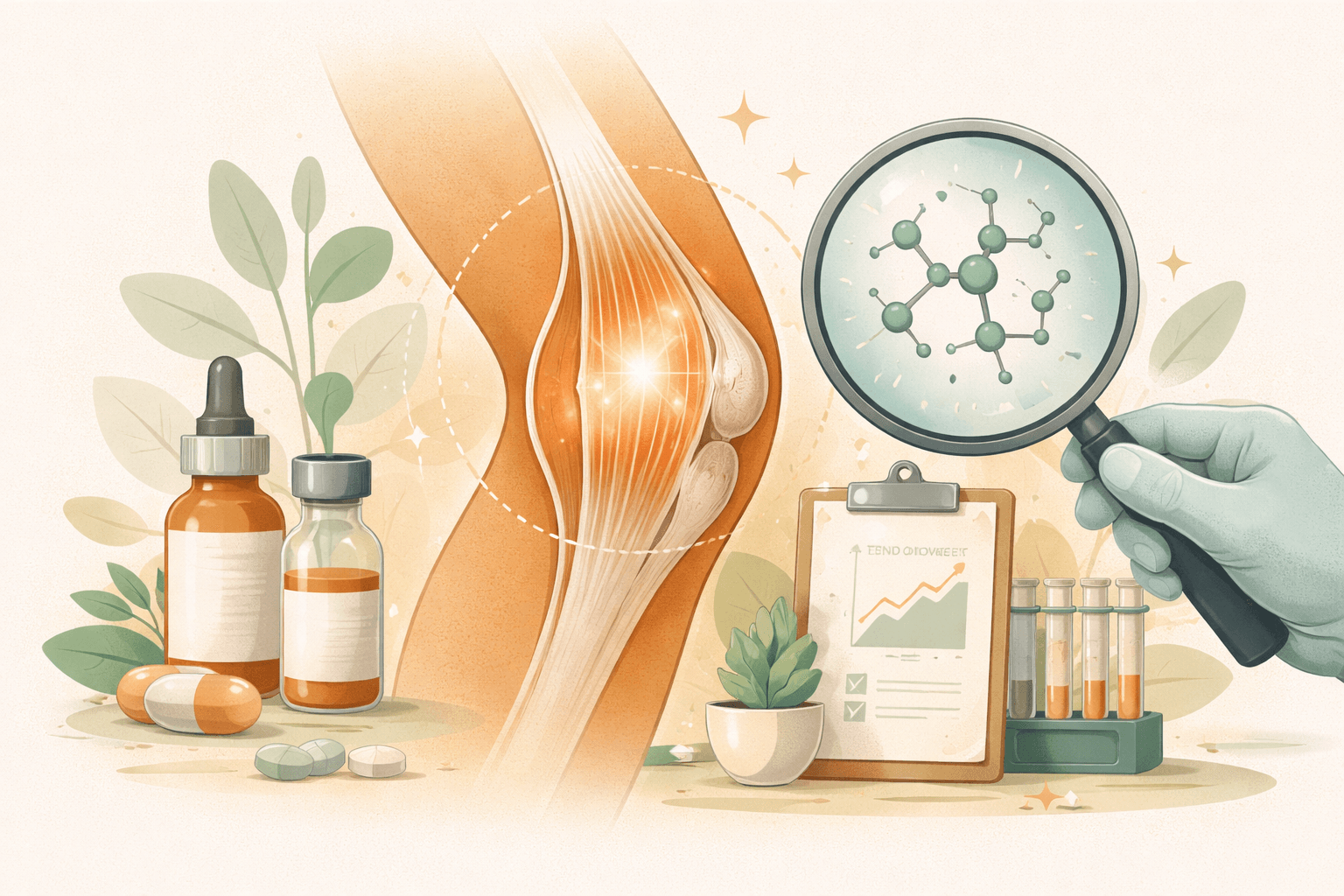
A focused, evidence‑based look at BPC‑157 and tendon healing—mechanisms, animal data, regulatory status, safety gaps, and why athletes are paying attention.
This content is for informational purposes only and does not constitute medical advice. Always consult a qualified healthcare provider before starting, stopping, or changing any supplement or medication regimen.
Introduction BPC‑157 (Body Protection Compound‑157) is a synthetic 15–amino acid peptide originally derived from research on protective factors found in gastric juice. Interest has surged in sports and rehab circles because animal studies suggest it may support tissue repair, particularly in tendons and ligaments. At the same time, BPC‑157 is not approved as a medicine, is prohibited in sport by the World Anti‑Doping Agency (WADA), and lacks robust human clinical trials. This article focuses on the specific question: What does the evidence say about BPC‑157 and tendon healing?
Key Takeaways at a Glance
- BPC‑157 originates from gastric‑mucosal research and has cytoprotective properties in preclinical models (Evidence: emerging).
- Proposed mechanisms include angiogenesis support, modulation of the nitric oxide (NO) system, and effects on cell migration and extracellular matrix remodeling (Evidence: emerging).
- Animal studies of tendon injury report improved biomechanical strength and faster tissue organization with BPC‑157 compared with controls (Evidence: emerging).
- Published, peer‑reviewed human trials for tendon or ligament healing are minimal to none; replication by independent labs is limited (Evidence: emerging).
- Safety signals in animals look favorable, but human safety, dosing patterns, and long‑term risks remain unclear (Evidence: emerging).
- BPC‑157 is prohibited by WADA as a non‑approved substance; athletes face anti‑doping and quality‑control risks (Evidence: strong for regulation; emerging for safety profile).
What Is BPC‑157 and Why Tendons? BPC‑157 is a pentadecapeptide first characterized in the context of the stomach’s protective environment. Peptides with cytoprotective activity from gastric juice drew attention for their ability to stabilize mucosal integrity in animal models. Researchers later explored effects beyond the gut—most notably in musculoskeletal repair—because tendon and ligament injuries heal slowly and often incompletely. This is where BPC‑157 entered performance‑recovery conversations (Evidence: emerging).
How Might BPC‑157 Influence Tendon Healing? Research suggests several plausible mechanisms, mostly from in vitro and animal data:
- Angiogenesis and microcirculation: BPC‑157 may support new vessel formation and collateral circulation, potentially improving nutrient delivery to hypovascular tendon tissue (Evidence: emerging). Reviews note upregulation of angiogenic pathways and improved blood flow in injury models (systematic/narrative reviews, 2020–2023; Evidence: emerging).
- Nitric oxide (NO) system modulation: BPC‑157 appears to interact with NO signaling. In rodent studies, it counteracts effects of NO synthase blockade and normalizes thrombosis and vasomotor responses, which could translate to better perfusion at injury sites (Evidence: emerging).
- Cell migration and matrix remodeling: Tendon fibroblasts must migrate, proliferate, and lay down organized collagen. Some preclinical work shows BPC‑157 may enhance fibroblast outgrowth, influence focal adhesion/FAK‑paxillin signaling, and improve collagen fiber alignment in healing tendons (Evidence: emerging).
- Anti‑inflammatory and cytoprotective effects: In various rodent models, BPC‑157 reduces tissue damage from inflammatory or toxic stimuli, which may indirectly create a more favorable healing environment (Evidence: emerging).
What Do Animal Studies Show for Tendons and Ligaments? Multiple rodent studies report accelerated healing in transected or injured tendons with BPC‑157 compared with controls. Key observations include:
- Faster functional recovery and higher load‑to‑failure strength in Achilles tendon injury models (randomized animal experiments; Evidence: emerging).
- Improved histological organization (straighter, denser collagen fibers; reduced edema) and more orderly fibroblast proliferation during the repair phase (Evidence: emerging).
- More robust revascularization around the injury site, consistent with a pro‑angiogenic milieu (Evidence: emerging).
- Some studies extend these findings to ligament and skeletal muscle injuries, showing improved biomechanical and structural endpoints in animals (Evidence: emerging).
Important caveats:
- Much of the published preclinical work originates from a limited number of research groups, and independent replication at scale is sparse (Evidence: emerging).
- Animal injury models do not fully capture the complexity of human tendon pathology (e.g., chronic tendinopathy with degenerative changes) (Evidence: strong for general translational limitations).
Where Do Human Data and Clinical Trials Stand?
- Peer‑reviewed human randomized controlled trials investigating BPC‑157 for tendon or ligament healing are minimal to none as of this writing (Evidence: strong for the absence of robust trials).
- Some clinical trial registries have listed exploratory plans, but publicly available results are scarce, and no authoritative practice guidelines endorse BPC‑157 for musculoskeletal repair (Evidence: strong for regulatory/practice status; emerging for ongoing trial status).
- Without controlled human data, it is not possible to determine real‑world efficacy, optimal timing, or comparative effectiveness versus established rehab strategies (Evidence: strong for evidence gap).
Safety Profile and Quality Considerations
- Preclinical safety: Animal studies generally report low acute toxicity and favorable tolerability, even across a range of experimental conditions (Evidence: emerging). However, animal safety signals do not guarantee human safety, especially with repeated or long‑term exposure (Evidence: strong for translational caution).
- Human safety data: There is a paucity of formal human safety assessments in peer‑reviewed literature. The long‑term effects on angiogenesis and tissue growth are unknown (Evidence: strong for data gap).
- Product quality: In many regions, BPC‑157 is sold as a “research chemical.” Independent testing has revealed variability in purity among gray‑market peptides in general, raising concerns about contamination or mislabeling (Evidence: moderate for peptide market quality issues).
- Regulation and sport: WADA lists BPC‑157 under the S0 category (non‑approved substances). Use may result in anti‑doping violations (Evidence: strong; WADA Prohibited List).
Why Athletes Are Interested
- Potential to shorten downtime: Because tendons have limited blood supply and heal slowly, a compound that may promote angiogenesis, fibroblast activity, and matrix organization is appealing for return‑to‑play timelines (Evidence: emerging).
- Theoretical synergy: Athletes often combine eccentric loading, progressive rehab, sleep optimization, and nutrition to recover. A biologic that may augment early tissue repair fits that multi‑modal mindset (Evidence: emerging).
- Reality check: Without human RCTs, it is impossible to quantify benefit, compare to standard rehab, or characterize risk. The anti‑doping status and uncertain sourcing further complicate decisions (Evidence: strong for regulatory issues; emerging for benefits).
Bridging Western and Traditional Perspectives
- Western research context: BPC‑157 grew out of gastric‑mucosal protection research and is now explored in musculoskeletal models. The concept is cytoprotection—stabilizing tissue under stress and supporting regenerative processes (Evidence: emerging).
- Traditional medicine parallels: Traditional systems (e.g., East Asian medicine) often emphasize nourishing the body’s core (“spleen/stomach” systems) to support tissue integrity and “move blood” to promote recovery. Botanicals like Centella asiatica (gotu kola) have been used traditionally for wound healing, aligning conceptually with angiogenesis and collagen support (Evidence: traditional for historical use; emerging for modern mechanistic overlap). While the sources differ—herbal vs. synthetic peptide—the shared theme is enhancing the body’s intrinsic repair capacity.
What This Means for Rehab Planning
- Established pillars such as graded loading, progressive strengthening, sleep quality, and broad nutritional adequacy have strong or moderate evidence for tendon health and recovery (Evidence: strong to moderate, depending on modality).
- BPC‑157 remains an investigational peptide: promising in animals, unproven in people, and prohibited in sport (Evidence: strong for regulatory status; emerging for efficacy/safety in humans).
Bottom Line
- BPC‑157 is a gastric‑derived synthetic peptide that may enhance tendon repair in animal models through angiogenesis, NO modulation, and improved fibroblast activity (Evidence: emerging).
- Despite compelling preclinical data, there are minimal to no peer‑reviewed human randomized trials demonstrating benefit for tendon or ligament injuries (Evidence: strong for the evidence gap).
- Safety signals in animals appear favorable, but human safety and long‑term outcomes are unknown; sourcing quality is a concern outside regulated research (Evidence: emerging to moderate for quality risks).
- BPC‑157 is prohibited by WADA as a non‑approved substance. Athletes should be aware of anti‑doping rules and the difference between preclinical promise and clinically proven therapies (Evidence: strong).
References (selected)
- Systematic and narrative reviews summarizing preclinical findings on BPC‑157’s cytoprotective and angiogenic actions (2020–2023).
- Staresinic M. et al. Journal of Orthopaedic Research (early 2000s): Rat Achilles tendon transection model reporting improved biomechanical and histological healing with BPC‑157 (animal, randomized).
- Reviews by Sikiric and colleagues on BPC‑157’s modulation of NO signaling, vascular effects, and multi‑organ protection in rodent models (various journals, 2017–2022; narrative/overview).
- World Anti‑Doping Agency (WADA). Prohibited List (S0, non‑approved substances), listing BPC‑157.
Note: Research on BPC‑157 is evolving. The absence of dosage guidance and medical advice here is intentional; individuals should consult qualified healthcare professionals and adhere to local regulations and anti‑doping rules.
Health Disclaimer
This content is for informational purposes only and does not constitute medical advice. Always consult a qualified healthcare provider before starting, stopping, or changing any supplement or medication regimen.