

Promising research with growing clinical support
Bifidobacterium longum NCC3001 and IBS‑Linked Depression: What Research Suggests
Focused review of Bifidobacterium longum NCC3001 as a psychobiotic for IBS‑linked depressive symptoms, with notes on the vagus nerve and fermented foods.
This content is for informational purposes only and does not constitute medical advice. Always consult a qualified healthcare provider before starting, stopping, or changing any supplement or medication regimen.
Psychobiotics and Mental Health (Supporting Article)
Focus: Bifidobacterium longum NCC3001 for mood symptoms in irritable bowel syndrome (IBS)
Overview
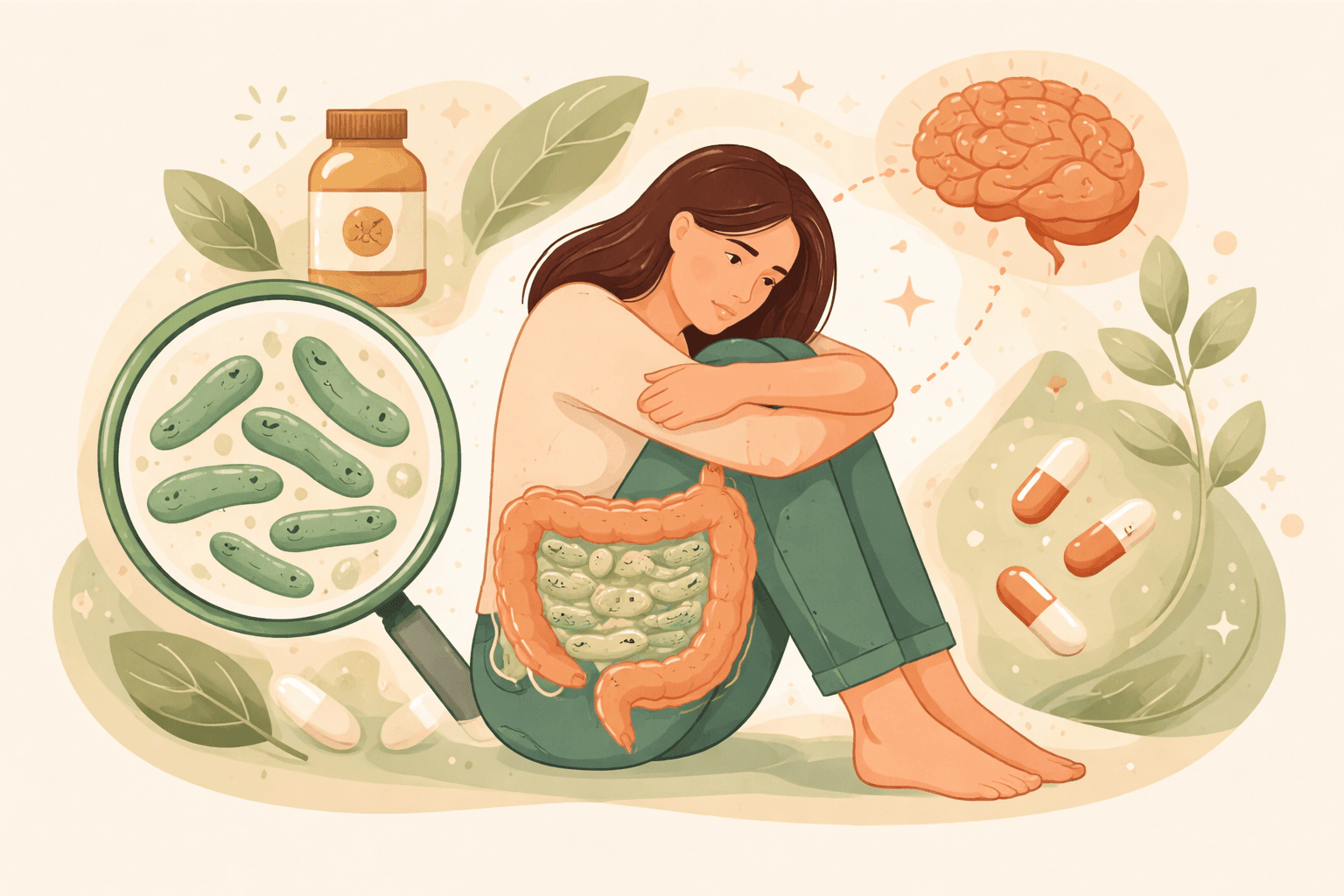
Psychobiotics are specific probiotic strains that may influence mood, stress, and cognition through the gut–brain axis. Among them, Bifidobacterium longum NCC3001 has attracted interest for people with irritable bowel syndrome (IBS), a condition frequently accompanied by low mood and anxiety. This article summarizes what clinical research suggests about B. longum NCC3001 and IBS‑linked depressive symptoms, how the vagus nerve may be involved, and where traditional fermented foods fit as proto‑psychobiotics.
Key takeaway up front: Early randomized trials suggest B. longum NCC3001 may improve depressive symptoms in IBS and modulate brain activity, though effects on general anxiety are less consistent and findings need replication in larger, diverse cohorts (evidence: moderate).
Why target IBS‑related mood symptoms?
- The gut–brain axis links intestinal physiology with emotional and cognitive processes via neural (vagus nerve), immune, endocrine, and microbial metabolites pathways. Disturbances in IBS often coincide with heightened stress reactivity and mood symptoms.
- Epidemiology shows higher rates of depressive and anxiety symptoms in IBS compared with the general population, making it a relevant setting to study psychobiotics (evidence: strong from observational and clinical cohort data).
What is Bifidobacterium longum NCC3001?
B. longum NCC3001 is a well‑characterized, strain‑specific probiotic from the Bifidobacterium longum species. Strain identity matters: effects seen with NCC3001 cannot be assumed for other B. longum strains. Proposed actions include supporting epithelial barrier function, modulating immune signaling, and producing metabolites (such as short‑chain fatty acids) that may influence neural pathways (evidence: emerging mechanistic data from preclinical and translational studies).
Clinical evidence in IBS and mood
- Gastroenterology 2017 RCT (Pinto‑Sanchez et al.): In a double‑blind, placebo‑controlled trial of adults with IBS (n≈44), participants receiving B. longum NCC3001 for 6 weeks showed a greater reduction in depressive symptoms compared with placebo, alongside functional MRI changes indicating altered limbic activity; IBS symptom severity improved in both groups (evidence: moderate—single well‑designed RCT with neuroimaging) (Pinto‑Sanchez MI et al., Gastroenterology, 2017).
- Anxiety outcomes in that trial were less consistent, suggesting potential specificity for depressive symptoms in the IBS context (evidence: moderate).
Context from related psychobiotic strains
While NCC3001 is the focus here, other Bifidobacterium and Lactobacillus strains provide converging lines of evidence:
- Bifidobacterium longum 1714: Healthy volunteer RCTs report reduced perceived stress and altered brain activity during cognitive tasks; cortisol responses were attenuated under stress (evidence: moderate—small RCTs) (Allen AP et al., Translational Psychiatry, 2016; O’Mahony SM et al., related work).
- Lactobacillus helveticus R0052 + Bifidobacterium longum R0175: A combined formulation reduced psychological distress and cortisol in healthy adults over 30 days in a randomized trial (evidence: moderate) (Messaoudi M et al., British Journal of Nutrition, 2011).
- Meta‑analyses: Systematic reviews across mixed populations suggest small but significant reductions in depressive symptoms with probiotics, with heterogeneity by strain, duration, and baseline diagnosis; effects on anxiety are more variable (evidence: moderate) (Ng QX et al., Nutrients, 2018; Firth J et al., Journal of Affective Disorders, 2019; Liu B et al., BMJ Nutrition, Prevention & Health, 2021).
How might it work? The vagus nerve and the gut–brain axis
- Vagus nerve signaling: Preclinical work shows that certain psychobiotic effects depend on an intact vagus nerve. A landmark mouse study found that Lactobacillus rhamnosus JB‑1 reduced anxiety‑ and depression‑like behavior via GABA receptor modulation; these effects disappeared after surgical vagotomy (evidence: strong preclinical) (Bravo JA et al., PNAS, 2011).
- Human hints: Neuroimaging changes with B. longum NCC3001 in IBS (reduced limbic reactivity) and stress biomarker shifts with B. longum 1714 suggest that brain circuits and autonomic tone may be modulated, potentially through vagal pathways, microbial metabolites, or immune signaling (evidence: emerging—human mechanistic proxies) (Pinto‑Sanchez MI et al., 2017; Allen AP et al., 2016).
- Inflammation and barrier function: IBS often features low‑grade inflammation and altered intestinal permeability. Psychobiotics may help normalize cytokine profiles and barrier markers, which could indirectly influence mood via immune‑to‑brain communication (evidence: emerging from small human trials and preclinical models).
Where fermented foods fit: proto‑psychobiotics
Traditional fermented foods—kimchi, kefir, miso, tempeh, yogurt—deliver live microbes and bioactive metabolites that may interact with the gut–brain axis. While these foods are not standardized for specific strains like NCC3001, they align with the broader psychobiotic concept.
- Observational signal: A cross‑sectional study in young adults linked greater fermented food intake with lower social anxiety, particularly in individuals high in neuroticism (evidence: emerging—observational) (Hilimire MR et al., Psychiatry Research, 2015).
- Dietary intervention: A randomized dietary trial from Stanford found that a fermented food‑rich diet increased microbiome diversity and reduced multiple inflammatory markers over 10 weeks; mood was not the primary endpoint, but lower inflammation is plausibly relevant to the gut–brain axis (evidence: moderate for inflammation outcomes) (Wastyk HC et al., Cell, 2021).
- Traditional perspectives: East Asian and Caucasus traditions long associated fermented foods with vitality, digestion, and calmness. These cultural practices can be viewed as early forms of psychobiotic dietary patterns, even if modern trials are needed to substantiate mood effects (evidence: traditional).
Practical implications (without medical advice)
- Strain specificity matters: Benefits seen with B. longum NCC3001 cannot be generalized to other strains or multi‑strain products without supporting data (evidence: strong consensus in probiotic science).
- Population matters: The most direct clinical signal for NCC3001 relates to IBS with co‑occurring depressive symptoms. Evidence in non‑IBS populations is still limited (evidence: moderate).
- Complementary approaches: Fermented foods may complement, rather than replace, strain‑specific psychobiotics, contributing live microbes and metabolites within a whole‑diet context (evidence: emerging to moderate, depending on outcome).
- Safety: Probiotics are generally well tolerated in healthy individuals, but responses vary, and research in those with significant medical conditions is still developing (evidence: moderate). Individuals should discuss personalized strategies with a qualified clinician.
What to watch in future studies
- Replication of the NCC3001 findings in larger, multi‑center IBS cohorts with standardized mood endpoints.
- Head‑to‑head trials comparing NCC3001 with other psychobiotics (e.g., L. helveticus R0052 + B. longum R0175; B. longum 1714) to clarify who benefits most.
- Mechanistic human studies linking vagal tone (e.g., heart‑rate variability), microbial metabolites (e.g., tryptophan–kynurenine pathways, short‑chain fatty acids), and brain network changes to symptom improvement.
- Diet–microbe synergy trials testing whether fermented foods enhance or sustain psychobiotic effects over time.
Bottom line
- For people with IBS and co‑occurring depressive symptoms, Bifidobacterium longum NCC3001 may provide mood benefits and measurable changes in brain activity (evidence: moderate, based on a well‑designed RCT with neuroimaging).
- Effects on anxiety are less consistent across studies, and benefits appear strain‑ and population‑specific (evidence: moderate).
- The vagus nerve likely plays a role in psychobiotic signaling, supported strongly by animal data and preliminarily by human biomarkers and imaging (evidence: emerging to moderate).
- Fermented foods from traditional cuisines can be considered proto‑psychobiotics that may support gut–brain health in a dietary context, though standardized mood outcomes remain under study (evidence: emerging/traditional).
- Ongoing, larger trials will clarify optimal contexts of use and the mechanistic underpinnings of psychobiotic effects on mental health.
Health Disclaimer
This content is for informational purposes only and does not constitute medical advice. Always consult a qualified healthcare provider before starting, stopping, or changing any supplement or medication regimen.