

Supported by multiple clinical trials and meta-analyses
Beta-Alanine for 1–4 Minute High-Intensity Efforts: What the Research Says
Research-backed look at beta-alanine for 1–4 minute high-intensity efforts: how it buffers muscle acidity, performance meta-analyses, side effects, and comparisons.
This content is for informational purposes only and does not constitute medical advice. Always consult a qualified healthcare provider before starting, stopping, or changing any supplement or medication regimen.
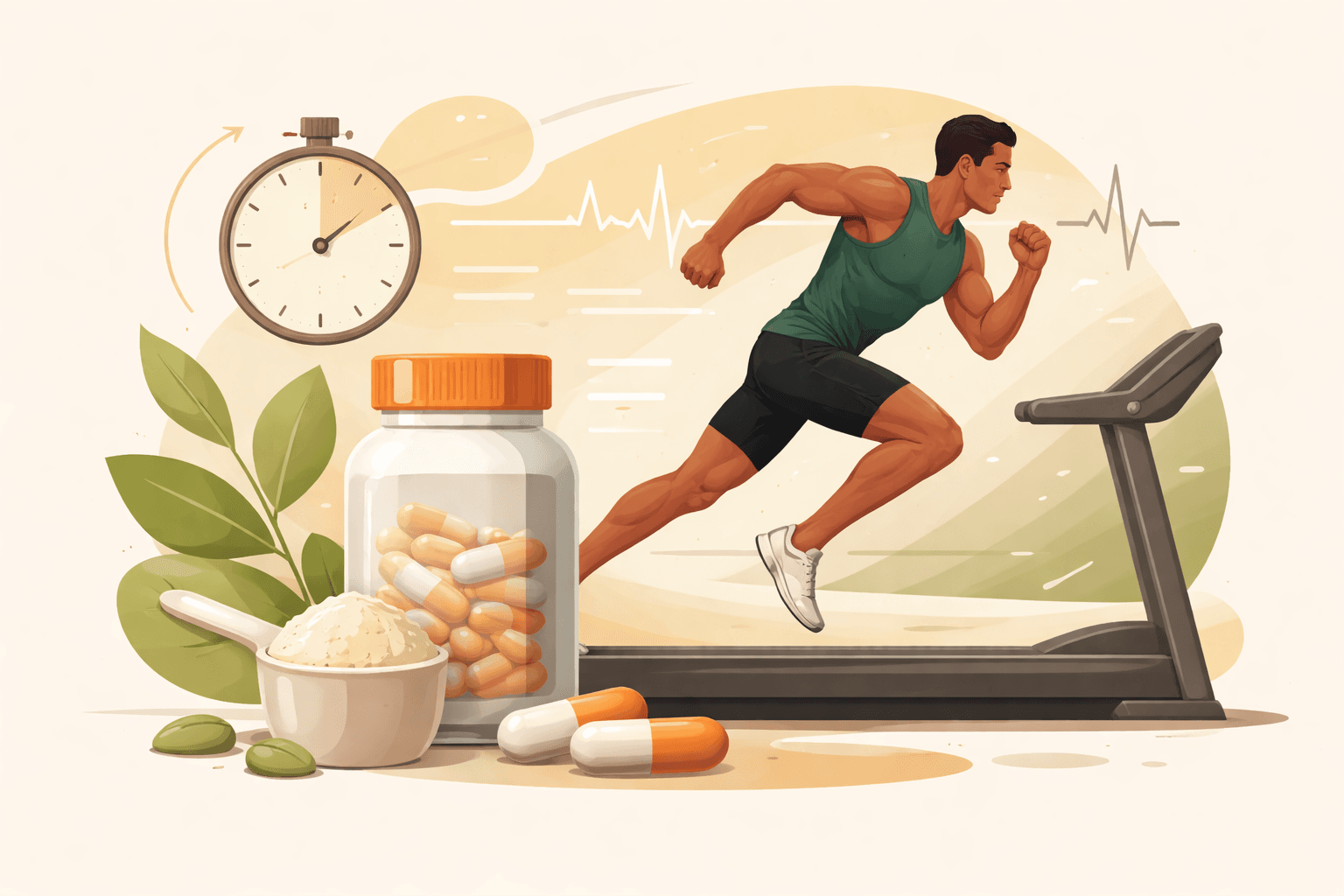
Overview Beta-alanine has become a go-to ergogenic aid for athletes who race, ride, row, or repeat intervals in the 1–4 minute “red zone.” Research suggests it raises intramuscular carnosine, a buffer that helps manage the burn from high-intensity efforts, and may translate into small but meaningful performance gains—especially in events lasting roughly 60–240 seconds. This focused review examines the mechanism, quality of evidence, practical strategies investigated in research, side effects, and how beta-alanine compares with other aids.
Key takeaways appear under each section with an evidence level: strong, moderate, emerging, or traditional.
How Beta-Alanine Works: Carnosine and Muscle Acidity
- Mechanism: Beta-alanine is the rate-limiting precursor for synthesizing carnosine in skeletal muscle. Carnosine acts as an intracellular buffer, helping mop up hydrogen ions (H+) that accumulate during intense glycolytic exercise. Less acidity means contractile proteins and calcium handling may function better under stress, potentially sustaining power output. Research also notes carnosine’s antioxidant and carbonyl-scavenging properties, which may support muscle function under high metabolic strain. [Evidence: strong]
- What the lab shows: Multiple controlled studies demonstrate that beta-alanine supplementation increases muscle carnosine content in both trained and untrained individuals. These biochemical increases are consistent across trials and underpin observed performance effects in targeted exercise domains. [Evidence: strong]
What Meta-Analyses Show for 1–4 Minute Efforts
- Performance window: Systematic reviews and meta-analyses consistently report that beta-alanine most reliably benefits exercise lasting about 1–4 minutes, with smaller or mixed effects outside that window (e.g., very short sprints or prolonged endurance). [Evidence: strong]
- Quantitative overviews:
- Hobson et al. (2012) reported performance benefits in high-intensity tasks lasting 60–240 seconds, aligning with the glycolytic demand where intracellular buffering matters most. [Evidence: strong]
- Saunders et al. (2017) concluded that beta-alanine improves exercise capacity and, to a lesser degree, performance across high-intensity tasks up to ~10 minutes, with the most consistent benefits in the 1–4 minute range. [Evidence: strong]
- Real-world relevance: For 400–1000 m track events, 500–2000 m rowing, short time-trial efforts in cycling, repeated combat-sport drills, and CrossFit-style intervals, these small effects may decide outcomes, particularly in trained populations where marginal gains matter. [Evidence: moderate]
ISSN Position Stand: Where Experts Land
- The International Society of Sports Nutrition (ISSN) position stand concludes that beta-alanine increases muscle carnosine and may enhance high-intensity exercise capacity, particularly in efforts around 1–4 minutes, with practical significance for many sports. It also notes inter-individual variability and supports chronic use protocols to build muscle carnosine. [Evidence: strong]
Side Effect: The Tingling (Paresthesia)
- What it is: Some people experience transient tingling or flushing (paresthesia), especially after larger single intakes. This sensation is generally considered benign and subsides on its own. [Evidence: strong]
- What research suggests may help: Splitting daily intake into smaller servings or using sustained-release formulations reduces the likelihood and intensity of tingling in trials. Co-ingesting with meals has also been explored to improve tolerance. [Evidence: moderate]
Strategies Investigated in Research (Without Dosage Advice)
- Build carnosine with time: Because muscle carnosine accumulates gradually, research protocols typically involve multi-week, daily intake to “load,” followed by continued, lower-level use to maintain elevated levels. Benefits track with carnosine content rather than acute timing. [Evidence: strong]
- Split and sustained-release: Studies testing smaller, divided servings and/or sustained-release tablets report fewer tingling symptoms and comparable carnosine accretion. [Evidence: moderate]
- With meals: Limited evidence indicates co-ingestion with food may support carnosine loading and comfort; results vary by study design. [Evidence: emerging]
- Individual response: Genetics, diet (e.g., habitual meat intake), training status, and fiber type distribution may influence baseline carnosine and responsiveness. Some athletes see larger gains than others, even with similar protocols. [Evidence: moderate]
How It Compares With Other Ergogenic Aids
- Creatine: Creatine primarily supports very short, repeated high-power efforts (seconds) by enhancing phosphocreatine availability and energy turnover. Beta-alanine, by contrast, targets buffering during longer, intense bouts (about 1–4 minutes). Many athletes use both, as they act through different mechanisms. [Evidence: strong]
- Sodium bicarbonate: Bicarbonate buffers acidity outside the muscle (extracellular), while beta-alanine works inside the muscle (intracellular). Some trials suggest co-supplementation may provide additive benefits in severe-intensity exercise, although results are mixed and bicarbonate often causes gastrointestinal discomfort. [Evidence: moderate]
- Caffeine: Caffeine primarily acts via the central nervous system to lower perceived exertion and enhance alertness, with broad applicability across endurance and high-intensity tasks. It works differently from beta-alanine but can be compatible in training or competition settings. [Evidence: strong]
Who Stands to Benefit Most
- Athletes and exercisers frequently performing heavy interval sets, repeated sprints with short recoveries, or competitive efforts lasting 1–4 minutes may be the best candidates to see measurable benefits. Those focusing on ultra-short sprints or steady-state endurance without severe-intensity surges may see less pronounced effects. [Evidence: moderate]
Bridging Western Research and Traditional Perspectives
- Traditional East Asian and Ayurvedic frameworks often emphasize balancing internal “heat,” effort, and recovery to sustain performance. From a biomedical lens, beta-alanine’s support of carnosine-based buffering could be viewed as helping maintain internal equilibrium during intense exertion, potentially complementing practices (e.g., breath work, cooling herbs, pacing) aimed at managing the discomfort of the burn. This bridge is conceptual, and research is still clarifying how combined traditional and modern strategies may interact. [Evidence: emerging]
Limitations and Considerations
- Effect sizes are generally small at the performance level, though meaningful for competitive athletes. [Evidence: strong]
- Not all studies show benefit, especially outside the 1–4 minute window or in protocols misaligned with known mechanisms. [Evidence: strong]
- Response variability is common; testing changes in training quality, split times, or time-to-exhaustion can help determine whether it meaningfully supports an individual’s goals. [Evidence: moderate]
Bottom Line
- Beta-alanine raises intramuscular carnosine and buffers acidity during hard efforts. [Evidence: strong]
- Meta-analyses and the ISSN position stand support small but meaningful performance benefits, particularly for 1–4 minute high-intensity exercise. [Evidence: strong]
- Tingling is a common, benign side effect; research suggests smaller, divided servings, co-ingestion with meals, and sustained-release forms may improve comfort. [Evidence: moderate]
- It targets a different mechanism than creatine, caffeine, and bicarbonate, and may be combined thoughtfully depending on sport demands and individual tolerance. [Evidence: moderate]
- Athletes whose events or intervals live in the 1–4 minute “red zone” are most likely to notice practical gains. [Evidence: strong]
Selected Research
- Hobson RM et al. Effects of beta-alanine supplementation on exercise performance: a meta-analysis. Amino Acids. 2012.
- Saunders B et al. Beta-alanine supplementation to improve exercise capacity and performance: a systematic review and meta-analysis. Sports Medicine. 2017.
- Trexler ET et al. International Society of Sports Nutrition position stand: beta-alanine. Journal of the International Society of Sports Nutrition. 2015.
- Derave W et al. Beta-alanine supplementation augments muscle carnosine content and attenuates fatigue during repeated isokinetic bouts. J Appl Physiol. 2007.
- Décombaz J et al. Effect of slow-release beta-alanine tablets on absorption kinetics and paresthesia. Amino Acids. 2012.
- Stegen S et al. Meal co-ingestion and beta-alanine-induced muscle carnosine loading. Amino Acids. 2013.
Health Disclaimer
This content is for informational purposes only and does not constitute medical advice. Always consult a qualified healthcare provider before starting, stopping, or changing any supplement or medication regimen.